Wheelchair Ramp Installation Cost: 2026 Pricing by Material & Layout
Modular aluminum, wood, concrete, portable — the 2026 cost breakdown for wheelchair ramp installation by material, rise height, and layout complexity.

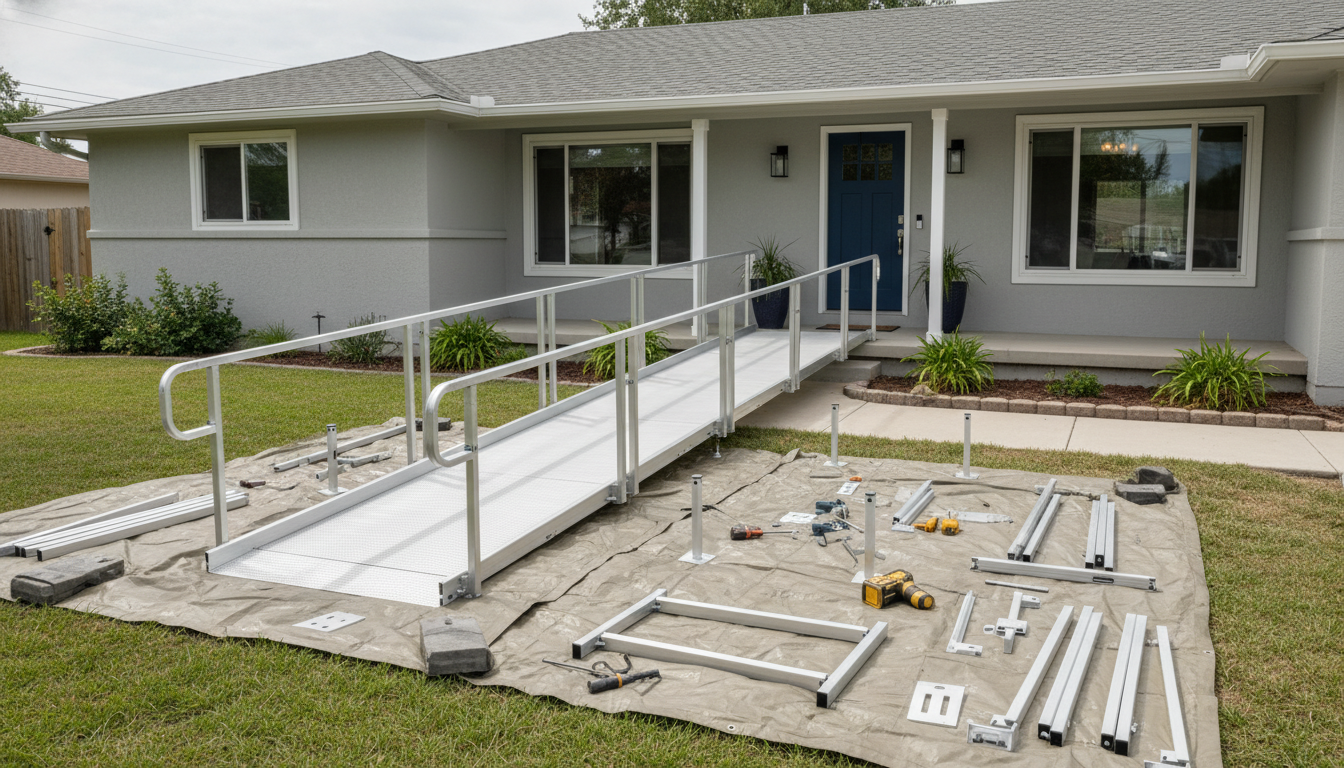
Wheelchair ramp installation costs vary dramatically — a portable folding ramp runs $100, a custom wood ramp with switchback runs $8,000, and a modular aluminum system sits in the sweet spot at $1,500–$5,000 installed. This guide breaks down 2026 pricing by material, layout, and rise height, so you can match your budget to the right solution without overpaying.
2026 Wheelchair Ramp Installation Cost Overview
Average installed cost by ramp type for a typical 24-inch residential rise (requiring a 24-foot ramp run plus landings):
| Ramp Type | Materials | Labor | All-in Installed | Lifespan |
|---|---|---|---|---|
| Portable folding (aluminum) | $150–$500 | $0 (DIY) | $150–$500 | 5–10 yrs |
| Threshold ramp (single step) | $50–$250 | $0 (DIY) | $50–$250 | 8–15 yrs |
| Modular aluminum (DIY) | $1,200–$3,500 | $0–$400 | $1,200–$3,900 | 20+ yrs |
| Modular aluminum (pro install) | $1,200–$3,500 | $600–$1,500 | $1,800–$5,000 | 20+ yrs |
| Wood construction (pro) | $800–$2,500 | $1,800–$5,500 | $2,600–$8,000 | 10–15 yrs |
| Concrete pour (pro) | $1,500–$4,000 | $3,500–$9,000 | $5,000–$13,000 | 30+ yrs |
| Rental (modular) | — | $200–$500 install + $80–$250/mo | $600–$1,500 first 3 mo | Temporary |
Modular aluminum is the most popular choice for residential use because the ADA-compliant slope, integrated handrails, and slip-resistant surface all come pre-engineered in the system. See our ramps and accessibility resource page for the full material comparison.
What’s in the Installation Labor Line
When a contractor quotes you $1,200 for ramp installation on a modular aluminum system, here’s what that labor covers:
- Site survey and measurement (30–60 min) — verify rise, locate suitable anchor points, identify drainage or grading issues
- Ground preparation (30 min–2 hrs) — concrete pad or gravel base if needed; level footings for ramp posts
- Ramp assembly (2–6 hrs) — bolting together pre-engineered sections, attaching handrails, setting landings
- Anchoring (30 min–1 hr) — securing the ramp to the home and ground surfaces
- Testing and walkthrough (15–30 min) — weight-testing, verifying slope compliance, family demonstration
- Haul-away of packaging (15 min)
Wood or concrete ramp construction adds significant labor: framing, pouring, curing, railing fabrication, and surface finishing can push labor to 20–40 hours total. That’s why a custom wood ramp costs 2–4x more than an equivalent modular aluminum installation.
Cost by Ramp Rise Height
Higher rises need longer ramps, more landings, and more complex layouts. Typical modular aluminum installed cost by rise:
| Rise | Ramp Length | Landings | Installed Cost | Layout |
|---|---|---|---|---|
| 6 inches (1 step) | 6 ft | 1 (bottom optional) | $400–$900 | Straight |
| 12 inches (2 steps) | 12 ft | 2 | $900–$1,700 | Straight |
| 18 inches (3 steps) | 18 ft | 2 | $1,400–$2,600 | Straight or L-shape |
| 24 inches (standard porch) | 24 ft | 2 | $1,800–$4,000 | L-shape typical |
| 30 inches | 30 ft | 2 | $2,500–$5,000 | L-shape or switchback |
| 36 inches (deep porch) | 36 ft | 3 (intermediate required) | $3,500–$6,500 | Switchback required |
| 48 inches (front stoop + steps) | 48 ft | 3–4 | $5,500–$9,500 | Double switchback |
For rises above 30 inches on a typical suburban lot, lot constraints often force a switchback design that doubles or triples the ramp footprint. At those heights, a porch lift ($4,000–$7,000 installed) can cost less and take less space than an ADA-compliant ramp.
Permanent vs. Portable: Which Makes Financial Sense
The decision isn’t just about cost — it’s about the duration and purpose of the need:
- Portable folding ramps ($150–$500) work best for single-step thresholds, doorway transitions, and short-term recovery needs. They support 600–800 lb, fold in half for storage, and require no installation.
- Threshold ramps ($50–$250) bridge doorway thresholds of 0.5–3 inches. Rubber, aluminum, or plastic composite; no installation required.
- Modular aluminum ramps ($1,800–$5,000 installed) fit long-term needs where structural changes to the home aren’t desired. They can be reconfigured, extended, or removed without damage.
- Custom wood or concrete ramps ($2,600–$13,000) fit permanent installations where aesthetics matter — matching the home’s exterior materials and color. Also required when building codes in historic districts or HOAs prohibit visible metal structures.
The big picture: for needs shorter than 3 years, rental or portable wins on cost. For 3–10 years, modular aluminum is the clear value leader. For multi-decade installations where the home will be occupied by the same family, wood or concrete can make sense if labor is affordable locally.
Permits and Inspection Fees by State
Unlike stair lifts, wheelchair ramps often require building permits because they’re attached to the home and may affect property lines, drainage, and egress:
| State / Area | Permit Required | Typical Fee | Notes |
|---|---|---|---|
| California | Yes | $150–$450 | Plans review + inspection |
| New York City / NJ | Yes | $200–$600 | Strict residential code enforcement |
| Massachusetts | Usually yes | $100–$300 | Varies by town |
| Texas | Varies by municipality | $50–$200 | Unincorporated areas often none |
| Florida | Yes in most counties | $75–$250 | HOA approval often required |
| Rural Midwest / Mountain West | Often none | $0 | Modular ramps sometimes exempt |
| Portable/temporary ramps nationwide | No | $0 | Not permanently attached |
HOA approval is its own hurdle in many neighborhoods. Some HOAs prohibit visible aluminum ramps at the front entrance and require wood construction matching the home’s trim color. Check your HOA covenants before ordering.
What Drives Your Installation Cost Up or Down
Same house, same rise, installation quote can swing $800–$3,000 based on these factors:
| Factor | Effect on Cost |
|---|---|
| Each 5 ft of additional ramp length | +$300–$700 |
| 90-degree turn requiring switchback landing | +$500–$1,200 |
| Concrete footing for posts (vs. surface mount) | +$400–$1,500 |
| Custom color powder coating (aluminum) | +$200–$800 |
| Wood decking retrofit over aluminum frame | +$800–$2,500 |
| Drainage regrading or French drain | +$500–$2,000 |
| Removal of existing steps or railings | +$200–$800 |
| Rural location (>30 miles from dealer) | +$150–$500 trip fee |
| Second-story deck access ramp | +$1,500–$4,000 vs. ground-level |
Should You Rent or Buy a Wheelchair Ramp?
Ramp rental makes financial sense in short-term situations. Typical rates:
- Setup fee: $200–$500 (often waived on 6+ month contracts)
- Monthly rental: $80–$250/mo depending on length and complexity
- Removal fee: $150–$400 at end of term
Break-even math for a 24-ft modular aluminum ramp at $3,500 all-in purchase vs. rental:
- 0–6 months: Rental wins clearly ($650–$2,000 vs. $3,500)
- 7–12 months: Rental still favorable but closing ($1,450–$3,100 vs. $3,500)
- 13–18 months: Break-even zone
- 19+ months: Buying wins clearly; modular systems resell for 40–60% of original cost
Common rental scenarios: post-surgery recovery, hospice at home, temporary caregiving, or a home sale that’s 6–12 months out. For long-term aging-in-place, buy.
How to Get an Accurate Ramp Installation Quote
Five steps that produce comparable, accurate quotes:
- Request on-site surveys from at least 3 contractors — national brands like 101 Mobility and AmeriGlide plus at least one local accessibility-focused contractor
- Provide photographs of your entry area showing rise height, porch depth, door swing direction, and surrounding ground grade
- Ask for itemized quotes breaking out materials, labor, permits, ground prep, handrails, and any optional upgrades
- Confirm ADA compliance is guaranteed in writing — particularly slope, landings, handrails, and edge protection
- Verify warranty terms — reputable modular aluminum systems carry lifetime warranties on frame components; wood construction should include at least 1 year on workmanship
For funding that covers installation cost, see our guide on free wheelchair ramp programs, including VA HISA grants, Medicaid HCBS waivers, and Habitat for Humanity’s Aging-in-Place program.
The Bottom Line on Wheelchair Ramp Installation Cost
Most residential wheelchair ramps in 2026 cost $1,800–$5,000 installed for a modular aluminum system — the right answer for most homes. Portable ramps under $500 work for single-step or threshold needs; wood and concrete construction at $2,600–$13,000 fit permanent or aesthetic-constrained installations. Get three itemized quotes, verify ADA compliance in writing, and check whether your state or HOA requires permits before committing.
Want help comparing ramp quotes or figuring out which material is right for your home? Contact our team for a free 15-minute consultation. We’ll help you interpret quotes, flag red flags, and connect you with vetted local installers. For a quick length estimate, try our interactive ramp length calculator in the ADA requirements guide.