Free Wheelchair Ramp Programs: 8 Ways to Get Yours Funded in 2026
Medicare won’t pay for a ramp, but eight other programs will — Medicaid waivers, VA HISA, Habitat for Humanity, state grants, and more. Full eligibility and application guide.

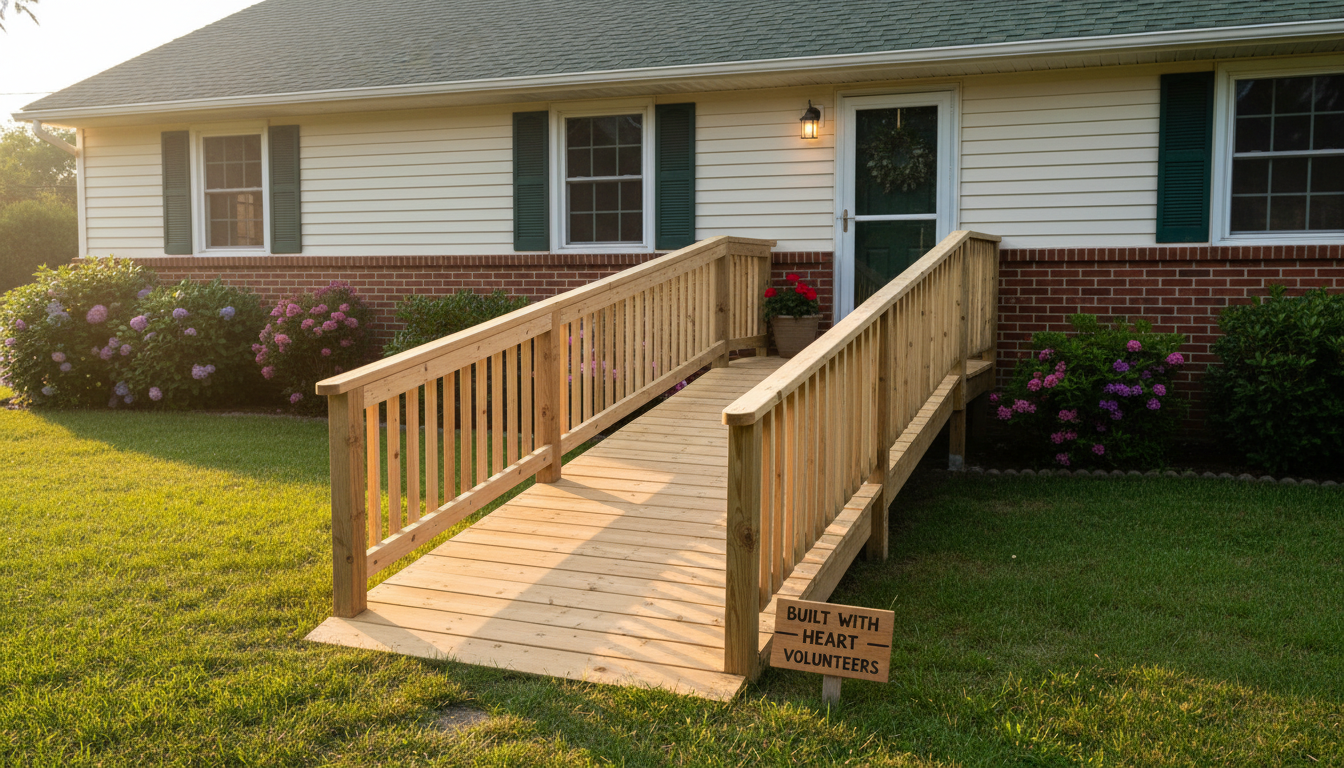
A wheelchair ramp can cost anywhere from $500 to $8,000 installed — a real barrier for families on fixed incomes. The good news: at least eight government programs, nonprofits, and charities provide free or heavily subsidized wheelchair ramps to qualifying seniors, veterans, and low-income households in 2026. This guide walks through each program’s eligibility, how to apply, typical wait times, and what’s actually covered.
Quick Answer: Does Medicare Pay for a Wheelchair Ramp?
Original Medicare (Parts A and B) does not cover wheelchair ramps in 2026. Medicare classifies ramps as “home modifications” rather than Durable Medical Equipment, which excludes them from coverage.
Two narrow exceptions:
- Medicare Advantage (Part C) plans — A growing number of Advantage plans cover partial ramp costs under supplemental benefits. Typical coverage: $500–$1,500 toward a modular ramp, often subject to prior authorization. Call your plan’s member services line to ask specifically whether wheelchair ramps are covered.
- PACE (Program of All-Inclusive Care for the Elderly) — For dual-eligible seniors (Medicare + Medicaid), PACE programs in 30+ states cover ramp installation as part of comprehensive in-home care. Contact your local PACE organization to enroll.
For the full breakdown of what Medicare does and doesn’t cover for home modifications, read our Medicare home modifications guide.
1. Medicaid HCBS Waivers — Best for Dual-Eligible Seniors
Medicaid’s Home and Community-Based Services (HCBS) waivers cover wheelchair ramps in 43 states as of 2026. These waivers are designed to keep seniors living at home instead of transitioning to nursing facilities, and home modifications including ramps are an explicit covered benefit.
- Who qualifies: Seniors 65+ who meet income limits (varies by state, typically $20,000–$30,000/year individual) and demonstrate need for nursing-facility-level care
- Typical coverage: Full ramp cost up to $2,500–$5,000 per household; some states allow $7,500+ for complex installations
- How to apply: Contact your state’s Medicaid office or Area Agency on Aging for HCBS waiver enrollment
- Typical wait time: 3–18 months depending on state; some states have waitlists closed to new enrollees
- Renewal: Annual recertification required
States with the strongest HCBS waiver programs for home modifications include California, New York, Pennsylvania, Michigan, and Texas. States with extensive waitlists include Florida, Illinois, and Tennessee.
2. VA HISA Grant — Best for Veterans
The VA’s Home Improvements and Structural Alterations (HISA) grant covers wheelchair ramps and other accessibility modifications for eligible veterans. HISA has two funding tiers depending on service-connection status:
- Service-connected veterans: Up to $6,800 lifetime maximum for home improvements including ramps
- Non-service-connected veterans: Up to $2,000 lifetime maximum
- Who qualifies: Any veteran enrolled in VA healthcare with a VA-prescribed medical need for the modification
- How to apply: File VA Form 10-0103 through your VA primary care provider; the prescription must originate from a VA clinician
- Typical wait time: 2–6 months from application to disbursement
- Coverage type: Reimbursement — veteran pays for install up-front, then submits receipts for reimbursement
HISA is in addition to (not instead of) the larger SAH (Specially Adapted Housing) and SHA (Special Home Adaptation) grants, which cover major home renovations up to $117,014 or $23,444 respectively for severely disabled veterans.
3. Habitat for Humanity Aging-in-Place Program
Habitat for Humanity’s Aging-in-Place program builds free wheelchair ramps and other accessibility modifications for low-income seniors who meet program criteria. Available in most U.S. metro areas through local Habitat affiliates.
- Who qualifies: Homeowners age 60+ with household income typically below 80% of Area Median Income (AMI), varies by affiliate
- Typical coverage: Free modular ramp or wood ramp construction, including materials and volunteer labor
- How to apply: Contact your local Habitat affiliate directly; application process includes income verification and home visit
- Typical wait time: 2–8 months depending on affiliate waitlist and volunteer availability
- Value delivered: $2,000–$5,000 equivalent of materials plus 20–40 hours of volunteer construction labor
Habitat’s program is particularly strong in the Midwest, Southeast, and Pacific Northwest where affiliate volunteer bases are largest. Find your local affiliate at habitat.org/local.
4. Rebuilding Together — Free Accessibility Modifications
Rebuilding Together is a national nonprofit that provides free home repairs and accessibility modifications for low-income homeowners, seniors, and veterans. Over 130 local affiliates operate across the U.S.
- Who qualifies: Low-income homeowners, seniors 60+, veterans, or people with disabilities; income limits vary by affiliate
- Typical coverage: Free wheelchair ramp installation including materials, labor, and permits where applicable
- How to apply: Apply through your local Rebuilding Together affiliate at rebuildingtogether.org
- Typical wait time: 1–6 months; many affiliates have annual build days (often in April/May) where multiple homes are served at once
- Value delivered: $1,500–$4,000 per project depending on complexity
5. USDA Section 504 Home Repair Loans and Grants
The USDA’s Section 504 program serves very-low-income rural homeowners with home repair loans up to $40,000 at 1% interest, plus grants up to $10,000 for homeowners age 62+ who cannot afford loan repayment.
- Who qualifies: Rural homeowners with income below 50% of Area Median Income; grants require age 62+
- Typical coverage: Ramp plus other home modifications up to $10,000 grant or $40,000 loan
- How to apply: Contact your state’s USDA Rural Development office
- Typical wait time: 2–4 months from application to approval
- Geographic restriction: Properties must be in USDA-designated rural areas (towns under ~35,000 population typically qualify)
6. State-Specific Senior Modification Grants
Many states operate independent home modification grant programs outside of Medicaid. A sampling of the strongest:
| State | Program Name | Coverage | Notes |
|---|---|---|---|
| California | CAL HFA Keep Your Home Program | Up to $5,000 | Senior-focused modifications |
| New York | NY Connects Home Modification Program | Up to $7,500 | Via regional agencies |
| Massachusetts | Home Modification Loan Program | Up to $50,000 loan, 0% interest | Deferred repayment |
| Texas | Texas Ramp Project | Free volunteer-built ramps | 80+ chapters statewide |
| Florida | Elder Affairs Home Modification Program | Up to $3,000 | Low-income seniors 60+ |
| Illinois | Home Services Program | Up to $5,000 | Via DoA |
| Pennsylvania | PA Link Home Modifications | Varies by county | Area Agencies on Aging |
Texas Ramp Project deserves special mention: it’s a volunteer organization that builds free wheelchair ramps for qualifying Texans using donated materials. Over 20,000 ramps built since 2006. Similar volunteer programs exist in Colorado (Colorado Ramp Project) and several other states.
7. Lions Club, Sertoma, and Other Service Clubs
Local chapters of national service organizations often fund individual wheelchair ramp installations for community members in need. These are typically smaller, one-off grants rather than formal programs:
- Lions Club International: Many local chapters fund accessibility modifications; apply through your nearest Lions Club
- Sertoma clubs: Focus on hearing but many chapters fund general disability support including ramps
- Rotary clubs: Community service grants for accessibility projects
- Knights of Columbus: Catholic fraternal service organization with extensive community assistance programs
- Masonic lodges: Charitable arm (Masonic Charities) provides individual grants for home modifications
Service club grants typically range from $500–$3,000 per project. Success depends heavily on local chapter activity and funding availability. Contact multiple chapters; approval can happen quickly (2–8 weeks) once a chapter commits.
8. Area Agencies on Aging (AAA) Grants
The 622 Area Agencies on Aging across the U.S. administer federal Older Americans Act funds plus state and local allocations. Many offer direct grants or loan programs for home modifications:
- Who qualifies: Typically seniors 60+ with demonstrated financial need; specific income limits vary
- Typical coverage: $500–$5,000 per household; some AAAs manage state-level programs with higher limits
- How to apply: Call the national Eldercare Locator at 1-800-677-1116 to find your local AAA
- Typical wait time: 1–4 months
AAAs are often the best starting point for seniors who don’t know which program to pursue — intake coordinators can screen you for Medicaid HCBS, state programs, and local charity funding in a single interview.
Combining Programs to Cover the Full Cost
Most programs allow combination with other funding sources as long as total coverage doesn’t exceed actual project cost. Common stacks:
- Veteran with rural property: VA HISA ($2,000–$6,800) + USDA 504 grant ($10,000) = up to $16,800 for accessibility renovations beyond just the ramp
- Dual-eligible senior: Medicaid HCBS waiver (full ramp cost) + state supplemental program for extensions or additional modifications
- Low-income senior without Medicaid: Habitat Aging-in-Place (free ramp) + Rebuilding Together (additional modifications like grab bars) + Lions Club grant ($500–$2,000 for cosmetic completion)
What to Do If You Don’t Qualify for Any Program
If income or asset limits exclude you from the programs above, consider these alternatives:
- Home Equity Line of Credit (HELOC) — Current rates around 8–9% in 2026. Interest may be tax-deductible if the ramp is medically necessary.
- Long-term care insurance — Check your policy’s “home modification” or “assistive equipment” rider; increasingly covers ramps
- Medical expense tax deduction — Ramp installation is tax-deductible as a medical expense if prescribed by a physician and above 7.5% of AGI threshold
- Ramp rental — $80–$250/month plus setup fee can bridge a short-term need without buying; see our ramp installation cost guide for rent-vs-buy math
- Used ramps from dealers — Modular aluminum ramps hold 40–60% of value; buying a previously installed system saves 40–50% off new
- Manufacturer financing — Most ramp manufacturers offer 0% or low-APR financing on qualified credit
The Bottom Line on Free Wheelchair Ramp Programs
At least eight programs cover free or heavily subsidized wheelchair ramps in 2026: Medicaid HCBS waivers, VA HISA grants, Habitat for Humanity, Rebuilding Together, USDA Section 504, state senior grants, service clubs like Lions and Rotary, and Area Agencies on Aging. Medicare Original does not cover ramps, but some Medicare Advantage plans do.
The best starting point for most seniors is the national Eldercare Locator at 1-800-677-1116 — a single call connects you to your local Area Agency on Aging, which can screen you for every program you might qualify for in a single interview. Many seniors qualify for multiple programs and can stack them to cover 100% of ramp installation cost.
Need help navigating which programs to pursue for your specific situation? Contact our team for a free 15-minute consultation. We’ll walk through eligibility, identify the fastest path to funding, and connect you with vetted local installers once funding is secured. For a quick estimate of the ramp length you’ll need, try our interactive ADA ramp calculator.