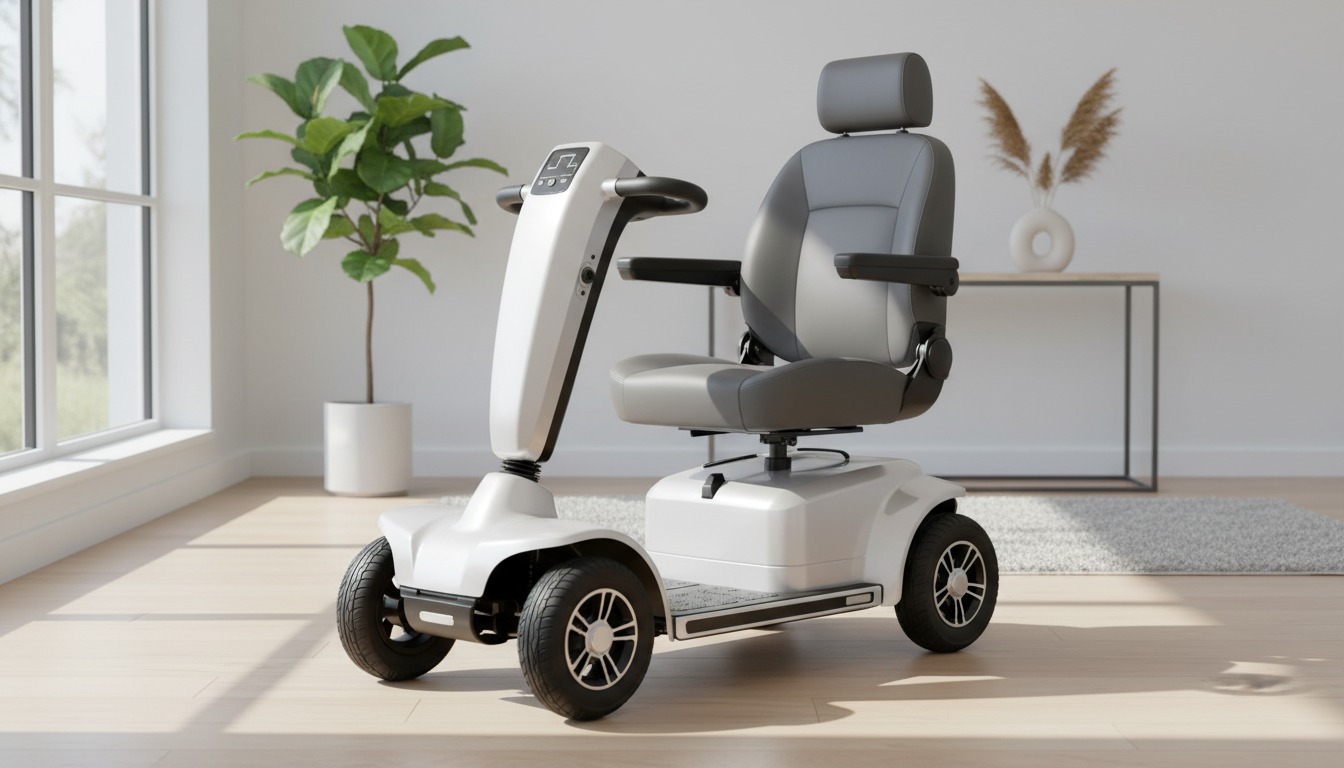
Mobility Scooters for Seniors: Safe, Independent Outdoor & Indoor Travel
Mobility scooters restore independence for seniors who struggle walking long distances. Whether you need a compact indoor model for navigating your home and local stores, a rugged outdoor scooter for neighborhood errands and social outings, or a lightweight folding design for travel, today's mobility scooters offer safe, comfortable transportation that keeps seniors active, engaged, and living life on their own terms.
What Makes Our Recommended Mobility Scooters Stand Out
Why Mobility Matters for Aging in Place
Walking limitations are the number one reason seniors reduce outdoor activity. When getting to the mailbox, grocery store, or a neighbor's house becomes painful or exhausting, seniors gradually withdraw from the routines that keep them physically and mentally healthy.
The consequences of reduced mobility are severe and well-documented. Social isolation increases the risk of depression by 50 percent in older adults. Muscle loss accelerates when walking decreases, creating a downward spiral where less activity leads to weaker muscles, which leads to even less activity. Cognitive decline, cardiovascular problems, and loss of independence follow closely behind.
A mobility scooter breaks this cycle. By restoring the ability to run errands, attend social outings, visit neighbors, and enjoy neighborhood walks, a scooter keeps seniors engaged with their community and physically active. For many families, a mobility scooter is the difference between a senior who thrives at home and one who gradually retreats into isolation. See our fall prevention guide for additional strategies to keep seniors safe and active.
Types of Mobility Scooters Explained
Choosing the right mobility scooter starts with understanding the five main categories, each designed for different needs and environments.
Travel and folding scooters are the lightest option, typically weighing 50 to 70 pounds. They fold or disassemble quickly for car trunks, cruise ships, and airline travel. FAA-approved models with lithium-ion batteries can fly. The trade-off is shorter battery range (8 to 12 miles) and lower weight capacities (250 to 300 pounds). These are ideal for seniors who travel frequently or need a scooter they can transport easily.
3-wheel scooters feature a single front wheel that delivers the tightest turning radius of any standard scooter design. They excel indoors, in narrow store aisles, and in apartments or smaller homes. The reduced stability compared to 4-wheel models means they are best on flat, even surfaces. If indoor maneuverability is your priority, you can compare 3-wheel and 4-wheel scooters in our detailed breakdown.
4-wheel scooters offer the best stability and are the safest choice for outdoor use, uneven terrain, grass, gravel, and inclines. Higher weight capacities (300 to 400 pounds) and longer battery ranges (15 to 25 miles) make them the most versatile option. For most seniors, a 4-wheel scooter is the recommended starting point.
Heavy-duty and bariatric scooters are built for riders weighing 400 to 500 pounds or more. They feature reinforced frames, wider seats, heavy-duty suspension, and powerful motors. Expect higher price points ($2,500 to $4,500) but exceptional durability and ride comfort.
Zero-turn scooters can rotate 360 degrees in their own footprint, requiring as little as 33 inches of turning space compared to 50 to 60 inches for standard models. They are ideal for tight apartments, narrow hallways, and crowded indoor environments. Learn more about zero turn models for tight spaces.
Key Features to Compare Before Buying
When evaluating mobility scooters, these eight features matter most for senior safety and satisfaction.
Turning radius determines where you can navigate. Indoor use demands a tight turning radius (33 to 42 inches). Outdoor-only scooters can have wider turns without issue.
Battery range varies from 8 miles on travel models to 25 miles on full-size scooters. Consider your typical daily distance and add a 25 percent buffer so you never run out mid-trip.
Weight capacity should exceed the rider's weight by at least 50 pounds to ensure safe, comfortable operation and long-term durability of the frame and motor.
Portability and folding matter if the scooter will be transported in a car, RV, or airplane. Check the folded dimensions against your trunk space and verify the heaviest single piece you will need to lift.
Suspension affects ride comfort dramatically, especially on uneven outdoor surfaces. Full suspension (front and rear) is standard on premium models and highly recommended for outdoor use.
Lighting is a safety essential. LED headlights and taillights improve visibility during early morning, evening, or overcast conditions. Reflectors and turn signals add another layer of protection.
Seat comfort includes padding thickness, adjustable height, swivel capability, and armrest width. Seniors who will ride for extended periods should prioritize a high-back padded captain's seat with lumbar support.
Speed settings on most scooters range from 4 to 8 mph. Adjustable speed dials let seniors start slow and increase as they gain confidence. Some models include a separate indoor speed limiter.
How Much Do Mobility Scooters Cost in 2026?
Mobility scooter prices vary significantly based on type, features, and build quality. Here is what to expect across the four main tiers.
| Scooter Type | Price Range | Best For | Typical Range (miles) |
|---|---|---|---|
| Travel / Folding | $600 - $1,200 | Air travel, car transport, light indoor use | 8 - 12 |
| Mid-Range 3-Wheel | $1,000 - $1,800 | Indoor use, tight spaces, apartments | 10 - 15 |
| Full-Size 4-Wheel | $1,500 - $3,000 | Outdoor use, errands, all-terrain | 15 - 25 |
| Heavy-Duty / Bariatric | $2,500 - $4,500 | Riders 400-500+ lbs, rugged terrain | 12 - 20 |
Prices reflect 2026 retail averages. Medicare and insurance coverage can significantly reduce out-of-pocket costs for qualifying seniors.
Our Top Mobility Scooter Picks for 2026
After evaluating dozens of models for safety, durability, comfort, and value, we recommend Vive Mobility as our top pick across three categories.
Vive Health 4-Wheel Mobility Scooter is our top overall pick. It delivers a 300-pound weight capacity, 15-mile battery range, LED headlights and taillights, full suspension, and a high-back padded seat. The 4-wheel platform provides excellent outdoor stability on grass, gravel, and inclines while remaining maneuverable enough for indoor shopping. Price: approximately $1,800.
Vive Health 3-Wheel Mobility Scooter is our pick for best 3-wheel model. The single front wheel delivers a tighter turning radius for navigating hallways, store aisles, and compact living spaces. It supports up to 250 pounds with a 12-mile range and includes the same LED lighting and comfortable seating as the 4-wheel version. Price: approximately $1,500.
Vive Health Folding Mobility Scooter is our best travel scooter. It is FAA-approved for airline travel, folds in seconds, and fits in most car trunks. The lithium-ion battery provides 10 miles of range and stays under the 300Wh limit for cabin carry. Price: approximately $1,200.
For a detailed brand comparison, we also evaluated these alternatives:
Segmart offers budget-friendly scooters in the $500 to $800 range. While the lower price is attractive, build quality, warranty coverage, and customer support do not match Vive. Segmart models may suit seniors on a tight budget who need basic transportation for light, occasional use.
Drive Medical Scout is a reliable mid-range option with a strong dealer network and readily available replacement parts. The Scout series has been a popular choice for years and offers solid value in the $1,200 to $1,800 range.
Pride Mobility Go-Go is an established brand with decades of reputation behind it. The Go-Go line covers travel, 3-wheel, and 4-wheel models with consistent quality and wide Medicare acceptance. Pricing is competitive with Vive across categories.
Medicare and Insurance Coverage
Understanding your coverage options can save thousands of dollars on a mobility scooter purchase.
Medicare Part B covers mobility scooters classified as durable medical equipment (DME) when your doctor certifies medical necessity. The standard cost split is 80/20: Medicare pays 80 percent and you pay 20 percent after meeting your annual Part B deductible.
To qualify, you must complete a face-to-face examination with your doctor who documents that you have a mobility limitation that significantly impairs your ability to participate in daily activities within your home. Your doctor must then provide a written prescription (also called a detailed written order) specifying a power-operated vehicle.
Medicaid coverage varies by state but many state Medicaid programs cover mobility scooters with prior authorization. Contact your state Medicaid office for specific eligibility requirements.
Veterans Affairs (VA) benefits may cover mobility scooters for eligible veterans through the VA's prosthetics and sensory aids program. Veterans should work with their VA healthcare team to explore this option.
Private insurance policies vary widely. Some cover mobility scooters as DME with a doctor's prescription, while others exclude them. Review your policy's DME section or contact your insurer directly.
Mobility Scooter vs Power Wheelchair
Choosing between a mobility scooter and a power wheelchair depends on your physical capabilities, primary use environment, and daily needs.
| Feature | Mobility Scooter | Power Wheelchair |
|---|---|---|
| Cost | $600 - $4,500 | $1,500 - $15,000+ |
| Portability | Many foldable/disassemble models | Heavy, limited portability |
| Indoor Use | Good (3-wheel/zero-turn best) | Excellent (compact turning) |
| Outdoor Use | Excellent (4-wheel models) | Good (limited on rough terrain) |
| Upper Body Requirement | Needs steering ability and transfer strength | Minimal upper body strength needed |
| Medicare Coverage | Covered as DME with prescription | Covered as DME with prescription |
Choose a mobility scooter if you have some upper body strength, can stand and transfer independently, and primarily need help covering distances. Scooters are also better for outdoor errands, travel, and social outings.
Choose a power wheelchair if you have limited upper body strength, cannot stand or transfer without assistance, or need to remain seated for extended periods throughout the day.
How to Choose the Right Scooter
Use this decision guide to narrow down the best scooter type for your situation.
If you primarily need indoor use in your home, apartment, or local stores, a 3-wheel scooter or zero-turn model gives you the maneuverability to navigate tight spaces, narrow doorways, and crowded aisles without frustration.
If you need outdoor and uneven terrain capability for neighborhood walks, park visits, grocery runs, or gravel and grass surfaces, a 4-wheel scooter with full suspension and larger wheels is the safest and most comfortable choice.
If you travel frequently by car, RV, cruise, or airplane, a folding travel scooter that disassembles quickly and fits in compact spaces is essential. For air travel, verify the model is FAA-approved with a lithium-ion battery under 300Wh.
If you weigh over 350 pounds, a heavy-duty or bariatric model with a reinforced frame, wider seat, and 400 to 500-pound capacity ensures safe operation and long-term durability.
If you live in a tight apartment or small home, a zero-turn scooter with a 33-inch turning radius lets you navigate hallways, kitchens, and bathrooms that would be impossible with a standard scooter.
Not sure which type is right? Contact our team for a free consultation. We help families evaluate their specific needs, home layout, and budget to recommend the best mobility solution.

Senior Home Safety Specialist at Home Instead Assisted Living. James has helped over 2,000 families find the right mobility and accessibility solutions for aging in place.
Common Questions About Mobility Scooters
How much does a mobility scooter cost?
Does Medicare cover mobility scooters?
Which is better, a 3-wheel or 4-wheel mobility scooter?
How far can a mobility scooter go on one charge?
Can I take a mobility scooter on an airplane?
What is a zero-turn mobility scooter?
Are mobility scooters safe for seniors?
How do I choose between a mobility scooter and a power wheelchair?
Need Help Choosing a Mobility Scooter?
Our mobility specialists help you compare scooter types, navigate Medicare coverage, and find the best model for your needs and budget. Get a free, no-obligation consultation today.
Get a Free Consultation