Walk-in Tub Alternatives 2026: 8 Safer, Cheaper Options for Senior Bathing
A practical guide to walk-in tub alternatives — from budget-friendly tub modifications and shower conversions to curbless showers and portable solutions, with honest cost comparisons and recommendations for every mobility level.

Why Seniors Are Looking Beyond Walk-in Tubs
Walk-in tubs are heavily marketed to seniors as the ultimate bathroom safety solution, but many families discover significant drawbacks that make them reconsider. If you have been researching walk-in tub alternatives, you are not alone — and you have more options than the TV commercials want you to believe.
The cost problem. Walk-in tubs typically cost $5,000 to $15,000 installed. For many families, this is a major investment that competes with other aging-in-place priorities. Several alternatives provide equal or better safety at a fraction of the cost, freeing up budget for other critical modifications like grab bars, non-slip flooring, and improved lighting.
The fill-and-drain problem. Walk-in tubs require the bather to sit inside the sealed tub while it fills (5 to 10 minutes) and wait inside while it drains (8 to 10 minutes with gravity drain, 2 to 3 minutes with a quick-drain pump). This means the senior sits on a cold seat waiting for warm water, then sits in cooling water waiting for it to drain — a total of 10 to 20 minutes of wait time added to every bath. For seniors with arthritis, poor circulation, or limited patience, this is a significant quality-of-life issue.
The accessibility limitation. Despite the name, walk-in tubs still have a step-in threshold of 3 to 7 inches and require the senior to navigate through a narrow door opening. For wheelchair users or seniors with severe mobility limitations, a walk-in tub is not truly accessible — a curbless shower is. And if the senior's mobility declines further in the future, the walk-in tub may become unusable while a curbless shower remains functional at every mobility level.
The resale concern. Walk-in tubs can be polarizing for home buyers. Some see them as a valuable feature; many see them as an unusual fixture that will need to be replaced. A well-designed walk-in shower, by contrast, is universally appealing and can actually increase home value. For more background on walk-in tubs themselves, visit our walk-in tubs resource page.
"A walk-in tub is one solution. But for most seniors, a well-designed walk-in shower is safer, more versatile, more affordable, and more future-proof."
Complete Walk-in Tub Alternatives Comparison
Here is a side-by-side view of every practical alternative, ranked from lowest to highest cost. Each option addresses the core safety concern — making bathing accessible for seniors — through a different approach.
| Alternative | Cost | Installation | Best For |
|---|---|---|---|
| Shower chair + handheld showerhead | $65–$250 | DIY, same day | Immediate safety, minimal budget |
| Tub transfer bench | $50–$250 | No installation | Eliminating step-over motion |
| Bath lift chair | $200–$600 | No installation | Seniors who want to soak in existing tub |
| Tub cut-out conversion | $500–$1,500 | Professional, 2–4 hours | Budget-friendly step-in access |
| Prefab walk-in shower kit | $2,000–$5,000 | Professional, 1–2 days | Fast tub-to-shower conversion |
| Custom curbless shower | $5,000–$10,000 | Professional, 3–5 days | Maximum accessibility, wheelchair access |
| Roll-in ADA shower | $6,000–$12,000 | Professional, 3–5 days | Full wheelchair accessibility |
| Portable shower system | $2,000–$5,000 | No installation | Renters, temporary needs, non-ambulatory |
Budget-Friendly Alternatives Under $500
The most cost-effective walk-in tub alternatives require no construction and can be implemented the same day you purchase them. These solutions work within your existing bathtub and are ideal as immediate safety improvements or as a bridge while planning a larger renovation.
Shower chair plus handheld showerhead ($65 to $250 total). This combination is the simplest and most widely recommended walk-in tub alternative. A sturdy shower chair (look for one rated for at least 300 pounds with non-slip feet, a backrest, and armrests) placed inside the tub allows the senior to bathe seated. A handheld showerhead on an adjustable slide bar replaces the fixed overhead spray, allowing thorough washing while seated. Combined cost: $40 to $150 for the chair plus $25 to $100 for the handheld showerhead. Install the showerhead yourself in 10 minutes by unscrewing the old one and attaching the new mount.
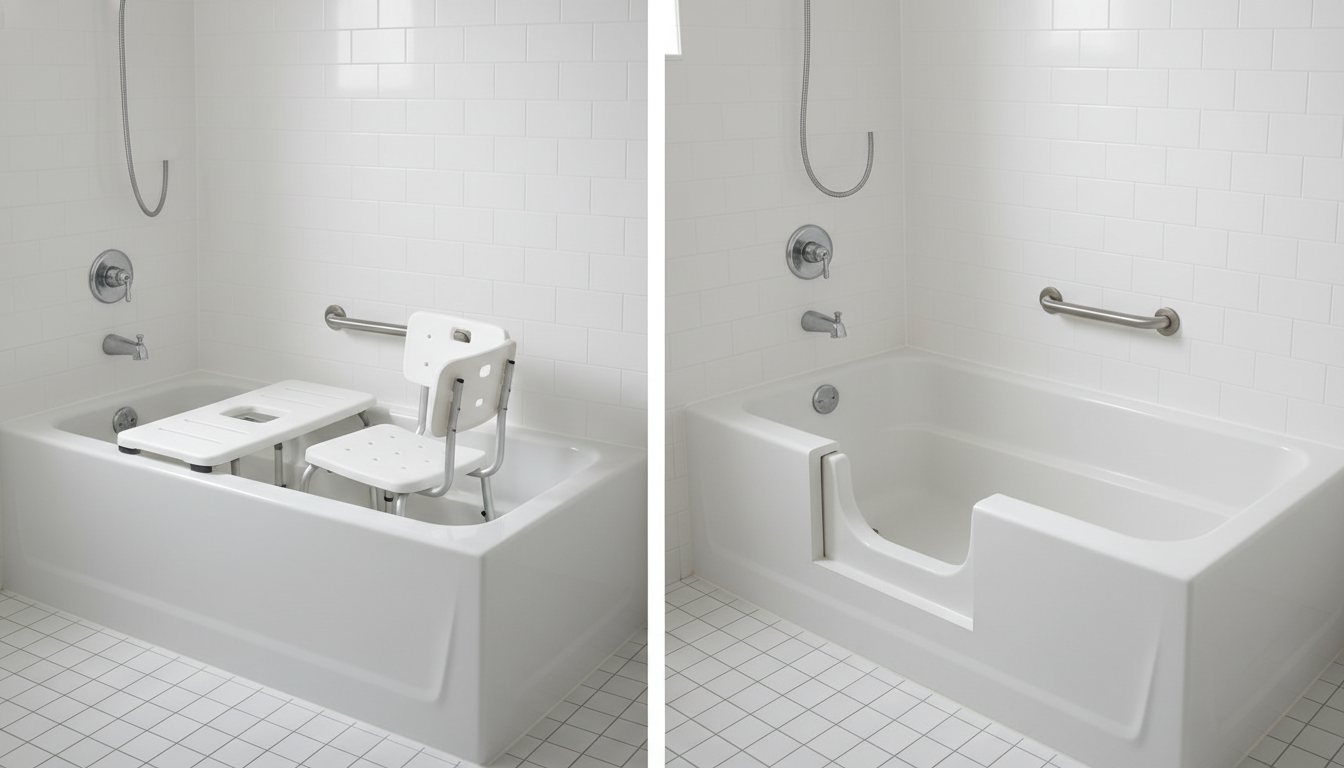
Tub transfer bench ($50 to $250). A transfer bench spans the tub wall with two legs inside the tub and two outside. The senior sits on the bench outside the tub and slides across into the bathing position — completely eliminating the dangerous step-over motion that walk-in tubs are designed to address. Premium models feature a sliding seat on rails for effortless transfer, a backrest, and armrests. This is the solution occupational therapists most frequently recommend for seniors who cannot safely step over a tub wall. Medicare Part B covers transfer benches when prescribed by a physician and supplied by a Medicare-enrolled DME provider.
Bath lift chair ($200 to $600). A battery-powered seat that lowers the bather from the tub rim down into the water and raises them back up. The senior sits on the lift at tub rim level, presses a button to descend to the bottom of the tub, bathes, then presses a button to rise back up. Unlike a walk-in tub, there is no fill-and-drain wait time — the tub is filled before the senior gets in and drained after they get out. Models like the Bathmaster Deltis and Aquatec Orca are rechargeable and require no plumbing or electrical modifications. Some Medicare Advantage plans cover bath lifts as durable medical equipment.
The Tub Cut-Out: Best Value Alternative
A tub cut-out (also called a step-through conversion) is our top recommendation for the best value walk-in tub alternative. A section of the tub wall — typically 8 to 12 inches wide — is cut away and replaced with a watertight insert that creates a step-in height of just 3 to 5 inches, compared to the original 14 to 16 inches.
Companies like CleanCut and TubcuT specialize in this modification. The process takes 2 to 4 hours, costs $500 to $1,500, preserves the existing plumbing and tile work, and does not require the major construction that a full tub replacement demands. A removable dam or door can be added to the opening, allowing the tub to still hold water for soaking when desired.
The tub cut-out combined with a shower chair, handheld showerhead, and grab bars creates a functional step-in shower at approximately $800 to $2,000 total — compared to $5,000 to $15,000 for a walk-in tub. For a detailed guide on this and other bathtub modifications, see our tub modifications for elderly article.
Tub-to-Shower Conversion: The Most Popular Alternative
A tub-to-shower conversion removes the existing bathtub entirely and replaces it with a walk-in shower. This is the modification most frequently recommended by occupational therapists and aging-in-place specialists because it eliminates the tub entirely — removing the step-over hazard, the slippery tub floor, and the need to lower oneself to floor level.
Prefabricated shower kits ($2,000 to $5,000 installed) are the fastest and most affordable approach. Companies like Bath Fitter, Re-Bath, and local contractors install a pre-formed shower base and wall panels in the space where the bathtub was. Most conversions take 1 to 2 days. The result is a low-threshold shower (typically 2 to 4 inch curb) with a clean, modern appearance.
Custom tile tub-to-shower conversions ($5,000 to $10,000) offer more design flexibility and the option of a true curbless (zero-threshold) entry. Custom tile allows you to choose materials, colors, and patterns that match your bathroom aesthetic. A linear drain along one wall handles water containment in a curbless design. This is the premium approach that delivers both maximum accessibility and the highest aesthetic value. Our bathroom remodel for elderly guide covers the full renovation planning process.
Every tub-to-shower conversion for seniors should include these essential safety features: a built-in or fold-down bench seat, a handheld showerhead on an adjustable slide bar, grab bars at standing and seated heights, anti-scald temperature controls, and non-slip flooring inside and immediately outside the shower. For detailed shower design guidance, see our shower stall for elderly guide.
The Curbless Shower: The Gold Standard
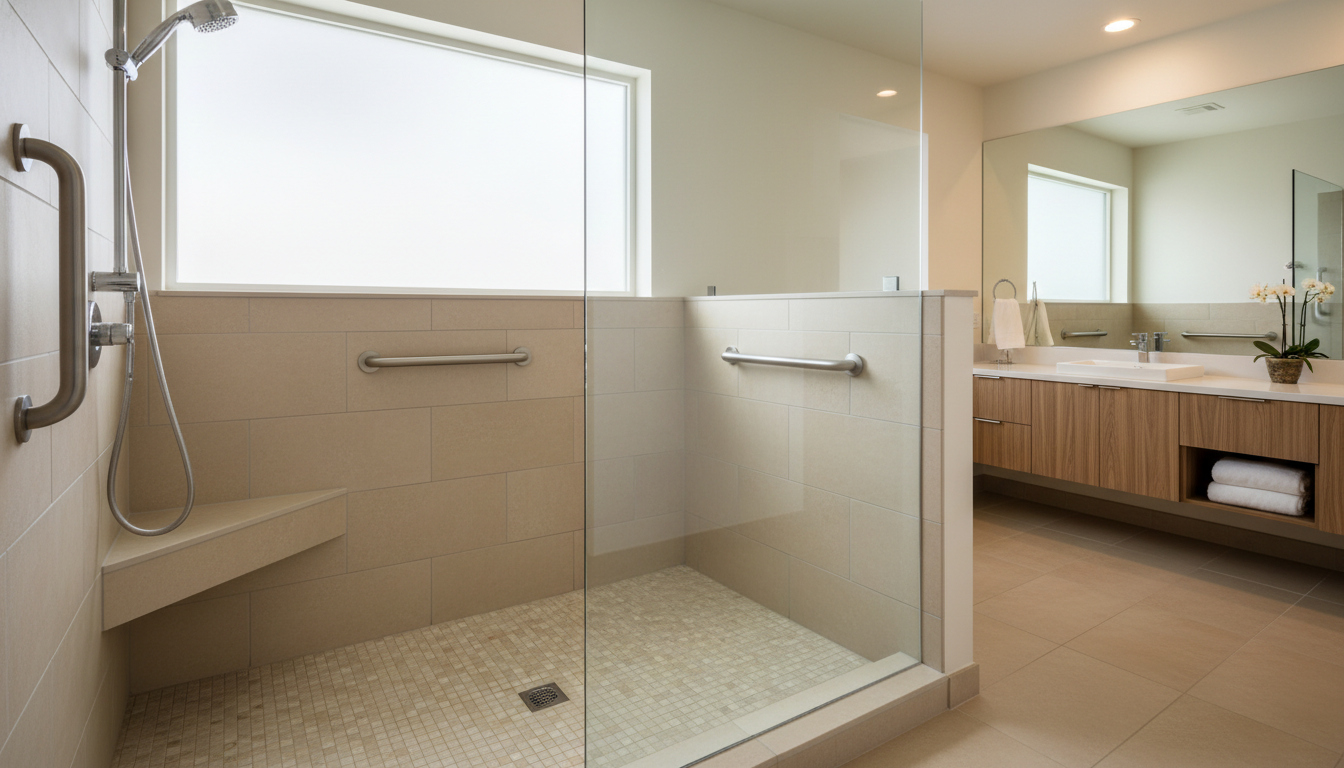
A curbless shower (also called a zero-threshold or barrier-free shower) is the most accessible bathing solution available and the gold standard walk-in tub alternative for long-term aging in place. The shower floor is flush with the bathroom floor, with a gentle slope toward the drain — eliminating any step, curb, or barrier to entry.
Why it is the best long-term investment: A curbless shower works for every mobility level. Whether the senior walks independently today, uses a walker next year, or transitions to a wheelchair in the future, the curbless shower accommodates them without modification. This future-proofing means you invest once and never need to modify the bathing area again — unlike a walk-in tub that may become unusable if the senior can no longer navigate the door and threshold.
Design considerations: The shower floor must slope at precisely 1/4 inch per foot toward the drain to contain water without creating a tripping hazard. A linear drain along one wall is the preferred approach for curbless designs because it creates a single slope in one direction (easier to build and walk on) rather than the compound slopes required by a center drain. The shower area should be at least 36 x 36 inches for ambulatory users and 60 x 30 inches for wheelchair accessibility.
Cost and installation: A custom curbless shower costs $5,000 to $10,000 depending on size, tile selection, and fixture quality. Installation requires modifying the subfloor to create the drainage slope, which adds complexity compared to a standard shower installation. A skilled contractor with experience in accessible bathroom design is essential — improper drainage slope is the most common failure point. For comprehensive design guidance, see our bathroom design for aging in place article.
Roll-in ADA Shower: Full Wheelchair Accessibility
A roll-in shower is a curbless shower specifically designed to accommodate wheelchair entry. It is the most accessible bathing option available and is the standard specified by the ADA for commercial and public facilities. For home use, a roll-in shower is the right choice when the senior currently uses or is likely to use a wheelchair.
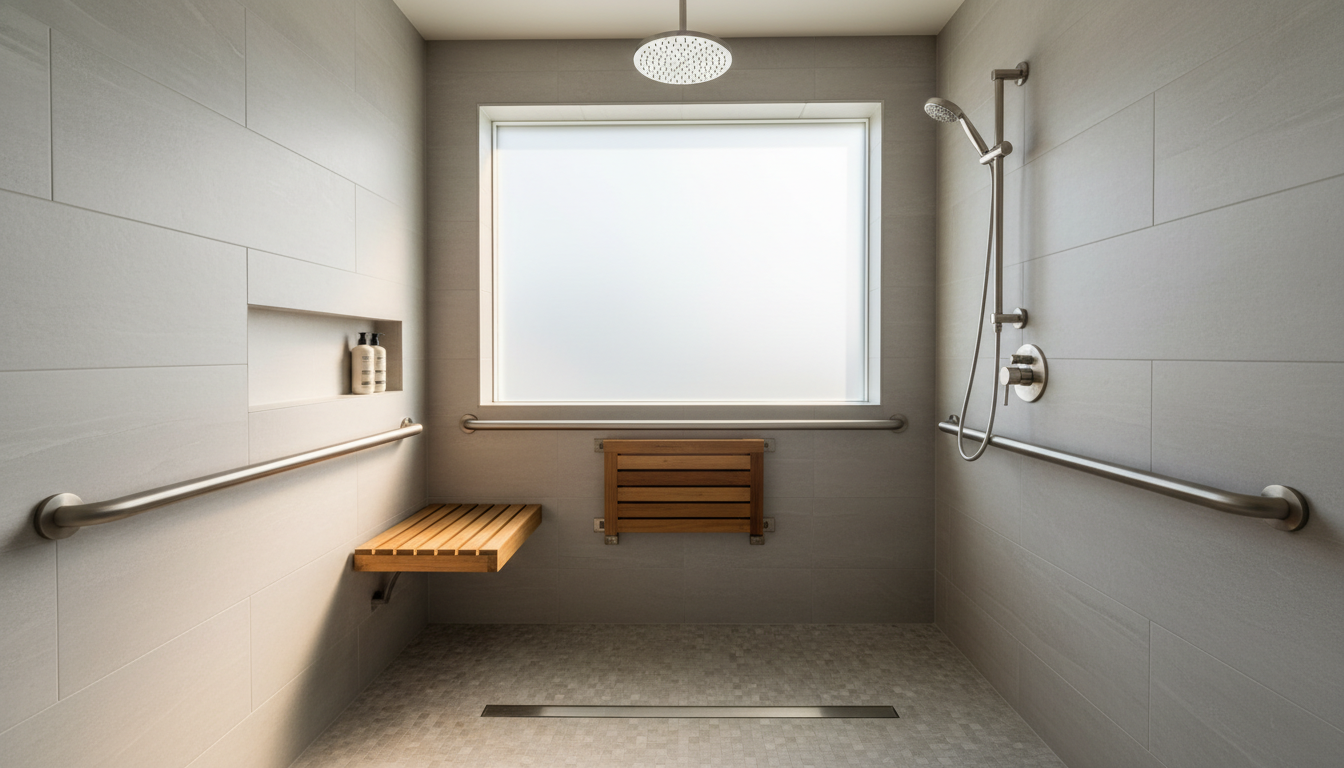
ADA specifications for roll-in showers: The minimum size is 60 x 30 inches (transfer type) or 60 x 36 inches (roll-in type). A fold-down seat mounted at 17 to 19 inches from the floor provides a seated bathing option. Grab bars are required on the back wall and at least one side wall. The showerhead must be a handheld type on an adjustable slide bar (48 to maximum height range). Controls must be mounted on an accessible wall at a maximum of 48 inches from the floor.
For home installations, we recommend exceeding the ADA minimums: a 60 x 36 inch or larger shower provides more maneuvering room, a teak fold-down bench is more comfortable and attractive than a molded plastic seat, and dual grab bar locations (standing and seated height) accommodate changing mobility. A roll-in shower costs $6,000 to $12,000 installed, compared to $5,000 to $15,000 for a walk-in tub that does not accommodate wheelchairs at all. Visit our bathroom accessibility resource for comprehensive wheelchair-accessible design guidance.
Portable Shower Solutions: No Construction Required
For seniors who cannot modify their bathroom — renters, those in temporary living situations, or those awaiting a major renovation — portable shower systems provide accessible bathing without any construction.
Portable shower chairs with wheeled commodes ($150 to $500) are rolling chairs that can be positioned over a toilet and wheeled into a shower or tub area. The caregiver rolls the senior into the bathing area and uses a handheld showerhead to bathe them. This is the most common solution for non-ambulatory seniors living in homes that have not been modified.
Shower Bay portable shower ($2,500 to $4,500) is a self-contained portable shower unit that connects to a standard faucet and drains into a toilet or tub. The senior rolls in on a shower wheelchair, and the unit provides a fully enclosed shower experience. It requires no plumbing modifications, no construction, and can be moved between rooms or residences. This is an excellent solution for apartment dwellers and renters.
Inflatable bath tubs ($40 to $150) are bed-level bathing systems for seniors who are bedridden or unable to transfer to a bathroom. The inflatable tub is placed on the bed, the senior is positioned inside, and warm water is added via a hose. While not a luxury experience, these systems provide dignified full-body bathing for the most mobility-limited seniors. They are commonly used by home health aides for patients receiving home-based care.
How to Choose the Right Alternative for Your Situation
The best walk-in tub alternative depends on four factors: the senior's current mobility level, anticipated future mobility changes, available budget, and whether the home is owned or rented. Here is our decision framework.
If the senior walks independently but has balance concerns: Start with a shower chair, handheld showerhead, and grab bars ($100 to $300 total). This provides immediate safety and may be sufficient for years. If a larger modification is desired, a tub-to-shower conversion ($3,000 to $5,000) is the most popular choice.
If the senior uses a walker or has significant mobility limitations: A tub cut-out ($500 to $1,500) combined with grab bars and a shower chair provides step-in access at minimal cost. For a more permanent solution, a curbless shower ($5,000 to $10,000) eliminates all barriers and accommodates future wheelchair use.
If the senior uses a wheelchair: A roll-in ADA shower ($6,000 to $12,000) is the only option that provides true wheelchair-level accessibility. A curbless shower with adequate dimensions (60 x 36 inches minimum) can also work if properly designed. Walk-in tubs are not appropriate for wheelchair users.
If the senior rents or cannot modify the bathroom: Portable solutions are the path forward. A transfer bench ($50 to $200), shower chair ($40 to $150), and handheld showerhead ($25 to $100) can be used in any bathroom without permanent modification. For a comprehensive solution, a Shower Bay portable shower ($2,500 to $4,500) provides accessible bathing anywhere. See our bath solutions for elderly guide for additional portable options.
Safety Features Every Alternative Needs
Regardless of which walk-in tub alternative you choose, certain safety features should be included to provide comprehensive bathing protection. Skipping these features undermines the safety value of the primary modification.
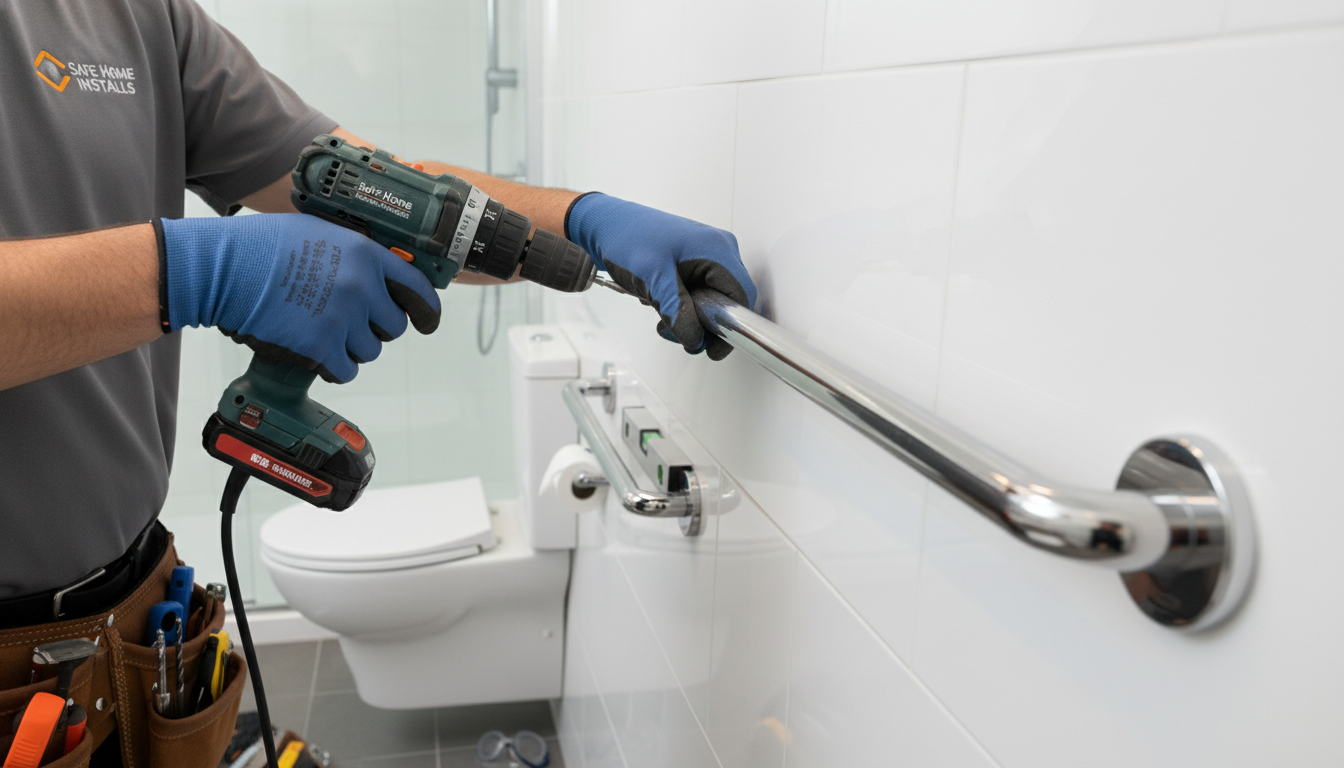
Grab bars are non-negotiable. Install them at the shower entrance, on the long wall at standing height (33 to 36 inches), at seated height if a bench is used, and on the wall nearest the transition to the bathroom floor. Our grab bar installation guide covers proper placement, mounting techniques, and product recommendations for every wall type.
Non-slip surfaces inside and immediately outside the shower area prevent the falls that the primary modification is designed to avoid. Use textured tile, non-slip adhesive strips, or a non-slip bath mat inside the shower. Replace smooth bathroom flooring outside the shower with slip-resistant material. See our non-slip bathroom flooring guide for material comparisons and COF ratings.
Anti-scald temperature controls prevent burns from sudden hot water surges. Pressure-balanced or thermostatic mixing valves limit the maximum water temperature regardless of pressure fluctuations. This is especially important for seniors with neuropathy, diabetes, or thin skin that burns more easily. Most plumbing codes now require anti-scald valves in new installations.
Adequate lighting ensures the senior can see surfaces, controls, and potential hazards clearly. Install a bright, moisture-rated LED fixture in the shower area and a night light or motion-activated light for nighttime bathroom visits. Aging eyes need two to three times more light than younger eyes — dim bathroom lighting is a major fall risk factor. For a holistic approach to senior bathroom design, see our bathroom for senior citizens guide.
Cost and Financial Assistance for Walk-in Tub Alternatives
One of the biggest advantages of walk-in tub alternatives is the range of price points available. Here is what to expect and where to find financial help.
Medicare coverage applies to certain portable bathing aids classified as durable medical equipment (DME). Medicare Part B covers shower chairs, transfer benches, and some bath lifts at 80% of the approved amount when prescribed by a physician and supplied by a Medicare-enrolled DME provider. Medicare does not cover walk-in tubs, shower conversions, tub cut-outs, or grab bar installation under traditional plans. Some Medicare Advantage plans include home modification benefits.
Medicaid HCBS waivers cover bathroom modifications including tub-to-shower conversions, grab bars, and other accessibility improvements in most states for qualifying individuals. Coverage limits vary by state but often range from $5,000 to $10,000 for home modifications. Contact your state Medicaid office for specific program details.
VA benefits including the HISA grant ($6,800 for service-connected disabilities) and the Specially Adapted Housing grant cover bathroom modifications for qualifying veterans. The VA also provides DME including shower chairs and transfer benches through the prosthetics department. For a complete overview of all financial assistance programs, see our aging in place services guide.
Nonprofit programs like Rebuilding Together provide free home modifications including bathroom safety upgrades for income-qualifying seniors. Many Area Agencies on Aging coordinate local grant programs and volunteer installation services for grab bars and other safety equipment. The Eldercare Locator (1-800-677-1116) can help identify programs in your area.
Frequently Asked Questions
What is the cheapest alternative to a walk-in tub?
A shower chair ($40 to $150) combined with a handheld showerhead ($25 to $100) and grab bars ($25 to $80 each) is the most affordable alternative, totaling $100 to $400. This combination provides seated bathing, easy water control, and secure handholds — addressing the same safety concerns as a walk-in tub at a fraction of the cost. A tub transfer bench ($50 to $200) is another excellent low-cost option.
Is a walk-in shower better than a walk-in tub?
For most seniors, yes. A walk-in shower is faster to use (no fill/drain wait), more accessible (especially curbless designs), easier for caregivers to assist with, more future-proof (accommodates declining mobility), and has better resale value. Walk-in tubs are better only for seniors who specifically want to soak in warm water and are willing to accept the fill/drain time and higher cost.
What are the problems with walk-in tubs?
Common complaints include the fill-and-drain wait time (10 to 20 minutes per bath), cold seat while waiting for water, high cost ($5,000 to $15,000), door seals that can leak over time, limited accessibility for wheelchair users, bulky size in small bathrooms, potential resale value concerns, and the need for a larger water heater to fill the 50 to 80 gallon capacity.
How much does a tub-to-shower conversion cost?
A prefabricated shower kit conversion costs $2,000 to $5,000 installed. A custom tile conversion costs $5,000 to $10,000. A curbless (zero-threshold) design is at the upper end of these ranges due to the subfloor modification required. Most conversions take 1 to 3 days to complete.
Does Medicare pay for shower chairs or walk-in showers?
Medicare Part B covers shower chairs, transfer benches, and some bath lifts as durable medical equipment when prescribed by a physician. Medicare does not cover walk-in showers, tub-to-shower conversions, or walk-in tubs under traditional plans. Some Medicare Advantage plans include home modification benefits that may cover shower conversions.
What is a tub cut-out and is it worth it?
A tub cut-out lowers a section of the bathtub wall from 14–16 inches to 3–5 inches, creating step-in access without replacing the entire tub. At $500 to $1,500, it is the most affordable structural modification available and is ideal for budget-conscious families or renters with landlord permission. When combined with grab bars and a shower chair, it provides safety comparable to much more expensive options.
Can I convert my bathtub to a walk-in shower myself?
The conversion itself requires professional plumbing and waterproofing skills. However, you can DIY several components: installing a handheld showerhead, adding a shower chair, placing non-slip mats, and installing grab bars into wall studs. For the structural conversion, hire a licensed contractor experienced in accessible bathroom design to ensure proper waterproofing and drainage.
Margaret Chen
Certified Aging-in-Place Specialist & Senior Care Advisor
Margaret is a CAPS-certified senior care advisor with over 15 years of experience helping families navigate the complexities of aging at home. She specializes in home safety assessments, bathroom accessibility, and connecting families with trusted local contractors and care services. Her work has helped hundreds of seniors maintain independence in the homes they love.

Find the Right Bathing Solution for Your Parent
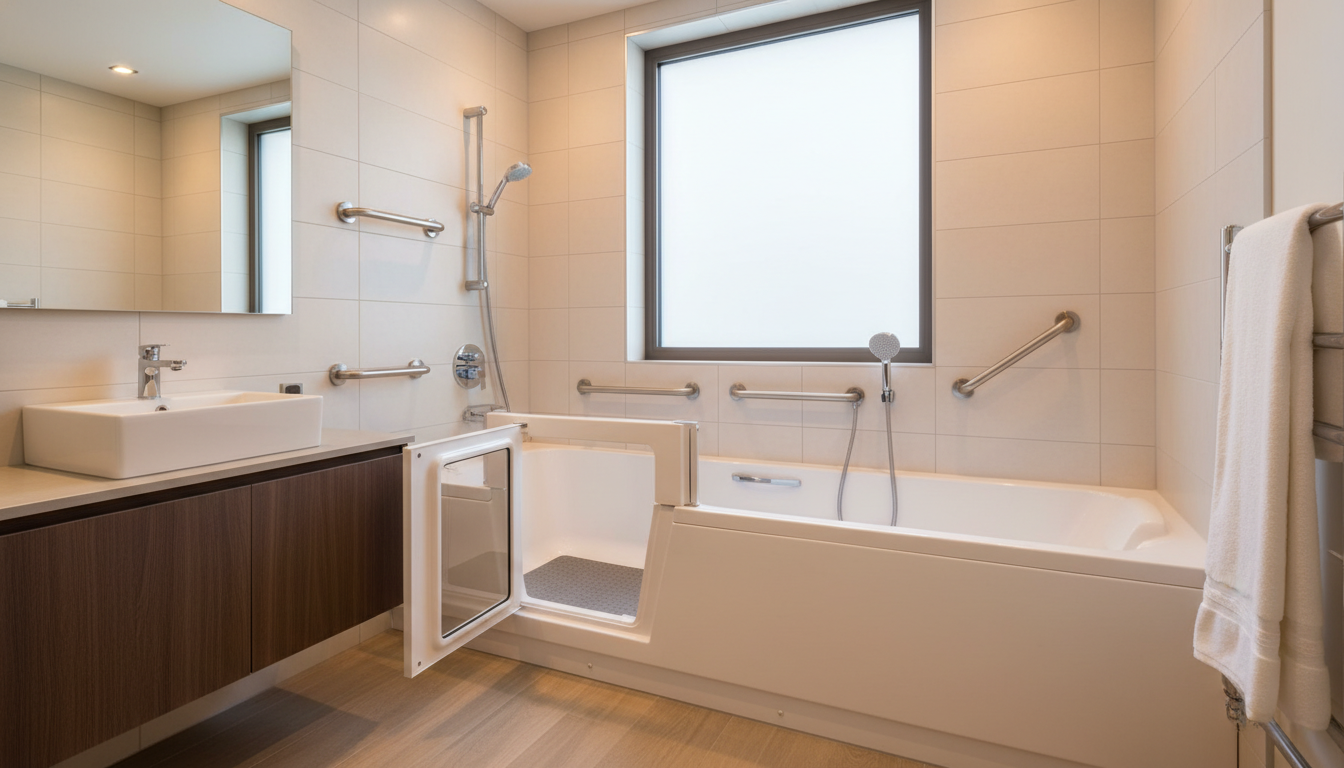
Our team can help you evaluate walk-in tub alternatives and connect you with CAPS-certified contractors. Get a free home safety assessment and personalized recommendation.
Get a Free Assessment