Bathroom Remodel for Elderly: Complete Aging-in-Place Renovation Guide 2026
Everything you need to know about remodeling a bathroom for elderly safety, from walk-in showers and grab bars to ADA-compliant fixtures, universal design principles, cost breakdowns, and financing options.

Why a Bathroom Remodel Is the Most Important Aging-in-Place Investment
The bathroom is responsible for more senior injuries than any other room in the home. According to the CDC, approximately 235,000 Americans over age 65 visit emergency rooms annually due to bathroom-related falls and injuries. For families weighing the decision between a bathroom remodel for elderly parents and eventually moving to assisted living, the numbers tell a compelling story: a comprehensive bathroom renovation typically costs $8,000 to $25,000, while the average annual cost of assisted living in the United States exceeds $54,000.
We have guided hundreds of families through aging in place bathroom modifications, and the bathroom is consistently where we recommend starting. Unlike kitchen or bedroom modifications that improve comfort, bathroom changes directly prevent the injuries most likely to end independent living. A single hip fracture from a bathroom fall can cost over $30,000 in medical expenses and often triggers the transition to a care facility that the senior was trying to avoid.
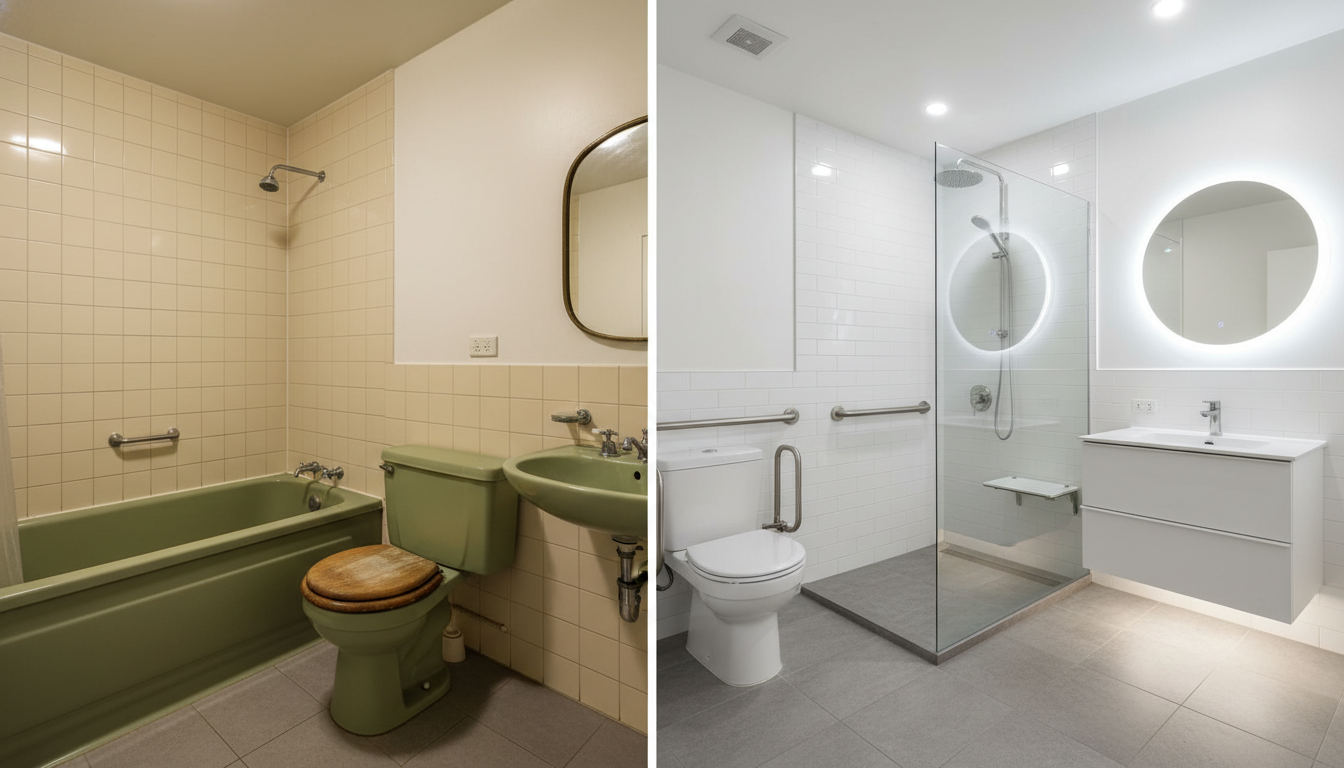
The good news is that bathroom remodeling for elderly safety has evolved dramatically. Modern universal design bathroom principles create spaces that are both beautiful and safe. You no longer have to choose between a bathroom that looks institutional and one that protects your loved one. Today's accessible fixtures, finishes, and layouts blend seamlessly with contemporary design aesthetics.
Key Fact: A study published in the Journal of the American Geriatrics Society found that home modifications, particularly bathroom modifications, reduced the rate of falls among older adults by 26% and reduced the rate of fall-related injuries by 33%. The bathroom remodel pays for itself in prevented medical costs within the first few years.
Essential Safety Features Every Elderly Bathroom Needs
Before diving into specific products and design decisions, let us establish the non-negotiable bathroom safety features that should be part of any elderly bathroom remodel. These are the elements that our Certified Aging-in-Place Specialists consider mandatory regardless of budget or aesthetic preferences.
Grab Bars: The Foundation of Bathroom Safety
Grab bars are the single most effective safety device in any bathroom. They provide stable support during the most vulnerable moments: getting in and out of the shower, rising from the toilet, and transitioning between standing and sitting. The key is proper placement and installation.
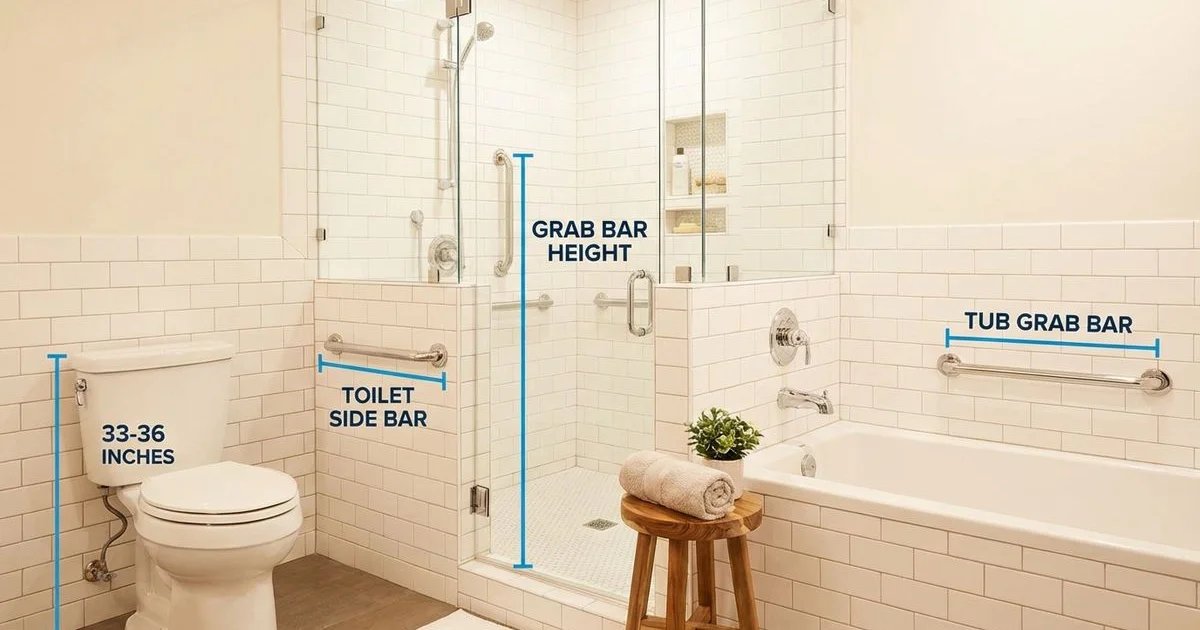
We recommend a minimum of five grab bar locations in a remodeled elderly bathroom:
- Shower entry: A vertical bar at 33–36 inches from the shower floor, positioned at the entrance point
- Shower interior (horizontal): A 24-inch horizontal bar at 33–36 inches height on the longest shower wall
- Shower interior (vertical): A vertical bar near the shower controls for support while adjusting water
- Toilet area: A 36-inch horizontal bar on the wall beside the toilet, centered at 33–36 inches height, plus a swing-up bar on the open side
- Vanity area: A horizontal bar near the sink for support while standing at the mirror
For detailed placement guidance and installation instructions, see our complete grab bar installation guide. The critical requirement is that grab bars must be anchored into wall studs or mounted with proper blocking behind the drywall. Grab bars installed only into drywall or tile will fail catastrophically when loaded, which is worse than having no grab bar at all.
Walk-in Shower vs. Walk-in Tub
The choice between a walk-in shower for seniors and a walk-in tub is one of the biggest decisions in any elderly bathroom remodel. Both eliminate the dangerous step-over required by traditional bathtubs, but they serve different needs and come with very different price tags.
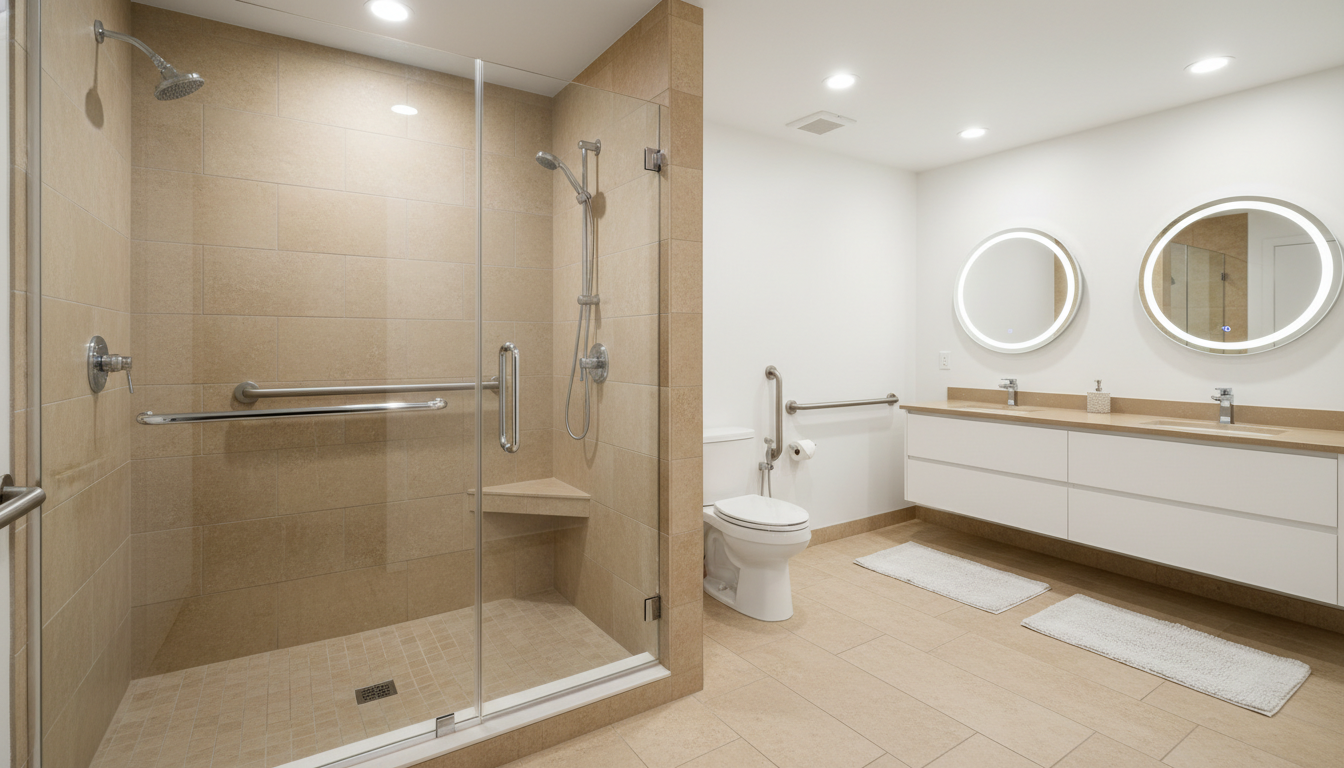
A curbless shower (also called a barrier-free shower or roll-in shower) is our recommended choice for most seniors. The zero-threshold entry eliminates all tripping hazards and accommodates wheelchairs and walkers. A properly designed curbless shower includes a slight floor slope toward the drain, non-slip flooring, a built-in shower bench, and multiple grab bars.
Walk-in tubs have their place, particularly for seniors who enjoy soaking baths or who benefit from hydrotherapy. However, they have significant drawbacks: the user must sit inside the tub while it fills and drains (which can take 10–15 minutes), they are expensive ($5,000–$15,000 installed), and they consume more water per use. Brands like Kohler and Safe Step dominate this market.
| Feature | Walk-in Shower (Curbless) | Walk-in Tub |
|---|---|---|
| Installed Cost | $3,000–$8,000 | $5,000–$15,000 |
| Entry Barrier | Zero threshold | 3–7 inch step-in |
| Wheelchair Accessible | Yes (roll-in design) | No |
| Wait Time | Immediate use | 10–15 min fill/drain |
| Hydrotherapy | With body spray upgrade | Built-in jets available |
| Space Required | 30×60 inches minimum | 30×52 inches minimum |
| Resale Value Impact | Positive (universal appeal) | Mixed (niche appeal) |
| Best For | Most seniors, wheelchair users | Soaking bath lovers, arthritis |
For a deeper cost analysis, see our walk-in tub cost guide and walk-in tub vs. roll-in shower comparison.
Comfort Height Toilet and Toilet Safety
A comfort height toilet sits 17 to 19 inches from floor to seat, compared to the standard 15 inches. Those extra 2 to 4 inches make an enormous difference for seniors with knee problems, hip replacements, or general mobility limitations. Rising from a standard-height toilet is one of the most physically demanding daily activities for older adults.
We recommend ADA-compliant comfort height toilets as a standard part of any elderly bathroom remodel. If replacing the toilet is not in the budget, a raised toilet seat can be added to an existing toilet for $30 to $80. For seniors who need additional support, a toilet safety frame provides armrests on both sides of the toilet, making it easier to lower down and push back up. For detailed comparisons, see our raised toilet seat vs. comfort height toilet guide.
Non-Slip Flooring
Slip-resistant flooring is the foundation of any safe elderly bathroom. The floor is the surface your loved one interacts with every time they enter the room, and when it is wet, it becomes the primary fall hazard. We recommend flooring with a DCOF (Dynamic Coefficient of Friction) rating of 0.60 or higher for bathroom applications.
The best options include textured porcelain tile, luxury vinyl plank (LVP), and rubber flooring. Each material offers different advantages in terms of slip resistance, comfort, cost, and aesthetics. For a comprehensive breakdown of every option, see our dedicated non-slip bathroom flooring guide.
Lighting, Faucets, and Supporting Features
Motion-activated lighting is one of the most underrated safety features in an elderly bathroom. Many bathroom falls happen during nighttime trips when seniors fumble for light switches in the dark. Motion-sensor night lights in the bathroom and hallway provide automatic illumination without the need to find a switch. We recommend warm-toned LED lights (2700K–3000K) to avoid the harsh glare that can temporarily impair vision.
Lever-style faucets replace traditional round knobs that can be difficult for seniors with arthritis, reduced grip strength, or tremors. Single-lever designs allow water temperature and flow to be controlled with one hand, reducing the time spent standing at the sink. Anti-scald faucets (also called thermostatic mixing valves) are essential safety additions that prevent water temperature from exceeding a safe threshold, typically 120°F. Burns from scalding water are a common injury among seniors with reduced temperature sensitivity.
A handheld shower head on an adjustable slide bar provides flexibility for both standing and seated showering. This simple $50–$150 upgrade eliminates the need to contort the body to rinse, which is a common cause of shower falls. For seniors with arthritis, look for models with easy-grip controls that do not require twisting or squeezing.
Universal Design Principles for Aging-in-Place Bathrooms
Universal design is the approach of creating spaces that work for people of all ages and abilities without requiring specialized adaptation. When applied to bathroom remodeling, universal design creates a space that is safe for an elderly parent today, functional for visiting grandchildren, and attractive to future homebuyers if you ever sell.
The seven principles of universal design, as applied to bathrooms, translate into these specific guidelines:
- Equitable use: A curbless shower works for everyone — wheelchair users, small children, able-bodied adults, and seniors with walkers
- Flexibility in use: An adjustable-height handheld shower head accommodates standing adults and seated users
- Simple and intuitive: Lever faucets and clear hot/cold markings require no learning curve
- Perceptible information: Contrasting floor colors at transitions and adequate lighting ensure visibility
- Tolerance for error: Anti-scald valves and rounded countertop edges reduce injury from mistakes
- Low physical effort: Comfort-height toilets and grab bars reduce the strength required for daily activities
- Size and space for approach: A minimum 60-inch turning radius for wheelchairs and clear floor space at every fixture
The beauty of universal design is that it does not look clinical or institutional. A curbless shower with frameless glass, matte porcelain tile, and brushed nickel grab bars looks like a high-end spa, not a hospital room. This matters both for the senior's dignity and self-image and for the home's resale value.
ADA Requirements and Accessibility Standards
While ADA bathroom requirements technically apply only to public and commercial spaces, they provide an excellent framework for residential elderly bathroom remodels. Meeting ADA standards ensures that the bathroom will accommodate the widest range of mobility challenges, including wheelchair use, and may be required if you are building an accessory dwelling unit or renting part of your home.
Key ADA-inspired measurements for a handicap accessible bathroom remodel:
- Clear floor space: Minimum 30×48 inches in front of each fixture (toilet, sink, shower)
- Doorway width: Minimum 32 inches clear (36 inches preferred). Consider a pocket door or barn door to eliminate the door swing that blocks floor space
- Turning radius: 60-inch diameter clear space for wheelchair turning. T-shaped turns can reduce this to a 36×60 inch space
- Toilet height: 17–19 inches from floor to top of seat
- Grab bar height: 33–36 inches above finished floor
- Shower threshold: Maximum 1/2 inch (0 inches preferred for curbless)
- Shower seat: 17–19 inches above the shower floor, supporting at least 250 pounds
- Sink clearance: 27 inches knee clearance underneath for wheelchair approach
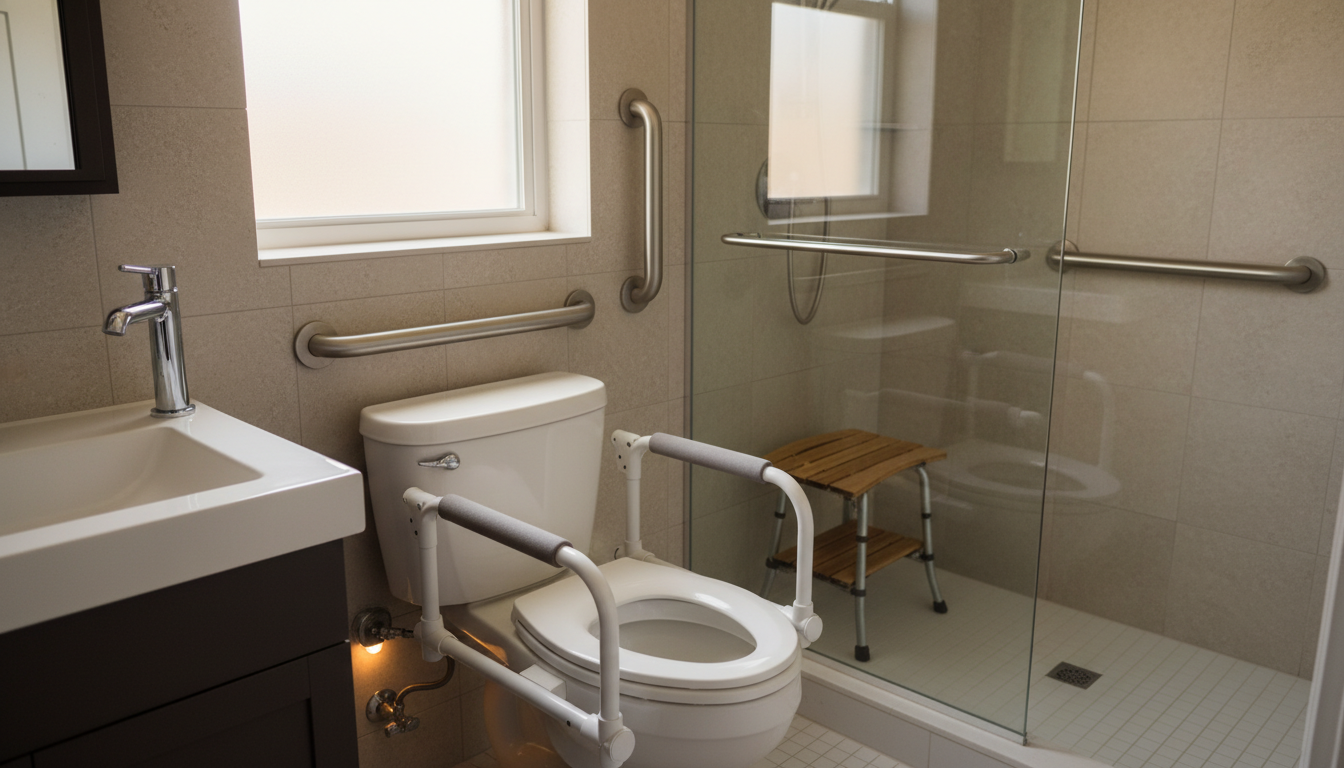
For families planning ahead, we recommend installing blocking (reinforced wood behind drywall) at grab bar locations throughout the bathroom even if you are not installing grab bars immediately. This costs virtually nothing during a remodel but saves hundreds of dollars and significant disruption if grab bars are needed later.
Bathroom Remodel Cost Breakdown for Elderly
Understanding the aging in place bathroom cost requires breaking the project into its component parts. Most families are pleasantly surprised to learn that a safety-focused remodel does not have to mean gutting the entire bathroom. Strategic upgrades to the highest-risk areas can dramatically improve safety at a fraction of the cost of a full renovation.
| Project Component | Budget Range | Mid-Range | Premium |
|---|---|---|---|
| Curbless walk-in shower | $3,000–$4,500 | $5,000–$8,000 | $8,000–$15,000 |
| Walk-in tub | $2,500–$5,000 | $5,000–$9,000 | $9,000–$15,000 |
| Grab bars (5 locations) | $250–$500 | $500–$1,000 | $1,000–$2,000 |
| Comfort height toilet | $200–$400 | $400–$800 | $800–$1,500 |
| Non-slip flooring (40 sq ft) | $150–$300 | $300–$600 | $600–$1,200 |
| Lever faucets + anti-scald | $150–$300 | $300–$600 | $600–$1,200 |
| Handheld shower + slide bar | $50–$150 | $150–$350 | $350–$600 |
| Motion-activated lighting | $50–$150 | $150–$400 | $400–$800 |
| Wider doorway | $300–$600 | $600–$1,200 | $1,200–$2,500 |
| Total (with walk-in shower) | $4,150–$6,900 | $7,000–$13,000 | $13,000–$25,000 |
These costs assume hiring a licensed contractor. DIY installation can reduce costs by 30–50% for simpler tasks like replacing a toilet or installing a handheld shower head, but we recommend professional installation for structural work like curbless shower construction, grab bar mounting, and flooring.
Financing Options and Financial Assistance
Bathroom remodel financing for seniors is more accessible than many families realize. Beyond personal savings, there are multiple programs designed specifically to help older adults fund home modifications.
- Medicaid HCBS Waivers: Many states cover home modifications through Home and Community-Based Services waivers. Coverage varies but can include bathroom modifications up to $5,000–$15,000 depending on the state.
- VA Specially Adapted Housing (SAH): Veterans with service-connected disabilities may qualify for grants up to $109,986 (2026) for home modifications including bathroom accessibility.
- VA Home Improvements and Structural Alterations (HISA): Provides up to $6,800 for service-connected and $2,000 for non-service-connected modifications.
- USDA Section 504 Grants: Up to $10,000 for home repairs for very low-income elderly homeowners in rural areas.
- HUD Title I Property Improvement Loans: Up to $25,000 for home improvements including accessibility modifications, available through FHA-approved lenders.
- Area Agency on Aging: Local AAA offices administer various grant and loan programs for senior home modifications. Contact your local agency through the Eldercare Locator at 1-800-677-1116.
- Home equity loans/HELOCs: For homeowners with equity, these provide lower interest rates than personal loans. Interest may be tax-deductible for accessibility modifications.
Medicare does not cover bathroom remodeling or home modifications. However, some Medicare Advantage plans include supplemental benefits for home safety modifications. Check with your specific plan. For a comprehensive breakdown of funding sources, see our financial assistance guide for senior home modifications.
Hiring the Right Contractor
Not every general contractor understands the specific requirements of an elderly bathroom remodel. A shower that looks beautiful but has a slightly raised curb, a grab bar mounted 2 inches too high, or a floor with inadequate slope can negate the safety benefits of the entire project. Here is what to look for when hiring a bathroom remodel contractor for elderly projects:
- CAPS certification: The Certified Aging-in-Place Specialist designation from the National Association of Home Builders (NAHB) indicates training in accessible design, universal design principles, and the unique needs of aging clients
- ADA knowledge: Ask specifically about ADA clearance requirements, grab bar mounting standards, and curbless shower construction techniques
- Portfolio of accessible projects: Request photos and references from previous elderly bathroom remodels, not just general bathroom renovations
- Insurance and licensing: Verify current general liability insurance, workers compensation, and appropriate state contractor licensing
- Written warranty: A minimum 1-year warranty on labor, separate from manufacturer warranties on products
Get at least three written estimates. Be wary of contractors who propose removing safety features to reduce costs or who are unfamiliar with concepts like DCOF ratings, blocking for grab bars, or zero-threshold shower construction. The cheapest bid is rarely the best value for accessibility work where precision and expertise directly impact safety.
The Phased Approach: When You Cannot Do Everything at Once
A complete bathroom remodel is not always feasible due to budget constraints, living situation, or timeline pressures. We often recommend a phased approach that prioritizes the highest-impact safety improvements first and builds toward a comprehensive renovation over time.
Phase 1 — Immediate safety (under $500):
- Install grab bars at toilet and shower (professional installation recommended)
- Add a raised toilet seat or toilet safety frame
- Replace round faucet knobs with lever handles
- Add non-slip mats or adhesive strips to the tub/shower floor
- Install motion-activated night lights
Phase 2 — Key upgrades ($1,000–$3,000):
- Replace the toilet with a comfort height model
- Install a handheld shower head on a slide bar
- Add a fold-down shower bench
- Replace flooring with non-slip options
- Install anti-scald mixing valves
Phase 3 — Full renovation ($5,000–$25,000):
- Convert tub to curbless walk-in shower
- Widen doorway to 36 inches
- Install wall-mounted or pedestal sink with wheelchair clearance
- Complete non-slip flooring throughout
- Upgrade all lighting to LED with motion sensors
This phased approach allows families to address the most dangerous hazards immediately while planning and saving for larger improvements. Each phase delivers meaningful safety improvements, so even if Phase 3 never happens, the bathroom is significantly safer than before.
Pro Tip: If you are planning a phased approach, have a contractor install grab bar blocking behind drywall during any wall work in Phases 1 or 2. This hidden reinforcement costs almost nothing during existing work but saves $200–$400 per grab bar location if added later.
Bathroom Safety Checklist for Caregivers
Whether you are planning a full remodel or have already completed one, use this bathroom safety checklist for senior caregivers to evaluate your loved one's bathroom. Check each item and address any gaps.
- Entry: Door opens outward or slides (allows rescue access if senior falls against door). Door width is at least 32 inches. No raised threshold.
- Flooring: Non-slip surface throughout. No loose rugs or mats without non-skid backing. Contrasting colors at transitions.
- Toilet: Comfort height (17–19 inches). Grab bar within reach. Clear floor space on at least one side.
- Shower/Tub: Grab bars at entry and inside. Non-slip floor surface. Shower bench or chair available. Handheld shower head installed. Anti-scald protection active.
- Lighting: Bright, even illumination (no dark corners). Night light or motion sensor active. Light switch accessible from doorway.
- Fixtures: Lever-style faucets. Easy-reach towel bars. Accessible storage (no high shelves requiring reaching).
- Emergency: Emergency call system accessible from toilet and shower areas. Door can be unlocked from outside.
For a more detailed room-by-room assessment, see our comprehensive senior bathroom safety checklist or our DIY home safety assessment guide.
Making the Decision: Remodel vs. Assisted Living
For many families, the bathroom remodel for elderly decision is part of a larger question: is aging in place still viable? We believe it is for the vast majority of seniors, and the bathroom is where the investment has the highest return in terms of extended independence.
Consider these numbers: a mid-range bathroom remodel costs $7,000–$13,000 and can extend safe independent living by 5–10 years. Assisted living costs average $4,500 per month — meaning even a premium $25,000 bathroom renovation pays for itself in less than 6 months of avoided facility costs.
The decision should factor in the senior's overall health trajectory, not just current capabilities. A bathroom remodel for someone with early-stage mobility challenges is a proactive investment. For someone with advanced cognitive decline or multiple complex medical needs, the bathroom remodel alone may not be sufficient, and a comprehensive care plan should be evaluated.
Whatever path you choose, start with a professional home safety assessment that evaluates the entire home, not just the bathroom. This provides a prioritized modification plan that addresses the highest risks first and creates a roadmap for aging safely at home.
Ready to Plan Your Bathroom Remodel?
Start with a professional home safety assessment to identify exactly which modifications will have the biggest impact on your loved one's safety and independence. Our assessment covers every room and provides a prioritized action plan.
Explore Home Safety Assessments About Margaret Chen
Certified Aging-in-Place Specialist & Senior Care Advisor
CAPS-certified senior care advisor with 15+ years helping families plan for safe aging at home. Margaret specializes in bathroom accessibility, universal design, and helping families navigate the financial aspects of aging-in-place home modifications.
Related Articles
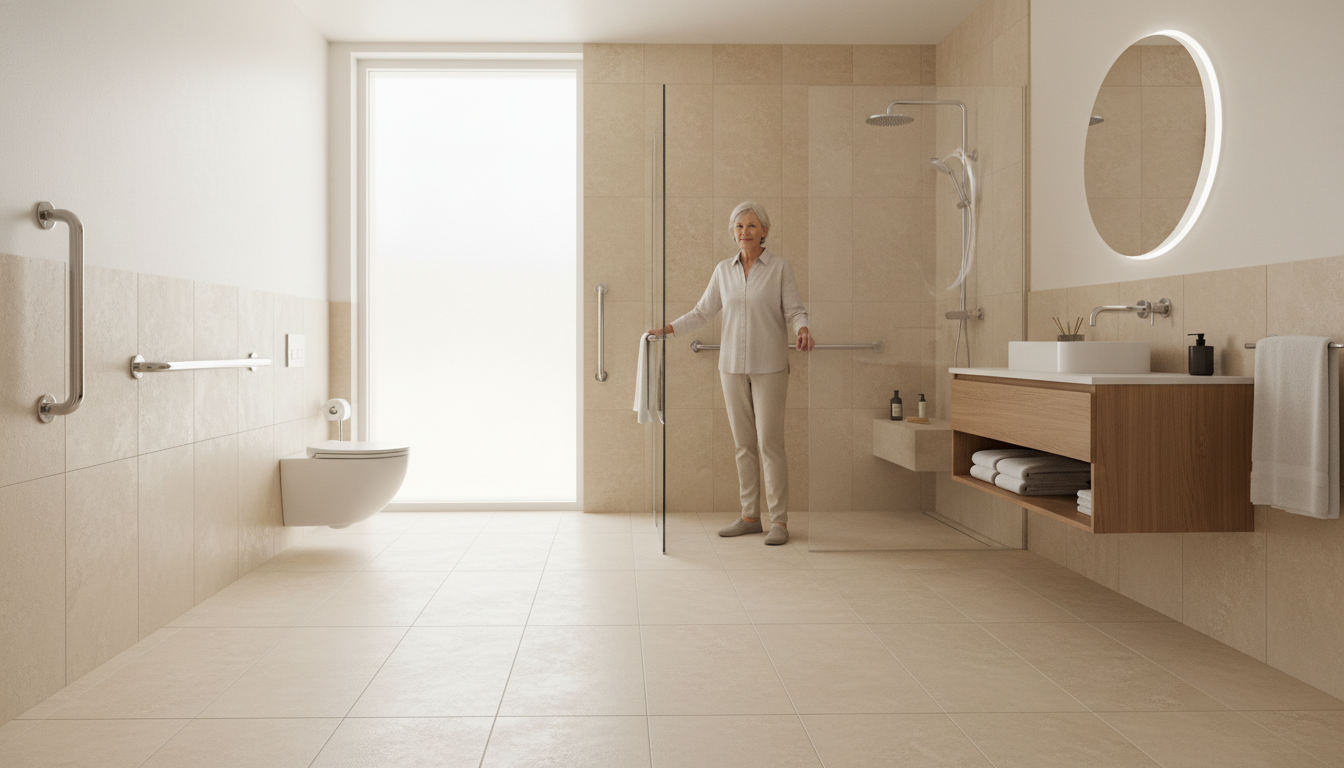
Non-Slip Bathroom Flooring for Elderly: Complete Safety Guide 2026
Expert guide to non-slip bathroom flooring including DCOF ratings, material comparisons, and ADA-compliant options for aging in place.
Grab Bar Installation Guide: Where and How to Install Safely
Step-by-step guide to installing grab bars in bathrooms including proper placement, stud finding, and ADA recommendations.

Walk-in Tub vs Roll-in Shower: Which Is Better for Seniors?
Comprehensive comparison of walk-in tubs and roll-in showers covering costs, accessibility, installation, and which option is best for your situation.