Tub Modifications for Elderly 2026: Walk-in Tubs, Conversions & Safety Upgrades
Complete guide to bathtub modifications for seniors — from simple safety add-ons and tub cut-outs to full walk-in tub installations and tub-to-shower conversions, with costs, pros and cons, and Medicare coverage explained.

Why Standard Bathtubs Are Dangerous for Seniors
The standard bathtub is one of the most hazardous fixtures in a senior's home. With walls typically 14 to 16 inches high, stepping over the tub rim requires balance, leg strength, and coordination — all of which decline with age. The CDC reports that bathroom falls send over 230,000 adults aged 65 and older to emergency rooms annually, and the bathtub is the most common site for these injuries.
The danger comes from multiple factors converging in one location. Wet, slippery surfaces inside the tub combine with the awkward stepping motion required to enter and exit. Seniors must lift one leg high while balancing on the other — often on a wet floor — then lower themselves onto a slippery surface. Getting up from a reclined or seated position in a low tub adds another high-risk movement. And unlike most other home hazards, a bathroom fall often happens when the senior is unclothed and without shoes, increasing both injury severity and the time before help arrives.
The good news is that tub modifications for the elderly have evolved dramatically. Today's options range from simple $50 add-ons that improve an existing tub to complete $15,000 walk-in tub installations that transform the bathing experience. The right modification depends on the senior's mobility level, budget, bathing preferences, and whether they plan to age in place long-term. For a broader view of bathroom safety, see our bathroom for senior citizens guide.
"Every bathtub modification you make is an investment in preventing a fall that could cost $30,000 or more in medical bills — and immeasurable loss of independence."
Types of Tub Modifications: From Simple to Complete
Bathtub modifications exist on a spectrum from quick, affordable safety additions to full fixture replacements. Understanding all the options helps families choose the right approach for their specific situation and budget.
| Modification Type | Cost Range | Installation Time | Best For |
|---|---|---|---|
| Non-slip mats & strips | $10–$40 | 5 minutes | Immediate safety improvement |
| Grab bars | $25–$300 per bar | 30–60 minutes each | Essential handhold support |
| Transfer bench | $50–$200 | No installation | Eliminating step-over motion |
| Bathtub lift chair | $200–$600 | No installation | Lowering into tub safely |
| Tub cut-out | $500–$1,500 | 2–4 hours | Lower step-in height without replacing tub |
| Walk-in tub | $2,000–$15,000 | 1–3 days | Seniors who want to soak safely |
| Tub-to-shower conversion | $3,000–$8,000 | 1–3 days | Maximum accessibility, future-proofing |
Simple Safety Add-Ons That Make an Immediate Difference
Not every tub modification requires a contractor or a large budget. Several inexpensive additions can significantly reduce bathtub fall risk and can be implemented the same day you purchase them.
Non-slip bathtub mats and adhesive strips are the simplest and most immediate safety improvement. Textured rubber mats with suction cups on the bottom provide traction inside the tub, while adhesive anti-slip strips applied directly to the tub floor create permanent grip zones. Look for strips with a grit rating — the coarser the texture, the better the grip. Replace mats every 6 to 12 months as the suction cups weaken and mold can develop underneath. For flooring outside the tub, see our non-slip bathroom flooring guide.
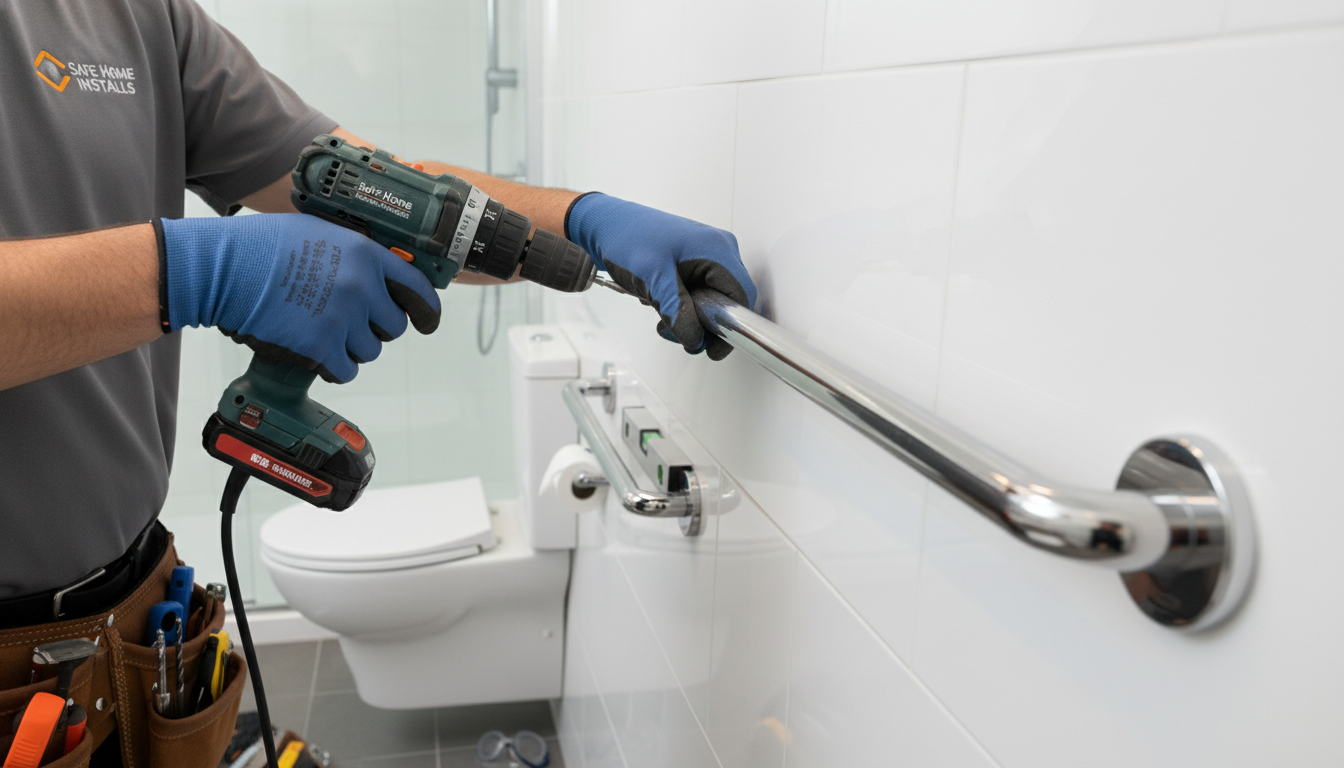
Grab bars provide the handholds that make tub entry and exit dramatically safer. At minimum, install a vertical grab bar at the faucet end of the tub for balance when stepping in, and a horizontal bar on the long wall at 33 to 36 inches for support while standing in the tub. A second horizontal bar at 8 to 10 inches above the tub rim provides support at seated level. Our grab bar installation guide covers proper placement, mounting techniques, and product recommendations.
A handheld showerhead with an adjustable slide bar allows seniors to bathe while seated on a shower chair or transfer bench, eliminating the need to stand in a wet tub. Look for models with an extra-long 72-inch hose, a pause button for water conservation, and large easy-grip controls. Installation is a simple DIY project — unscrew the existing showerhead and screw on the handheld mount. Cost ranges from $25 to $100.
A transfer bench spans the tub wall so the senior can sit down outside the tub and slide across into the bathing position — completely eliminating the dangerous step-over motion. Transfer benches have two legs inside the tub and two outside, with a wide seat and backrest. Some models include a sliding seat on rails for effortless transfer. They are particularly useful for seniors who cannot lift their legs high enough to step over the tub wall. Medicare Part B covers transfer benches when prescribed by a physician.
A bathtub lift chair is a battery-powered seat that lowers the bather from the tub rim down into the water and raises them back up. The senior sits on the lift at tub rim level, then presses a button to slowly descend to the bottom of the tub. After bathing, another button press raises them back up. Lifts like the Bathmaster Deltis and Aquatec Orca run on rechargeable batteries and require no plumbing or electrical modifications. Prices range from $200 to $600, and some models are covered by Medicare as durable medical equipment.
The Tub Cut-Out: A Budget-Friendly Middle Ground
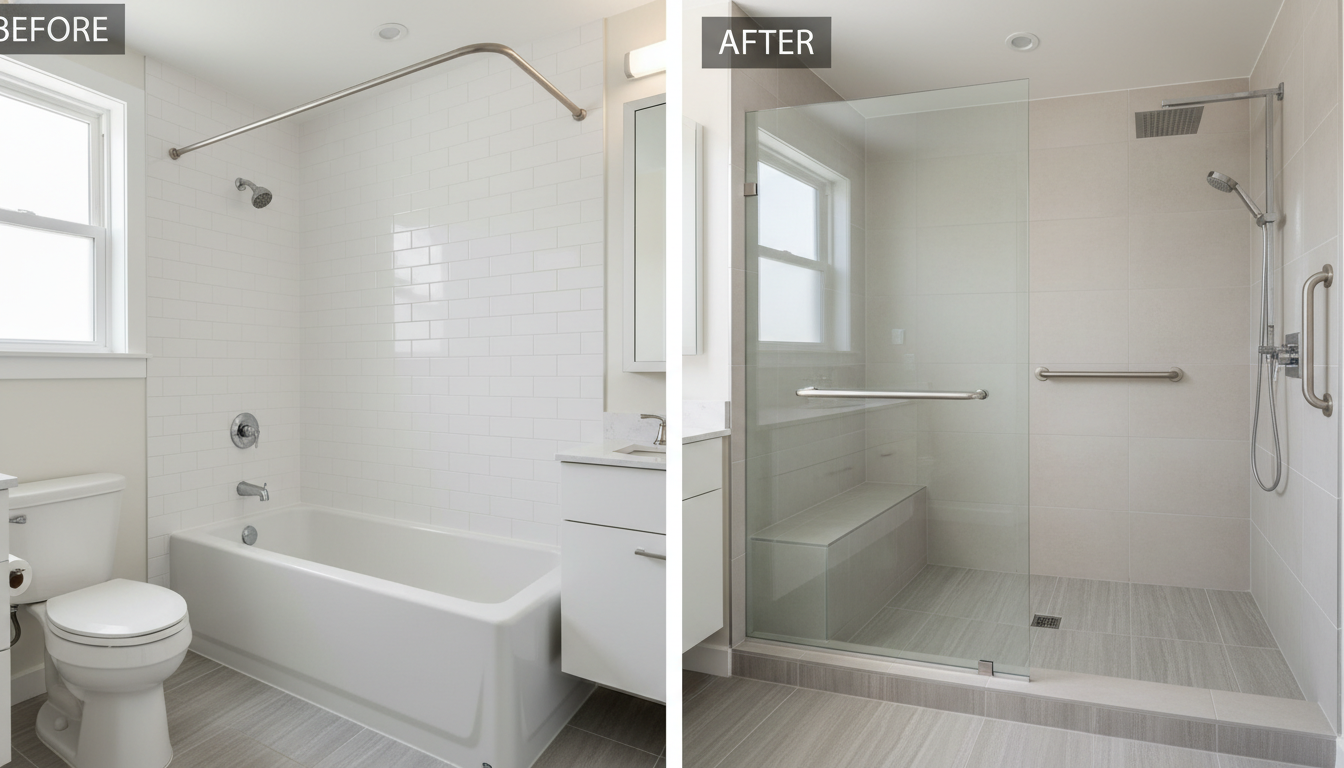
A tub cut-out (also called a tub-to-step-in conversion) is one of the most practical modifications for seniors who want to keep their existing bathtub but need a lower entry point. A section of the tub wall — typically 8 to 12 inches wide — is cut away and replaced with a watertight insert that creates a step-in height of just 3 to 5 inches, compared to the original 14 to 16 inches.
Companies like CleanCut and TubcuT specialize in this modification. The process involves cutting a U-shaped opening in the front wall of the tub using specialized tools, then fitting a custom insert that maintains the tub's waterproof integrity. A removable dam or door can be added to the opening, allowing the tub to still hold water for soaking when desired and providing step-in access for showering.
The advantages of a tub cut-out are compelling. The modification costs only $500 to $1,500 (compared to $3,000+ for a walk-in tub or conversion), can be completed in 2 to 4 hours, preserves the existing plumbing and tile work, and does not require the major construction that a full tub replacement demands. It is an excellent option for renters (with landlord permission), seniors on a tight budget, or situations where a quick solution is needed before a longer-term renovation.
The primary limitation is that a tub cut-out does not address the other safety concerns of a standard tub — the slippery surface, the lack of a built-in seat, and the need to lower oneself to the tub floor. For seniors who primarily shower rather than soak, a cut-out combined with a shower chair, handheld showerhead, and grab bars creates a functional step-in shower at a fraction of the cost of a full conversion.
Walk-in Tubs: Complete Buyer's Guide
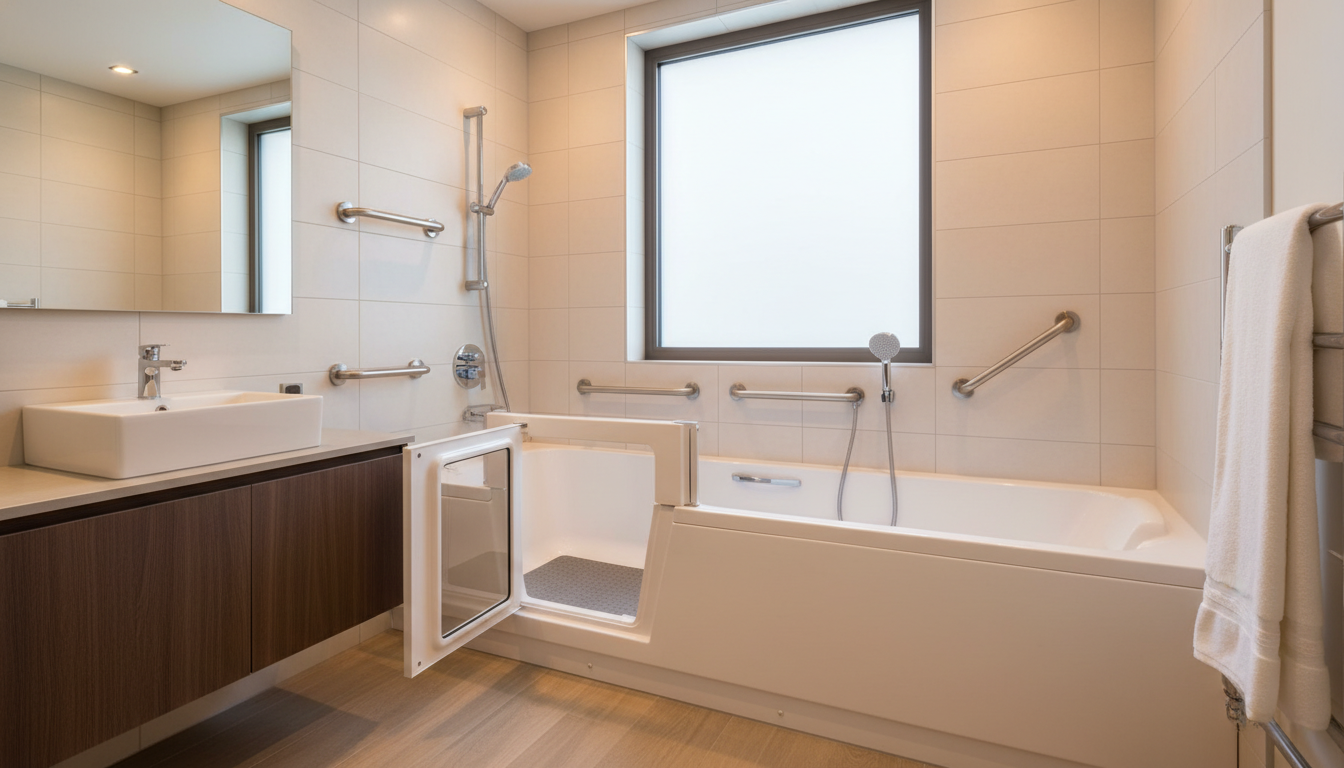
A walk-in tub is a purpose-built bathtub with a watertight door that swings open for easy step-in entry. Once inside, the bather sits on a built-in chair-height seat (17 to 20 inches), closes the door, and fills the tub. Most walk-in tubs include safety features like grab bars, anti-slip floors, anti-scald valves, and handheld showerheads as standard equipment. For our dedicated resource, visit our walk-in tubs page.
How walk-in tubs work: The bather opens the door and steps over a low threshold (typically 3 to 4 inches). They sit on the integrated seat, close and seal the door, then fill the tub. After bathing, they drain the tub before opening the door — this is important because the door cannot be opened while the tub is full or the water would flood the bathroom. This fill-and-drain time (typically 5 to 10 minutes each way) is the primary drawback of walk-in tubs.
Types of walk-in tubs include soaker tubs (standard hot water only), hydrotherapy/whirlpool tubs (water jets for muscle relaxation), air jet tubs (gentle air bubbles for therapeutic massage), and combination tubs with both water and air jets. Some premium models add chromotherapy (colored lighting), aromatherapy dispensers, and heated backrests. Features add to the cost, so focus on what the senior will actually use.
Top walk-in tub brands in 2026 include Safe Step (most widely advertised, good warranty), Kohler Walk-In Bath (premium quality, sleek design), American Standard (excellent value, reliable brand), Ella's Bubbles (best variety of sizes and features), and Jacuzzi Walk-In (luxury hydrotherapy). Prices range from $2,000 for a basic soaker model to $15,000+ for a fully featured hydrotherapy installation. Installation adds $1,000 to $3,000 depending on plumbing complexity.
| Walk-in Tub Brand | Price Range | Key Feature | Warranty |
|---|---|---|---|
| Safe Step | $5,000–$12,000 | Micro-bubble therapy, heated seat | Lifetime limited |
| Kohler Walk-In Bath | $6,000–$15,000 | Sleek design, fast drain | Lifetime limited |
| American Standard | $3,000–$8,000 | Quick-drain technology | Limited lifetime |
| Ella's Bubbles | $2,000–$7,000 | Wide size range, bariatric options | Limited lifetime |
| Jacuzzi Walk-In | $5,000–$12,000 | Premium hydrotherapy jets | Limited lifetime |
Tub-to-Shower Conversion: The Most Popular Option
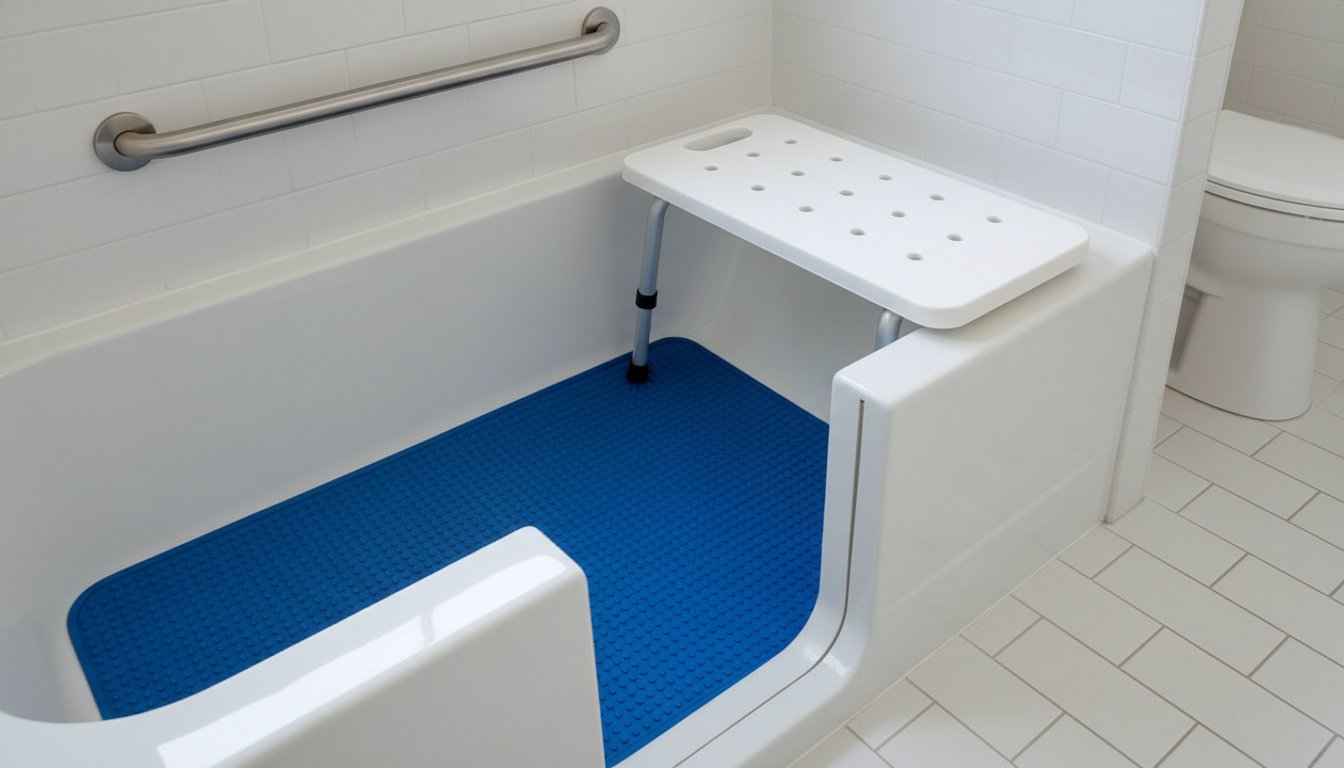
A tub-to-shower conversion replaces the existing bathtub entirely with a walk-in shower. This is the modification most frequently recommended by occupational therapists and aging-in-place specialists because it eliminates the tub entirely — removing the step-over hazard, the slippery tub floor, and the need to lower oneself to a seated position at floor level.
The conversion process involves removing the existing bathtub, modifying the plumbing to accommodate the new shower configuration, installing a shower base (either a pre-formed pan or a custom-tiled floor), adding wall panels or tile, and installing fixtures including a showerhead, valve, grab bars, and optionally a built-in bench seat. Most professional conversions take 1 to 3 days to complete.
Curbless (zero-threshold) showers are the gold standard for senior accessibility. The shower floor is flush with the bathroom floor, with a gentle slope toward the drain. This design allows wheelchair and walker access, eliminates any tripping hazard, and creates a spacious, modern look. A linear drain along one wall handles water containment. Our shower stall for elderly guide covers curbless shower design in detail.
Low-threshold showers have a small curb (typically 1 to 3 inches) that provides a bit more water containment than a curbless design while still being much easier to step over than a tub wall. This is a good compromise when a curbless design is not feasible due to floor structure limitations.
Every tub-to-shower conversion for seniors should include: a built-in bench seat or fold-down wall-mounted seat, a handheld showerhead on an adjustable slide bar, properly installed grab bars at standing and seated heights, anti-scald temperature controls, non-slip flooring, and adequate lighting inside the shower area. These features transform a basic shower into a safe, comfortable bathing environment. See our bathroom remodel for elderly guide for full renovation planning.
Walk-in Tub vs. Tub-to-Shower Conversion: Which Is Better?
This is the most common question families ask, and the answer depends entirely on the senior's preferences and physical needs. Both options are far safer than a standard bathtub, but they serve different bathing styles.
Choose a walk-in tub if: The senior enjoys soaking in warm water, has arthritis or joint pain that benefits from hydrotherapy, wants the therapeutic benefit of water jets, has the patience to wait for fill and drain cycles (10 to 20 minutes total), and does not need wheelchair-level accessibility. Walk-in tubs are also a good choice when the senior currently bathes rather than showers and would resist changing their routine.
Choose a tub-to-shower conversion if: The senior primarily showers, needs the fastest and easiest bathing entry/exit, may need wheelchair or walker access now or in the future, has limited patience for fill/drain wait times, wants a caregiver to be able to assist easily, or wants to reclaim bathroom floor space. Showers are also generally easier for home health aides to assist with, as they can work from outside the shower area.
One important consideration: a tub-to-shower conversion is permanent. If the home will eventually be sold, some buyers prefer a tub (especially in the primary bathroom). A walk-in tub preserves bathing functionality while adding safety. However, walk-in tubs can also deter some buyers who find them unusual. In general, a well-designed walk-in shower with modern finishes has neutral to positive resale impact, while a walk-in tub may have mixed impact depending on the buyer pool.
Cost Breakdown and Financing Options
Understanding the full cost of each tub modification option helps families budget accurately and explore available financial assistance. Here is what to expect in 2026.
Basic safety add-ons ($50 to $500): Non-slip mats ($10–$40), handheld showerhead ($25–$100), shower chair ($40–$150), transfer bench ($50–$200), and grab bars ($25–$80 each for hardware, $100–$300 installed). These improvements can be done progressively and deliver meaningful safety improvement at each step.
Tub cut-out ($500 to $1,500): Includes the cut-out service, custom watertight insert, and basic finishing. Companies like CleanCut and TubcuT operate nationally and often offer package pricing that includes a grab bar and non-slip treatment. This is the most budget-friendly structural modification available.
Walk-in tub ($2,000 to $15,000 installed): The tub unit itself costs $2,000 to $10,000 depending on features. Installation adds $1,000 to $3,000 for plumbing modifications, electrical work (for whirlpool jets), and finishing. Premium models with full hydrotherapy, fast-drain systems, and heated seats are at the upper end of this range.
Tub-to-shower conversion ($3,000 to $8,000): A standard conversion using a prefabricated shower pan and wall panels costs $3,000 to $5,000. Custom tile work, a curbless design, and premium fixtures push costs to $6,000 to $8,000. A high-end conversion with custom tile, glass enclosure, and luxury fixtures can reach $10,000 to $15,000. Our bathroom design for aging in place guide covers premium renovation options.
Financial assistance is available through several programs. Medicaid Home and Community-Based Services (HCBS) waiver programs cover bathtub modifications in most states for qualifying seniors. The VA HISA grant provides up to $6,800 for home modifications for veterans with service-connected disabilities. Many Area Agencies on Aging coordinate free or subsidized bathroom modification programs. See our aging in place services guide for a comprehensive list of funding resources.
Choosing the Right Contractor for Tub Modifications
The quality of the installation determines whether a tub modification performs as intended for years to come. Poor workmanship can create water damage, inadequate waterproofing, and safety features that fail under load. Here is how to select the right professional.
Look for CAPS certification. The National Association of Home Builders' Certified Aging-in-Place Specialist (CAPS) designation indicates the contractor has specific training in home modifications for seniors. CAPS-certified professionals understand ADA guidelines, aging-in-place design principles, and the products that perform best for older adults.
Get at least three written estimates. Each estimate should detail the scope of work, materials and products specified by brand and model, labor costs broken out separately, project timeline, warranty coverage (both labor and materials), and any permits required. Be wary of estimates that are significantly lower than the others — this often signals corners being cut on waterproofing or materials.
Verify waterproofing methods. Bathroom waterproofing failures are the most common and costly installation problem. Ask the contractor specifically how they will waterproof the shower floor, walls, and any transitions between surfaces. Industry-standard methods include sheet membrane (like Schluter KERDI), liquid-applied membrane (like RedGard), and PVC shower pan liners. Any contractor who dismisses waterproofing concerns or plans to rely only on grout for water containment should be disqualified.
Check references specifically for senior bathroom work. A contractor who does beautiful kitchen remodels may not understand the specific requirements of accessible bathroom design. Ask for photos and references from at least three previous senior bathroom projects. Talk to those clients about the contractor's attention to safety details, adherence to timeline, and how they handled any post-installation issues. For more on finding qualified contractors, see our bathroom remodel for elderly guide.
Medicare and Insurance Coverage for Tub Modifications
Understanding what insurance will and will not cover helps families plan their budget realistically and identify alternative funding sources for tub modifications.
Traditional Medicare (Parts A and B) does not cover bathtub modifications, walk-in tubs, tub-to-shower conversions, or grab bar installation. These are classified as home modifications rather than durable medical equipment. However, Medicare Part B does cover certain portable bathing aids that are classified as DME — including transfer benches, shower chairs, and bath lifts — when prescribed by a physician and supplied by a Medicare-enrolled DME provider.
Medicare Advantage (Part C) plans may cover home modifications including tub modifications as part of their supplemental benefits. These benefits vary significantly between plans and change annually. Contact your specific Medicare Advantage plan to ask about home modification benefits. Some plans cover up to $2,500 to $5,000 annually in home modifications.
Medicaid HCBS waivers are often the most generous funding source. Most states cover bathroom modifications including tub-to-shower conversions, walk-in tubs, and grab bars for Medicaid recipients who meet the waiver eligibility criteria (typically requiring assistance with 2+ activities of daily living). Coverage limits vary by state — some cover up to $7,000 to $10,000 in home modifications.
Veterans benefits through the VA include the HISA grant ($6,800 for service-connected disabilities, $2,000 for non-service-connected), the Home Improvements and Structural Alterations program, and the Specially Adapted Housing grant for significantly disabled veterans. Contact your local VA medical center's prosthetics department to initiate the process.
Long-term care insurance policies sometimes cover home modifications as part of their benefit structure. Review your policy or contact the insurer to determine whether tub modifications qualify under your specific coverage. For a complete guide to all available financial resources, visit our independent assisted living guide.
Common Mistakes to Avoid With Tub Modifications
After reviewing hundreds of senior bathroom modification projects, we consistently see the same preventable mistakes that compromise safety, waste money, or create future problems.
Choosing a walk-in tub based solely on TV advertising. Walk-in tub companies spend millions on television advertising featuring happy seniors in gleaming tubs. The reality is that not all brands deliver equal quality, prices can be inflated by marketing budgets, and the fill-and-drain wait time is not always mentioned prominently. Always get competitive quotes from at least three providers and ask specifically about drain time — quick-drain technology (which pumps water out in 2 minutes vs. 8 to 10 minutes for gravity drain) is worth the upgrade.
Skipping the grab bars. Some families invest thousands in a walk-in tub or shower conversion but skip the grab bars to save money or because they think the new fixture is safe enough on its own. Every bathing area — regardless of type — needs grab bars at appropriate locations. A walk-in tub without grab bars is still a fall hazard during entry, exit, sitting, and standing. Read our grab bar installation guide for proper placement.
Ignoring water heater capacity. Walk-in tubs hold 50 to 80 gallons — significantly more than a standard bathtub's 30 to 40 gallons. If the home's water heater is a standard 40 or 50-gallon tank, it may not produce enough hot water to fill the walk-in tub comfortably. Verify the water heater capacity before purchasing a walk-in tub, and budget for a water heater upgrade if needed (typically $1,000 to $2,500 for a larger tank or tankless unit).
Not planning for future mobility changes. A modification that works for a senior who walks independently today may not work if they transition to a walker or wheelchair in the future. Whenever possible, choose the most accessible option the budget allows — a curbless shower will serve the senior at every mobility level, while a walk-in tub with a step-in threshold may become inaccessible if wheelchair use becomes necessary. Our fall prevention resource covers how to anticipate changing mobility needs.
Failing to address bathroom flooring. A new walk-in shower or tub is only as safe as the floor surrounding it. If the bathroom floor outside the shower area is smooth tile, the senior faces a slip hazard every time they step out of the shower onto a wet floor. Address the bathroom flooring as part of any tub modification project. Our non-slip bathroom flooring guide covers the best options.
Frequently Asked Questions About Tub Modifications
What is the safest bathtub modification for seniors?
A tub-to-shower conversion with a curbless (zero-threshold) entry, built-in bench seat, grab bars, handheld showerhead, and non-slip flooring is the safest option. It eliminates the step-over hazard entirely and accommodates all mobility levels. For seniors who prefer soaking, a walk-in tub is the safest bathtub option.
How much does a tub-to-shower conversion cost?
A standard tub-to-shower conversion costs $3,000 to $5,000 using prefabricated components. Custom tile work and a curbless design cost $5,000 to $8,000. Premium conversions with luxury finishes can reach $10,000 to $15,000. The final cost depends on the complexity of plumbing modifications and the materials selected.
Does Medicare cover walk-in tubs?
Traditional Medicare (Parts A and B) does not cover walk-in tubs. Some Medicare Advantage plans include home modification benefits that may partially cover a walk-in tub. Medicaid HCBS waiver programs cover walk-in tubs in many states. The VA HISA grant can be used toward a walk-in tub for qualifying veterans.
What is a tub cut-out and how much does it cost?
A tub cut-out is a modification where a section of the bathtub wall is cut away and replaced with a watertight insert, lowering the step-in height from 14–16 inches to 3–5 inches. Cost is $500 to $1,500 and installation takes 2 to 4 hours. Companies like CleanCut and TubcuT specialize in this service.
Is it safer to shower or bathe for elderly people?
Showering in a properly equipped walk-in shower is generally safer than bathing in a standard tub because it eliminates the high step-over, the need to lower to and rise from the tub floor, and the risk of the water level rising above the nose if the bather becomes disoriented. Walk-in tubs provide a safer bathing alternative for those who prefer soaking.
How long does a walk-in tub take to fill and drain?
Filling a walk-in tub takes 5 to 10 minutes depending on water flow rate and tub capacity (50 to 80 gallons). Draining takes 8 to 10 minutes with gravity drain or 2 to 3 minutes with a quick-drain pump. The senior must sit inside the sealed tub while it fills and wait while it drains before opening the door, which adds 10 to 20 minutes to each bath.
Can I modify my bathtub without replacing it?
Yes. Non-structural modifications include adding grab bars, a handheld showerhead, a transfer bench, a bath lift, and non-slip surfaces. A tub cut-out lowers the step-in height without replacing the tub. These modifications can make an existing bathtub significantly safer at a fraction of the cost of a full replacement.
Margaret Chen
Certified Aging-in-Place Specialist & Senior Care Advisor
Margaret is a CAPS-certified senior care advisor with over 15 years of experience helping families navigate the complexities of aging at home. She specializes in home safety assessments, bathroom accessibility, and connecting families with trusted local contractors and care services. Her work has helped hundreds of seniors maintain independence in the homes they love.


Ready to Make Your Bathtub Safer?
Our team connects you with CAPS-certified contractors who specialize in senior bathtub modifications. Get a free home safety assessment and personalized recommendation today.
Get a Free Assessment