What to Do When Assisted Living Is Not Enough: Next Steps Guide 2026
A compassionate, practical guide for families facing the realization that assisted living no longer meets their loved one's needs — covering the signs, all available alternatives from memory care to enhanced home care, cost comparisons, and how to navigate this difficult transition.


Recognizing the Signs That Assisted Living Is No Longer Enough
The transition from assisted living to a higher level of care is one of the most emotionally challenging decisions a family can face. Moving a loved one into assisted living may have felt like a permanent solution, but the reality is that assisted living is designed for a specific range of care needs — and those needs evolve over time. Recognizing when the current level of care falls short is not a failure. It is an act of love and advocacy.
Here are the signs that families and care professionals most commonly identify when assisted living is not enough:
- Increasing wandering or elopement risk: If your loved one has been found outside the facility unsupervised, or staff has reported wandering incidents, this is a serious safety concern. Most assisted living communities are not secured environments and cannot prevent residents from leaving.
- Frequent falls despite safety measures: Assisted living provides some supervision, but not continuous one-on-one monitoring. If falls are happening regularly despite grab bars, walkers, and scheduled check-ins, the care ratio is insufficient.
- Escalating behavioral changes: Aggression, severe agitation, sundowning, or resistive behavior during personal care can exceed what assisted living staff are trained or equipped to manage.
- Declining ability with activities of daily living: When your loved one can no longer participate in basic self-care activities — eating, bathing, dressing, toileting — even with the assistance that assisted living provides, more hands-on care is needed.
- Complex medical needs: Wound care, IV medications, ventilator management, feeding tube care, or frequent hospitalizations require skilled nursing that goes beyond what assisted living staff can legally provide.
- Significant weight loss or malnutrition: If the dining program and staff reminders are not sufficient to maintain nutrition, this indicates a need for more intensive meal assistance or medical evaluation.
- Cognitive decline requiring constant supervision: Mid-to-late stage dementia or Alzheimer's disease creates safety needs — leaving stove burners on, consuming non-food items, inability to recognize danger — that demand the secured environment and specialized programming of memory care.
Important: If you are noticing these signs, you are not alone. The Alzheimer's Association reports that approximately 50% of assisted living residents eventually require transfer to a higher level of care due to cognitive decline. This is a normal part of the care continuum, not an emergency or a failure of the current arrangement.
Understanding the Levels of Senior Care
Before evaluating alternatives, it helps to understand where assisted living fits within the broader levels of care for seniors. Each level addresses a different combination of medical, cognitive, and personal care needs.
| Level of Care | Medical Care | Personal Care | Cognitive Support | Monthly Cost (2026) |
|---|---|---|---|---|
| Independent Living | None | None | None | $2,000–$4,500 |
| Assisted Living | Medication management | ADL assistance | Basic reminders | $4,500–$7,000 |
| Memory Care | Medication management | Full ADL assistance | Specialized dementia care | $6,000–$10,000 |
| Skilled Nursing Facility | 24/7 nursing care | Full ADL assistance | Available | $8,000–$12,000 |
| In-Home Care (24/7) | With home health add-on | Full ADL assistance | Customizable | $10,000–$20,000 |
The key insight is that the jump from assisted living does not have to mean a nursing home. There are multiple pathways, each suited to different combinations of needs and preferences. Let us explore each one.
Memory Care: When Cognitive Decline Drives the Decision
If the primary reason assisted living is no longer sufficient is dementia, Alzheimer's disease, or other cognitive decline, a memory care facility is typically the most appropriate next step. Memory care provides everything assisted living does, plus critical additions specifically designed for residents with cognitive impairment.
What Memory Care Provides Beyond Assisted Living
- Secured environment: Locked doors with keypad or badge access to prevent wandering and elopement. This is the single biggest safety upgrade over standard assisted living.
- Higher staff-to-resident ratio: Typically 1:5 to 1:8 in memory care versus 1:8 to 1:15 in assisted living. More hands means more supervision and more responsive assistance.
- Specialized programming: Activities designed specifically for cognitive stimulation — music therapy, art therapy, reminiscence therapy, sensory activities — structured around the abilities residents still retain rather than those they have lost.
- Trained staff: Caregivers specifically trained in dementia care techniques including redirection, validation therapy, and managing behavioral symptoms without restraints or over-medication.
- Simplified environment: Circular hallway designs that allow safe wandering, color-coded doors for wayfinding, reduced visual clutter, and controlled noise levels that minimize confusion and agitation.
For a deeper understanding of memory care, see our memory care guide for families. For cost planning specific to dementia care, see our dementia aging-in-place costs guide.
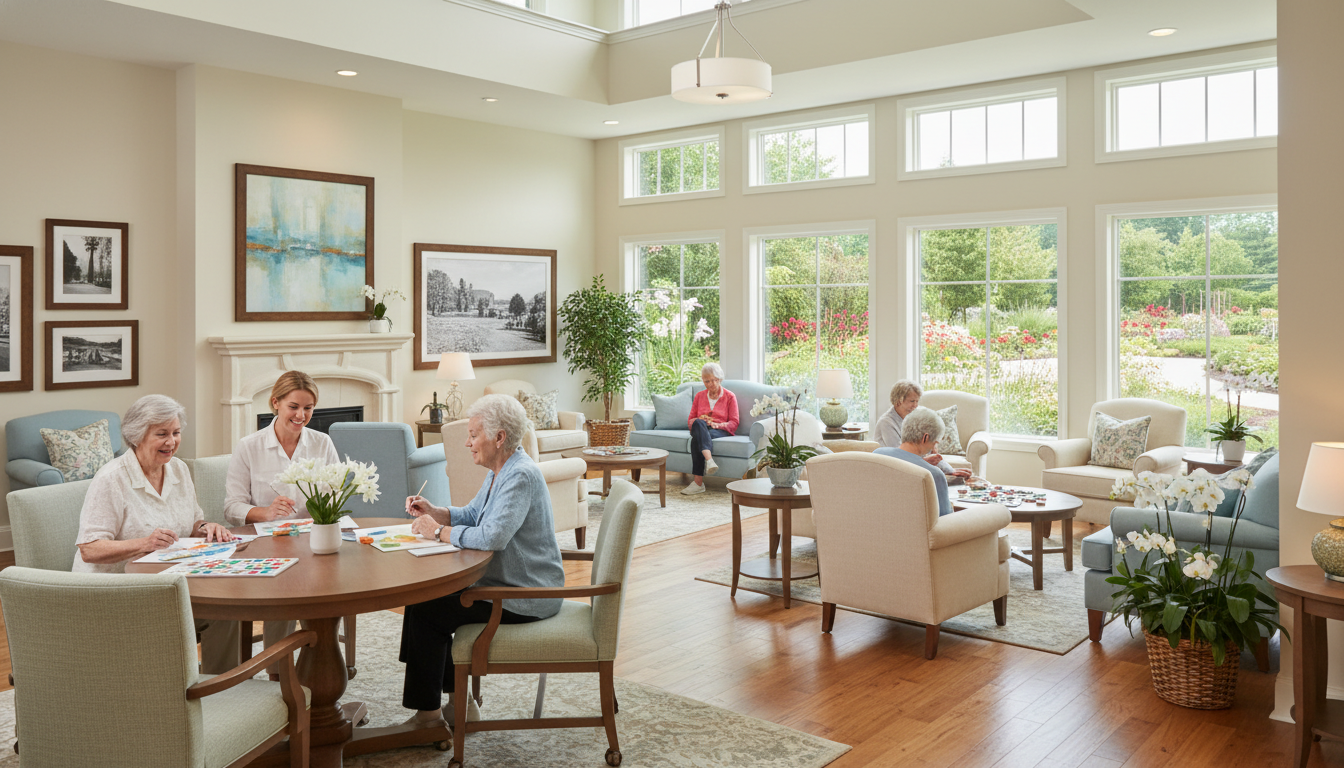
Memory Care Cost
The national median cost of memory care in 2026 is approximately $7,200 per month ($86,400 annually), though costs range from $5,000 to $12,000+ depending on location, amenities, and level of care. This represents a 30–60% premium over standard assisted living, driven primarily by the higher staffing requirements and specialized environment.
Skilled Nursing Facilities: When Medical Needs Are Primary
If the reason assisted living is insufficient is complex medical needs rather than cognitive decline, a skilled nursing facility (SNF) may be the appropriate next step. Skilled nursing provides 24-hour medical care from licensed nurses (RNs and LPNs) under physician supervision.
Skilled nursing is appropriate when the senior requires:
- Wound care for pressure ulcers or surgical wounds
- IV medication administration
- Ventilator or respiratory therapy
- Tube feeding management
- Post-surgical rehabilitation
- Complex medication regimens requiring nursing assessment
- Frequent vital sign monitoring due to unstable conditions
The national median cost of a skilled nursing facility in 2026 is approximately $9,700 per month for a semi-private room ($116,400 annually) and $11,000 for a private room ($132,000 annually). Medicare covers skilled nursing only for short-term rehabilitation (up to 100 days following a qualifying hospital stay), not for long-term custodial care. Medicaid is the primary payer for long-term nursing home care for those who qualify financially.
Enhanced Home Care: Bringing Higher-Level Care Home
For families who want to avoid facility-based care entirely, enhanced in-home care can replicate many of the services provided by memory care or skilled nursing in the comfort of home. This approach combines professional caregiving with home medical equipment, home modifications, and technology.

24-Hour Home Care
Round-the-clock in-home care provides continuous supervision and assistance, either through live-in caregivers or rotating shift caregivers. This is the home-based equivalent of the staffing in a care facility.
- Live-in caregiver: A single caregiver stays in the home, typically working 5 days per week with a relief caregiver for 2 days. The live-in caregiver gets a sleep period (usually 8 hours) but is available for overnight needs. Cost: $200–$350 per day ($6,000–$10,500 per month).
- Shift-based 24/7 care: Two or three caregivers work rotating 8-or 12-hour shifts, providing fully awake care around the clock. This is more expensive but ensures continuous alert supervision. Cost: $400–$650 per day ($12,000–$19,500 per month).
Private Duty Nursing
Private duty nursing provides licensed nurses (RNs or LPNs) in the home for extended shifts. This is the home-based alternative to skilled nursing facility care and is appropriate when the senior requires medical procedures, complex medication management, or clinical assessment that non-medical caregivers cannot provide.
Cost: $50–$100 per hour for an RN, $35–$75 per hour for an LPN. Many families combine private duty nursing for 8–12 hours per day with non-medical caregivers for the remaining hours, creating a hybrid care team that is less expensive than full nursing coverage.
Home Modifications for Higher-Level Care at Home
Providing enhanced care at home requires a physical environment that supports it. Key modifications include:
- Hospital bed: Adjustable beds with side rails for safe repositioning and transfers. Many are covered by Medicare as durable medical equipment.
- Hoyer lift or transfer equipment: For non-weight-bearing seniors who need to be moved between bed, wheelchair, and bathroom.
- Accessible bathroom: Full bathroom remodel with roll-in shower, grab bars, and comfort height toilet.
- Stairlift or first-floor bedroom: Eliminating stairs is essential for higher-level care at home. See our stairlift buying guide.
- Medical alert system: Emergency response systems with automatic fall detection for moments when the caregiver is not in the same room.
- Smart home technology: Smart devices for medication reminders, door alarms (for wandering), and remote monitoring.
PACE Programs: A Comprehensive Alternative
The Program of All-Inclusive Care for the Elderly (PACE) is one of the most underutilized and valuable programs available to seniors who need more than assisted living can provide but want to remain in their community. PACE combines medical care, social services, and long-term care services into a single coordinated program.
PACE provides:
- Adult day care center services (typically 3–5 days per week)
- Primary medical care from PACE physicians
- All necessary medications
- Physical, occupational, and speech therapy
- Transportation to and from the PACE center
- Home health aide services
- Social services and caregiver support
- Hospital and nursing home care when needed
To qualify, an individual must be 55 or older, live in a PACE service area, and be certified by the state as needing a nursing home level of care. Most PACE participants are dual-eligible for Medicare and Medicaid, in which case there is no monthly premium. For those with only Medicare, there is a monthly premium for the long-term care portion.
PACE programs operate in 32 states as of 2026. Find programs in your area through the National PACE Association website or the Eldercare Locator at 1-800-677-1116.
Other Alternatives to Consider
Adult Day Care Centers
Adult day care provides structured daytime programming — social activities, meals, health monitoring, and sometimes therapy — while allowing the senior to return home each evening. This is an excellent supplement to home care that provides cognitive stimulation, social interaction, and respite for family caregivers.
Specialized adult day care for Alzheimer's patients offers dementia-specific programming in a secured environment during daytime hours. Cost: $75–$150 per day ($1,500–$3,000 per month for 5 days per week). Many Medicaid waiver programs cover adult day care services.
Board and Care Homes (Residential Care)
Board and care homes, also called residential care facilities or adult foster care, are small group homes (typically 6–10 residents) in residential settings. They provide a homelike environment with more personalized attention than large assisted living communities, often at a lower cost. Monthly rates typically range from $3,000 to $6,000.
Board and care homes are particularly well-suited for seniors who are overwhelmed by the size and stimulation of large communities or who benefit from the consistent staffing of a small home. Some specialize in dementia care with secured environments.
Continuing Care Retirement Communities (CCRCs)
A continuing care retirement community provides all levels of care — independent living, assisted living, memory care, and skilled nursing — on a single campus. The resident can transition between levels as needs change without relocating to a new community. This continuity can be enormously valuable for both the senior and the family.
The trade-off is cost: CCRCs require a substantial entrance fee ($100,000–$500,000+) plus monthly fees ($3,000–$7,000+). However, for families who can afford the entry cost, a CCRC provides the security of knowing that all future care levels are available without the upheaval of another move.
Palliative Care and Hospice
If the transition from assisted living is driven by a serious progressive illness, palliative care and hospice care focus on comfort and quality of life rather than curative treatment.
Palliative care can be provided alongside curative treatment at any stage of a serious illness. It focuses on symptom management, pain relief, and emotional support. Palliative care is available in facilities or at home.
Hospice care is specifically for individuals with a life expectancy of six months or less who have chosen to focus on comfort rather than curative treatment. Hospice is fully covered by Medicare Part A with no copays or deductibles — making it one of the most comprehensive and least expensive care options available. Hospice can be provided at home, in a hospice facility, or within a nursing home or assisted living community.
Paying for Higher-Level Care
Cost is often the most stressful aspect of transitioning beyond assisted living. Here are the primary funding sources:
- Medicare: Covers skilled nursing (up to 100 days post-hospitalization), home health care (physician-ordered skilled services), hospice care, and some durable medical equipment. Does not cover custodial care, assisted living, memory care, or non-medical home care. See our Medicare coverage guide.
- Medicaid: The primary payer for long-term nursing home care and, through HCBS waivers, for home and community-based services. Eligibility requires meeting income and asset limits. Medicaid waiver programs can fund home modifications, personal care, adult day care, and other services that enable alternatives to nursing home placement.
- Long-term care insurance: If your loved one has a long-term care insurance policy, it typically covers assisted living, memory care, nursing homes, and sometimes in-home care. Review the policy carefully for elimination periods, daily benefit amounts, and covered services.
- VA benefits: Veterans may qualify for Aid and Attendance benefits ($2,431/month for a veteran, $1,564/month for a surviving spouse in 2026) that can be applied toward any type of care, plus VA caregiver support programs.
- Life insurance conversion: Some life insurance policies can be converted to long-term care benefit plans, providing monthly care payments instead of a death benefit.
- Geriatric care manager: A geriatric care manager (aging life care manager) can help families navigate the financial landscape, identify all available benefits, and create a sustainable care plan. Cost: $100–$250 per hour, but the savings from optimizing benefits often far exceed the fee.
For home modification funding specifically, see our financial assistance guide for senior home modifications.
Navigating the Transition: A Step-by-Step Approach
The transition from assisted living to a higher level of care does not have to be a crisis-driven event. With planning, it can be a thoughtful, gradual process that prioritizes the senior's comfort and dignity.
Step 1: Gather Information
Meet with the assisted living facility's care team, the senior's physician, and any specialists to get a clear picture of current needs and projected trajectory. Ask specifically: "What can you no longer adequately provide, and what level of care would address the gaps?"
Step 2: Assess All Options
Do not assume the answer is a nursing home. Review every alternative outlined in this guide: memory care, enhanced home care, PACE programs, adult day care combined with home care, board and care homes, and CCRCs. Each addresses different need profiles at different costs.
Step 3: Evaluate Finances
Create a realistic 3-to-5-year budget that accounts for changing care needs. Include all income sources: Social Security, pensions, investments, long-term care insurance, VA benefits, and potential Medicaid eligibility. A geriatric care manager or elder law attorney can help with this analysis.
Step 4: Visit and Compare
If considering a new facility, visit at least three options. Go during different times of day. Eat a meal there. Observe how staff interact with residents. Ask about staff turnover rates, training programs, and how they handle behavioral challenges. Check state inspection reports.
Step 5: Plan the Physical Transition
If moving, minimize disruption by bringing familiar items from the current room — photos, a favorite blanket, familiar artwork. If transitioning to home care, ensure all home modifications and equipment are in place before the transition.
Step 6: Support the Emotional Transition
The senior may experience grief, anger, or confusion during the transition. Allow these feelings. Maintain as much routine as possible. Involve the senior in decisions to the extent their cognitive abilities allow. Family presence during the first days and weeks of a new arrangement is critical.
A Note for Family Caregivers: This transition is emotionally taxing for you, too. Respite care services — temporary relief care that gives family caregivers a break — are available through many community organizations, Medicaid waiver programs, and the VA. You cannot provide good care for your loved one if you are burned out. The Eldercare Locator (1-800-677-1116) can connect you with local respite care resources.
When Enhanced Aging in Place Is Still Possible
It is worth noting that many families who are told "assisted living is not enough" find that aging in place with enhanced support is still a viable — and often preferred — alternative. The combination of professional in-home caregivers, aging in place services, proper medical equipment, and technology can replicate much of what memory care and skilled nursing facilities provide.
This approach is most feasible when:
- The home can be adequately modified for safety (see our home safety assessment guide)
- Family members or hired caregivers can provide or coordinate daily oversight
- The senior's medical needs can be managed by home health services and telehealth
- The budget supports 12–24 hours of daily caregiving assistance
- The senior strongly prefers to remain home (and this preference is safely achievable)
For a complete comparison of the costs involved, see our assisted living vs. home care cost comparison. For the full picture of available home-based services, see our aging in place services guide.
Whether the next step is a new facility, enhanced home care, or a creative combination, the goal remains the same: ensuring your loved one receives the care they need in an environment that supports their dignity, safety, and whatever quality of life is possible at this stage of their journey.
Need Help Planning the Next Step?
If you are exploring whether your loved one can remain at home with enhanced support, start with a professional home safety assessment. We evaluate the home environment, identify necessary modifications, and help you understand whether aging in place is still a safe option.
Explore Home Safety Assessments About Margaret Chen
Certified Aging-in-Place Specialist & Senior Care Advisor
CAPS-certified senior care advisor with 15+ years helping families navigate the complex landscape of senior care options. Margaret specializes in helping families find the right balance between safety, independence, dignity, and affordability at every stage of aging.
Related Articles

Assisted Living vs Home Care: Complete Cost Comparison Guide
Detailed cost comparison of assisted living facilities versus in-home care services to help families make informed decisions.

Memory Care: What Families Need to Know
Essential guide to memory care covering when it's needed, what services are provided, costs, and how to choose the right facility.

When Is Assisted Living Necessary? Signs and Decision Guide
How to recognize the signs that a loved one needs assisted living and guide for making the transition decision.