Will Medicare Pay for a Walk-in Tub? 2026 Coverage Guide
Original Medicare almost never pays for walk-in tubs, but Medicare Advantage plans, Medicaid waivers, and VA grants often close most of the gap. Here is exactly who qualifies.

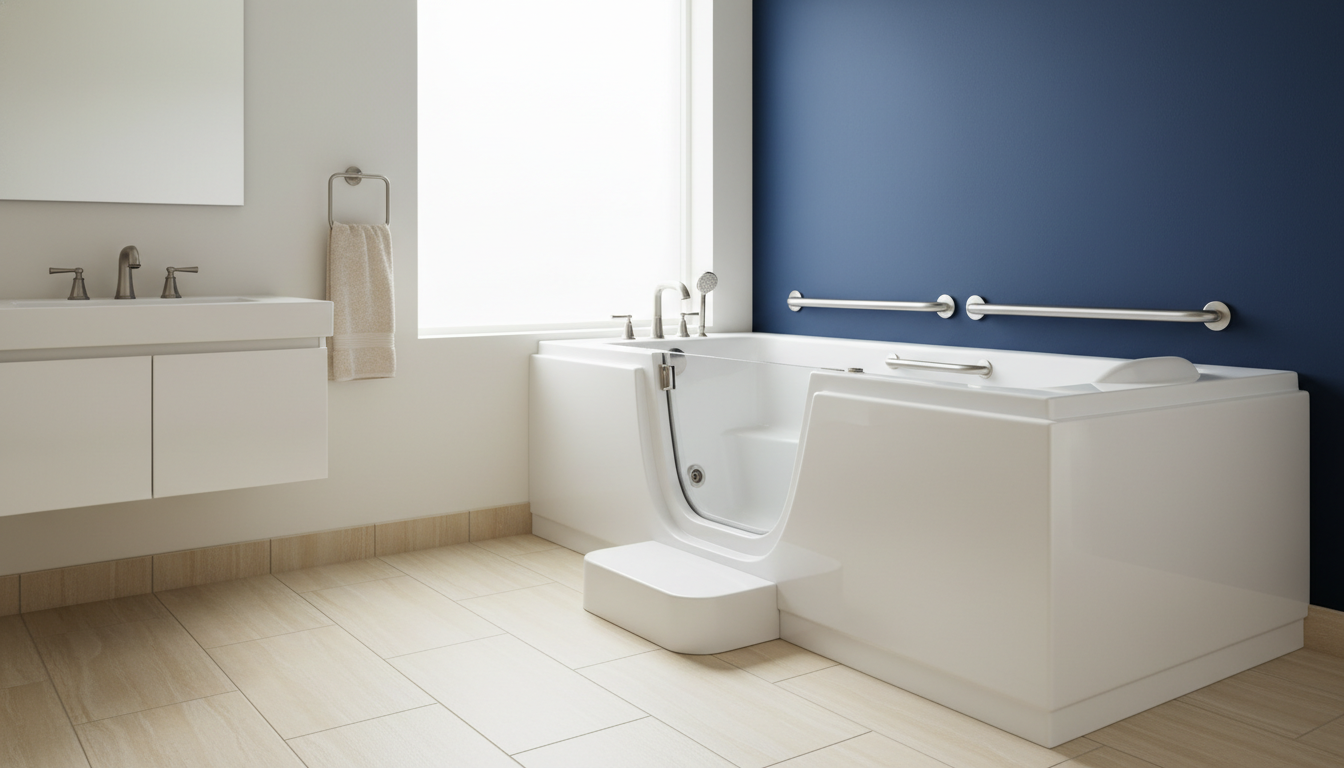
Will Medicare Pay for a Walk-in Tub? The Short Answer
Original Medicare (Parts A and B) almost never pays for walk-in tubs. The Centers for Medicare & Medicaid Services classifies walk-in tubs as home modifications rather than durable medical equipment (DME), which is the category Medicare actually covers for in-home health items like hospital beds, wheelchairs, and oxygen concentrators.
That said, the story does not end there. A small number of seniors get partial Medicare contribution under very specific medical-necessity rules, and many Medicare Advantage plans — which are private insurance plans contracted with Medicare — now include accessibility and home-safety benefits that can apply toward a walk-in tub. Add Medicaid waivers, VA programs, and state-level grants to the mix and the out-of-pocket number often drops dramatically.
Below, we break down exactly who qualifies, what documentation you need, and five funding sources that actually work in 2026.
Why Original Medicare Excludes Walk-in Tubs
Medicare’s DME benefit requires an item to meet all five of these conditions:
- Durable — can withstand repeated use
- Used for a medical purpose
- Not useful to a person without illness or injury
- Appropriate for use in the home
- Has an expected lifetime of at least 3 years
Walk-in tubs clearly satisfy four of the five. They fail the third one: a walk-in tub is “useful to a person without illness or injury.” A perfectly healthy person can still bathe in a walk-in tub. Because of that single word — useful — walk-in tubs are classified alongside bathroom remodels, accessibility ramps, and grab bars as home modifications that Medicare excludes even when they directly improve a senior’s safety.
This is the same reason Medicare does not pay for stair lifts or most permanent bathroom accessibility modifications, though Medicare Advantage plans are gradually expanding what they cover in these categories.
The Rare Exception: Medical-Necessity Prescribed Installations
A very small subset of Medicare claims for walk-in tubs have been approved under an exception framework. To have any realistic chance, all of the following must be true:
- A Medicare-enrolled physician writes a Letter of Medical Necessity specifying that a walk-in tub is essential to prevent imminent injury (typically for patients with Parkinson’s, advanced arthritis, post-stroke hemiparesis, or severe balance disorders).
- The tub is prescribed as part of an active treatment plan, not as a general quality-of-life improvement.
- The installation is billed through a Medicare-enrolled DME supplier, not the tub manufacturer directly.
- Documentation includes recent fall-risk assessments, physical therapy evaluations, and photos of the current bathroom showing why a standard tub creates unsafe conditions.
Even with perfect documentation, approval is rare and usually partial — Medicare may cover the therapeutic components (like hydrotherapy jets prescribed for arthritis) but not the tub shell, door, or labor. Appeal rates are high; initial denial is the norm.
Bottom line: Do not plan your financing around this path. Treat any Medicare contribution as an unexpected bonus rather than a budgeted line item.
Medicare Advantage Plans: The Real Opportunity
This is where the picture changes dramatically. Since 2019, Medicare Advantage (Part C) plans have been permitted to offer “supplemental benefits” that Original Medicare does not cover — including home safety and accessibility modifications. By 2026, more than a third of Medicare Advantage plans include some form of home-modification benefit.
Benefits vary widely by plan, but the most common structures are:
- Annual OTC / wellness allowance — typically $100–$2,500 per year that can be applied to approved bathroom safety items, including walk-in tubs at some plans.
- One-time home safety allowance — a lump-sum benefit (commonly $500–$2,000) available to chronically ill members who meet clinical criteria.
- SSBCI (Special Supplemental Benefits for the Chronically Ill) — more generous benefits, sometimes covering 50–100% of a walk-in tub, available only to members with specific qualifying conditions such as heart failure, COPD, dementia, or severe mobility limitations.
How to check your Advantage plan
- Log in to your plan’s member portal and search for “home modifications,” “bathroom safety,” or “SSBCI benefits.”
- Call the member services line and ask specifically: “Does my plan offer any allowance toward a walk-in tub or bathroom accessibility modification?”
- Request the benefit in writing before you buy, including any pre-authorization forms.
- Use an in-network contractor if your plan requires it. Out-of-network installs are often denied reimbursement.
Plans most likely to include walk-in-tub benefits in 2026 include certain Humana Gold Plus, UnitedHealthcare Dual Complete, Aetna Medicare Eagle, WellCare, and Kaiser Senior Advantage plans — but coverage differs by county and plan year, so always verify before you sign a purchase agreement.
Other Funding Sources That Do Cover Walk-in Tubs
Even if Medicare pays nothing, these five programs consistently help seniors afford walk-in tubs:
1. Medicaid & HCBS Waivers
Medicaid’s Home and Community-Based Services (HCBS) waivers are the single most reliable funding path for low-income seniors. Waiver programs in most states cover walk-in tubs as an “environmental modification” when prescribed to prevent nursing-home placement. Coverage can reach 100% of installation cost, including labor.
| State | Waiver name | Typical walk-in tub coverage |
|---|---|---|
| California | CalAIM Community Supports | Up to $7,500 home modification |
| Texas | STAR+PLUS HCBS | Up to $10,000 lifetime environmental modifications |
| Florida | SMMC LTC Waiver | Covered when medically necessary |
| New York | NHTD & TBI Waivers | Up to $15,000 environmental modifications |
| Pennsylvania | Community HealthChoices | Covered, pre-approval required |
Apply through your state’s Medicaid office or an Area Agency on Aging. Processing takes 60–120 days, so start early.
2. VA Home Improvements and Structural Alterations (HISA) Grant
Veterans enrolled in VA healthcare are eligible for up to $6,800 (service-connected) or $2,000 (non-service-connected) toward home modifications including walk-in tubs. There is also the larger SAH / SHA grant program for veterans with specific disability ratings, which can reach $117,014 (SAH) or $23,444 (SHA) in 2026 for major accessibility modifications.
3. USDA Rural Development Section 504 Loans & Grants
Rural seniors aged 62+ can receive up to $10,000 in grants or a 1% interest loan up to $40,000 for accessibility improvements. No Medicare involvement required.
4. State and Local Senior Grants
Many states, counties, and nonprofits (like Rebuilding Together and Habitat for Humanity’s Aging in Place program) run walk-in-tub grant programs for low- to moderate-income seniors. Check your state’s Department of Aging website or call 211 for local programs.
5. Long-term Care Insurance
Some long-term care policies include home-modification riders. Read your policy’s “aging-in-place” or “home care” section carefully — a walk-in tub may qualify if it helps delay institutional placement.
How to Appeal a Medicare Denial (If You Try Anyway)
If you submit a Medicare claim and it is denied, you have the right to appeal. The process has five levels, but most approvals happen at Level 2 or below:
- Level 1 — Redetermination: File within 120 days of the denial letter. Include a new, more detailed Letter of Medical Necessity.
- Level 2 — Reconsideration: Submitted to a Qualified Independent Contractor (QIC). 180-day filing window.
- Level 3 — Administrative Law Judge hearing: Requires a claim amount of at least $190 (2026 threshold).
- Level 4 — Medicare Appeals Council review
- Level 5 — Federal District Court
Tips that improve approval odds: pair the tub with a hydrotherapy prescription, submit recent fall-risk assessments, and include notes from any physical or occupational therapist involved in the senior’s care plan.
The True Out-of-Pocket Cost in 2026
Here is what seniors actually pay in 2026, after all available funding is applied:
| Situation | Avg. tub+install cost | Typical funding | Out-of-pocket |
|---|---|---|---|
| No insurance, no program | $8,500–$14,000 | $0 | $8,500–$14,000 |
| Medicare Advantage with OTC benefit | $10,000 | $500–$2,000 | $8,000–$9,500 |
| Medicare Advantage SSBCI qualifier | $10,000 | $3,000–$8,000 | $2,000–$7,000 |
| Medicaid HCBS waiver | $10,000 | $7,500–$10,000 | $0–$2,500 |
| VA HISA (service-connected) | $10,000 | $6,800 | $3,200 |
| USDA Section 504 grant | $10,000 | $10,000 grant | $0 |
For a full breakdown of what actually drives price — tub unit, labor, plumbing, electrical, permits — see our walk-in tub cost quiz, which generates a personalized quote in under 90 seconds.
What to Do Before You Buy
Follow these steps in order — skipping any of them is the single biggest reason seniors overpay for walk-in tubs:
- Call your Medicare Advantage plan first. Ask specifically about OTC allowance, home-safety benefits, and SSBCI eligibility. Get the answer in writing.
- Apply for Medicaid HCBS waivers if you qualify financially. Even if you are just above the income cap, many states have “Medically Needy” spend-down provisions.
- Check VA eligibility even if you think you do not qualify. HISA covers any enrolled veteran, regardless of service-connection status (at reduced amounts).
- Get three itemized quotes from licensed contractors. Prices vary by $3,000+ on the same tub model.
- Verify the contractor is in-network if you are using Advantage benefits, or pre-approved by Medicaid if using waiver funds.
- Ask about the 2-inch step-in height and door swing. A bad install can undo all the safety benefit.
- Confirm the warranty in writing — lifetime on the shell and door seal is standard; anything less is a red flag.
You may also want to read our Safe Step vs. Kohler walk-in tub comparison and our bathroom safety checklist for seniors before committing to any one brand or installer.
The Bottom Line on Medicare and Walk-in Tubs
Original Medicare will almost certainly not pay for a walk-in tub. But that is not the end of the conversation — for the majority of seniors, stacking a Medicare Advantage benefit with Medicaid, VA, or state grant programs reduces out-of-pocket cost by 50–100%. The key is applying before you sign a contract, not after.
Not sure where to start? Schedule a free Home Instead accessibility consultation and we will help you identify every benefit you qualify for, from Medicare Advantage allowances to state-level grants, and match you with an installer whose pricing is compatible with those programs. No obligation, no sales pressure — just clarity.
Need Help Navigating Funding?
Our free consultation maps every Medicare, Medicaid, VA, and state program you may qualify for - before you commit to a tub.
Explore Walk-in Tubs
About James Wilson
Home Safety Specialist & Accessibility Consultant
Certified home safety specialist with 10+ years designing accessible living spaces for seniors and individuals with mobility challenges.