Walk-in Tub Financing: Payment Plans, Loans & Assistance Programs (2026)
Complete guide to walk-in tub financing options including 0% APR plans, personal loans, HELOCs, VA grants, Medicaid waivers, FHA Title 1 loans, HSA/FSA eligibility, and tax deductions. Compare walk-in tub monthly payments and find the best way to pay — even with bad credit.

Why Walk-in Tub Financing Matters
A walk-in tub is one of the most effective safety upgrades you can make to a senior's bathroom. But when most families see the $8,500 to $12,000 price tag for a quality installation, the conversation stalls. We hear the same thing every week: the need for an affordable walk-in tub is urgent, but the cash is not there right now.
The good news is that you almost never need to pay the full amount upfront. Whether you are exploring walk-in bathtub payment plans, government grants, senior bathroom financing, or tax deductions, there are at least eight distinct paths to how to pay for a walk-in tub in 2026 — including options for bad credit walk-in tub financing. The trick is knowing which option fits your specific financial situation and timeline. This guide breaks down every major financing route so you can make a confident decision. For a full breakdown of what you will actually be financing, see our walk-in tub cost guide.
Quick Cost Recap: What You're Financing
Before we discuss how to pay, it helps to know exactly what the bill includes. A complete walk-in tub project typically involves more than just the tub itself.
| Expense Category | Typical Range |
|---|---|
| Tub Unit | $2,500 - $15,000 |
| Installation Labor | $1,500 - $7,000 |
| Plumbing Modifications | $500 - $1,500 |
| Electrical Work | $570 - $1,100 |
| Water Heater Upgrade | $800 - $3,200 |
| Permits & Disposal | $300 - $1,000 |
The total amount you need to finance will depend heavily on your bathroom's current condition and the type of tub you choose. A basic walk-in tub for elderly use in a modern home might cost $6,000, while a premium walk-in tub with jets (hydrotherapy) or a walk-in tub with shower combo in an older home could push the project past $18,000. A bariatric walk-in tub for larger users adds another $2,000 to $4,000 to the base price. Knowing your number upfront is essential because it determines which financing options make sense and helps you calculate your walk-in tub cost per month under different loan terms.
Manufacturer Financing Programs
The simplest path to affordable walk-in tub ownership is often through the company selling you the tub. Major manufacturers all offer in-house financing or partnerships with lending institutions. Kohler walk-in bath financing, Safe Step walk-in tub payment plans, American Standard walk-in tub promotions, and Jacuzzi walk-in tub financing programs each have slightly different terms and credit requirements.
0% APR Promotions
The most attractive manufacturer deals are the 0% interest for 18 to 24 months offers that brands frequently run. These are essentially interest-free loans that let you spread the cost across monthly payments with no extra charges. On a $10,000 installation, that works out to roughly $417 per month over 24 months with zero interest.
We see these promotions most frequently during spring and fall, when manufacturers push inventory before seasonal shifts. Safe Step and Kohler both ran 24-month 0% offers in early 2026.
Important: These "deferred interest" offers carry a serious risk. If you miss even one payment or fail to pay off the balance before the promotional period ends, the lender can charge retroactive interest on the entire original balance — often at rates of 22% to 29% APR. Only choose this option if you are confident you can make every payment on time.
Lease-to-Own Programs
Some dealers offer rent to own walk-in tub or lease-to-own arrangements — these are often marketed as no credit check walk-in tub financing for buyers who cannot qualify for traditional credit. Monthly payments are typically higher than a loan, and you may end up paying 30-50% more than the cash price over the full term. We generally recommend exploring other options first, but lease-to-own can be a viable path for those with limited credit history or anyone looking for bad credit walk-in tub financing.
Personal Loans for Walk-in Tubs
An unsecured personal loan from a bank, credit union, or online lender is one of the most straightforward financing options. You receive a lump sum, pay for the tub, and repay the lender in fixed monthly installments.
 Working with a financial advisor can help you compare loan terms and find the most affordable monthly payment
What to Expect from Personal Loans
- Interest rates: Typically 6.5% to 36% APR depending on your credit score and lender
- Loan terms: 2 to 7 years, with 3 to 5 years being most common
- Monthly payment example: A $10,000 loan at 8.5% APR over 5 years costs about $205 per month
- Funding speed: Many online lenders deposit funds within 1 to 3 business days
- No collateral required: Your home is not at risk if you default
Credit unions often offer the best senior citizen home improvement loan rates for their members. If you belong to a credit union or can join one, it is worth checking their rates before going to an online lender. We frequently see credit union rates 2 to 4 percentage points lower than bank or online alternatives. Some credit unions also offer specialized accessible bathtub loans or bathroom renovation loans with favorable terms for members aged 62 and older.
Also worth checking: AARP walk-in tub discounts are available through select partner retailers and can save $500 to $1,500 off the purchase price. While not a financing option per se, combining a senior discount walk-in tub deal with a low-rate personal loan can significantly reduce your total out-of-pocket cost.
Home Equity Loans and HELOCs
If you own your home and have built up equity, a home equity loan or HELOC (Home Equity Line of Credit) can be a powerful financing tool. These products use your home as collateral, which means lenders offer significantly lower interest rates than unsecured options.
Home Equity Loan vs. HELOC
| Feature | Home Equity Loan | HELOC |
|---|---|---|
| Interest Rate | Fixed (7% - 10%) | Variable (6.5% - 9%) |
| Payment Structure | Fixed monthly payments | Interest-only during draw period |
| Best For | One-time project with known cost | Multiple projects or uncertain costs |
| Funding Speed | 2 - 6 weeks | 2 - 6 weeks |
| Tax Deductible | Yes (home improvement use) | Yes (home improvement use) |
| Risk | Home is collateral | Home is collateral |
The major advantage here is cost. A $10,000 home equity loan at 7.5% over 10 years costs about $119 per month — nearly half the payment of an unsecured personal loan. And because walk-in tub installations qualify as home improvements, the interest may be tax-deductible under current IRS rules.
The downside is speed and risk. It takes weeks to close a home equity product, and your home secures the debt. If you are planning a tub installation 2-3 months out, a home equity loan for bathroom remodel can be an excellent choice. If you need the tub next week, look at faster options.
Many families use a HELOC not just for the tub but for a complete aging in place bathroom renovation — adding grab bars, a raised toilet, non-slip flooring, and an accessible vanity alongside the walk-in tub. Bundling everything into a single HELOC draw often makes more financial sense than financing each modification separately.
Government Grants and Assistance Programs
Several federal and state programs can reduce or eliminate the cost of a walk-in tub for qualifying seniors. These are not loans — they are grants that do not need to be repaid.
VA Benefits for Veterans
Veterans have access to some of the strongest financial assistance available. The HISA Grant (Home Improvements and Structural Alterations) provides:
- Up to $6,800 for veterans with service-connected disabilities
- Up to $2,000 for veterans with non-service-connected conditions
The SAH (Specially Adapted Housing) grant offers up to $109,986 for veterans with specific service-connected disabilities, and the SHA (Special Home Adaptation) grant provides up to $44,299. While these larger grants cover extensive home modifications beyond a single tub, they can fund a complete bathroom accessibility overhaul.
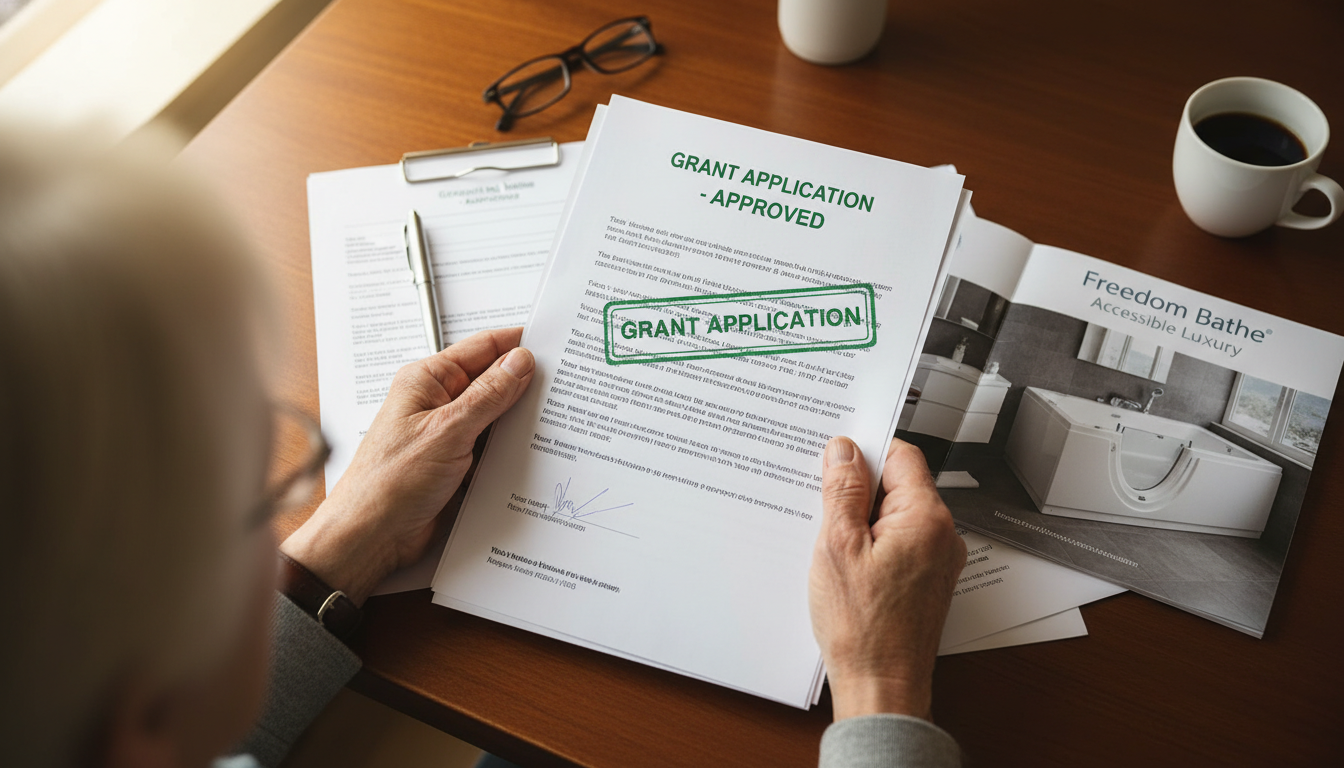 Government grants and VA benefits can significantly reduce out-of-pocket costs for qualifying seniors
Medicaid HCBS Waivers
State Medicaid Home and Community-Based Services (HCBS) waivers can fund home modifications that prevent nursing home placement. Coverage varies by state, but many programs will pay for walk-in tub installations when a physician documents the medical necessity. We recommend starting with your state's Medicaid office or our Medicare coverage guide for specifics.
Area Agency on Aging Programs
Your local Area Agency on Aging (AAA) often administers small grant programs specifically for home modifications. Funding amounts are typically $2,000 to $5,000 and are usually reserved for low-income seniors. These programs fill up quickly, so apply early in the fiscal year.
USDA Rural Development Grants
The USDA Section 504 Home Repair Program provides grants of up to $10,000 for homeowners aged 62 and older who live in rural areas and cannot repay a loan. The program also offers loans at just 1% interest for up to $40,000 in repairs. This is one of the most generous programs available, but it is limited to rural areas as defined by the USDA.
FHA Title 1 Home Improvement Loan
The FHA Title 1 Home Improvement Loan is a federally insured loan specifically designed for home improvements, including handicap accessible bathtub installations and senior bathroom remodel projects. Key benefits include:
- Borrow up to $25,000 for single-family homes
- No home equity required — even homeowners with little or no equity can qualify
- Fixed interest rates, typically 7% to 12% APR
- Repayment terms up to 20 years
- Can be combined with other HUD home modification assistance programs
The FHA Title 1 loan is particularly useful for seniors who need an ADA compliant bathtub or a complete aging in place bathroom renovation but do not have enough home equity for a HELOC. Your lender must be FHA-approved, but most major banks and credit unions participate.
FHA 203(k) Rehabilitation Loan
If you are purchasing a home or refinancing, the FHA 203(k) rehabilitation loan rolls home improvement costs into your mortgage. This can cover a walk-in tub installation, walk-in tub with shower conversion, grab bars, and other elderly bathroom renovation work — all within a single mortgage payment. The Limited 203(k) covers projects up to $35,000, which is more than enough for a complete bathroom accessibility overhaul.
Reverse Mortgage for Home Modifications
Homeowners aged 62 and older can use a reverse mortgage (HECM) to fund walk-in tub installations and other senior home improvement projects without making monthly loan payments. Instead, the loan is repaid when you sell the home, move out, or pass away. This option works well for asset-rich, cash-poor seniors who want to age in place without adding a monthly payment to their budget.
A reverse mortgage can fund not just a walk-in tub but an entire bathroom accessibility project — including a therapeutic bathtub with hydrotherapy jets, grab bars, non-slip flooring, and an accessible vanity. However, closing costs are high (typically $8,000 to $15,000), so this option makes the most financial sense when you are bundling multiple home modifications together.
Nonprofit and Community Assistance
Several nonprofit organizations fund elderly bathroom renovation projects and other home modifications for seniors. While availability depends on your location, these low income walk-in tub assistance sources are worth investigating.
- Rebuilding Together: A national nonprofit that provides free home repairs and modifications for low-income homeowners, including bathroom accessibility upgrades.
- Habitat for Humanity: Some local chapters run aging-in-place programs that fund bathroom modifications.
- State housing finance agencies: Many states operate low-interest loan or grant programs for senior home modifications. Check your state's housing authority website.
- Community development block grants (CDBG): Your city or county may allocate federal CDBG funds for senior home modifications. Contact your local housing department.
For a comprehensive list of financial assistance programs in your area, see our guide to senior home modification grants and loans.
Credit Cards with Promotional APR
A 0% APR introductory credit card can work for smaller projects or as a supplement to other financing. Many cards offer 15 to 21 months of 0% interest on purchases.
This option works best when the project cost is under $5,000 and you can pay it off within the promotional period. For a full $10,000+ installation, we generally advise against putting the entire amount on a credit card. If the promotional period ends before you pay off the balance, standard credit card rates of 20% to 29% kick in, which can be devastating.
Pro Tip: If you use a credit card for a portion of the project, choose one that earns cash back or rewards. A 2% cash-back card on a $5,000 charge earns $100 back — essentially a small discount on your installation.
Does Insurance Cover a Walk-in Tub? HSA, FSA & Tax Deductions
One of the most common questions we hear is "does insurance cover a walk-in tub?" The short answer is: standard homeowner's insurance does not, but there are several ways to reduce your cost through health-related accounts and tax benefits.
Health Insurance and Walk-in Tub Coverage
Most private health insurance plans do not cover walk-in tub insurance coverage as a standard benefit. However, there are exceptions. If your physician documents that a walk-in tub is medically necessary to prevent falls or treat a specific condition (such as arthritis or mobility impairment), some Medicare Advantage plans and supplemental policies may provide partial reimbursement. Always call your plan's benefits line and ask specifically about durable medical equipment or home modification benefits before assuming you are not covered.
Using HSA or FSA for a Walk-in Tub
A Health Savings Account (HSA) or Flexible Spending Account (FSA) can potentially cover a walk-in tub installation if you have a Letter of Medical Necessity (LMN) from your physician. The IRS allows HSA and FSA funds to be used for home improvements that are primarily for medical care, and a walk-in tub prescribed to prevent falls or treat a medical condition often qualifies.
- HSA advantage: Funds roll over year to year, so you can accumulate enough to cover a significant portion of the installation cost
- FSA limitation: Most FSAs have a "use it or lose it" rule with annual limits around $3,200, so FSA funds typically cover only part of the project
- Documentation required: Keep the physician's LMN, itemized invoices, and proof of payment for your tax records
Is a Walk-in Tub Tax Deductible?
Yes — a walk-in tub can be tax deductible as a medical expense under IRS rules when it is installed primarily for medical reasons. The key requirements:
- A physician must prescribe the modification for a specific medical condition
- The deduction applies to the portion of the cost that exceeds any increase in home value the tub provides
- Total medical expenses (including the tub) must exceed 7.5% of your adjusted gross income to qualify for the itemized deduction
- Installation labor, plumbing modifications, and related construction costs are all includable
For a $10,000 walk-in tub installation where an appraiser determines the tub adds $2,000 to your home's value, $8,000 would be deductible as a medical expense. Consult a tax professional to ensure you claim the deduction correctly. You may also be eligible for your state's property tax exemption for disability modifications — check with your county assessor's office.
Comparing Your Financing Options
Here is how the major financing paths stack up for a $10,000 walk-in tub installation:
| Financing Option | APR Range | Monthly Payment | Total Cost | Best For |
|---|---|---|---|---|
| Manufacturer 0% APR (24 mo) | 0% | $417 | $10,000 | Strong credit, can pay in 2 years |
| Personal Loan (5 yr) | 6.5% - 36% | $196 - $362 | $11,760 - $21,720 | Fast funding, no collateral |
| Home Equity Loan (10 yr) | 7% - 10% | $116 - $132 | $13,920 - $15,840 | Lowest monthly payment |
| HELOC (variable) | 6.5% - 9% | $54 - $75* | Varies | Flexible draw, multiple projects |
| VA HISA Grant | 0% | $0 | $0 (up to $6,800) | Veterans with disabilities |
| Medicaid HCBS Waiver | 0% | $0 | $0 (varies by state) | Low-income, medical necessity |
| Credit Card 0% APR (18 mo) | 0% | $556 | $10,000 | Smaller amounts, rewards |
| FHA Title 1 Loan (15 yr) | 7% - 12% | $90 - $120 | $16,200 - $21,600 | Low/no equity homeowners |
| Reverse Mortgage (HECM) | Variable | $0* | Varies (repaid at sale) | Age 62+, asset-rich, cash-poor |
| HSA / FSA (with LMN) | 0% | N/A (pre-tax savings) | $0 (already saved) | Medical necessity documented |
*HELOC payments shown are interest-only during the draw period. Reverse mortgage has no monthly payments — the loan is repaid when the homeowner sells, moves, or passes away.
How to Qualify and What Lenders Look For
Qualifying for walk-in tub financing depends on the type of product you choose. Here is what lenders typically evaluate:
- Credit score: Most personal loans require a minimum of 580 to 640. Home equity products typically need 620+. Manufacturer financing programs vary, but many accept scores as low as 550.
- Debt-to-income ratio: Lenders prefer your total monthly debt payments to be below 43% of your gross monthly income.
- Home equity: For HELOCs and home equity loans, most lenders require at least 15-20% equity in your home.
- Income verification: Fixed-income seniors can use Social Security, pension payments, and retirement distributions as qualifying income.
If your credit score needs improvement, even a few months of paying down existing balances and correcting credit report errors can make a meaningful difference in the rates you qualify for. For walk-in tub for disabled individuals on supplemental security income, government grant programs (VA, USDA, Medicaid waivers) have income-based rather than credit-based qualification, making them the best starting point.
If your credit is below 580, your best options for no credit check walk-in tub financing are manufacturer lease-to-own programs, nonprofit assistance through Rebuilding Together or Habitat for Humanity, or a co-signer on a personal loan. The FHA Title 1 loan is also more lenient than conventional products, with many lenders approving scores as low as 560.
Red Flags to Avoid When Financing
The walk-in tub industry has its share of aggressive financing tactics. Watch out for these warning signs:
- Pressure to sign today: Any dealer who says the price disappears if you do not sign immediately is using a high-pressure sales tactic. Legitimate offers will still be available next week.
- Bundled financing with inflated prices: Some companies inflate the tub price by 30-50% and then offer "generous" financing. Always compare the cash price to independent retailers before evaluating the financing terms.
- Prepayment penalties: Avoid any loan that charges a fee for paying it off early. Most modern personal loans and HELOCs do not have prepayment penalties, but always confirm in writing.
- Variable rates without caps: If you choose a variable-rate product, ensure it has a rate cap that limits how high the interest can climb.
- Verbal promises not in the contract: If the salesperson promises a specific rate, term, or monthly payment, make sure it appears in the written agreement before you sign.
Step-by-Step: How to Finance Your Walk-in Tub
Here is our recommended approach to securing the best financing for your walk-in tub project:
- Get your total project cost: Schedule a home safety assessment to understand the full scope of work including plumbing, electrical, and structural modifications.
- Check for grants first: Apply to VA, Medicaid, AAA, and USDA programs before taking on any debt. Free money should always be your first choice.
- Pull your credit report: Review your score at AnnualCreditReport.com and correct any errors before applying for loans.
- Check HSA/FSA eligibility: If you have a Health Savings Account or FSA, ask your doctor for a Letter of Medical Necessity. Using pre-tax dollars can save you 25-35% compared to after-tax financing.
- Compare at least three lenders: Get written quotes from your bank, a credit union, and an online lender. Include FHA Title 1 loans in your comparison if you have limited home equity. Compare APR, monthly payment, total cost, and fees.
- Evaluate manufacturer offers: Ask about Safe Step financing, Kohler walk-in bath financing, or American Standard walk-in tub promotions and compare them to your external loan quotes. Check for AARP walk-in tub discounts or senior discount programs too.
- Read the fine print: Look for deferred interest clauses, prepayment penalties, and variable rate terms before signing anything.
- Plan for the tax deduction: Save all receipts, the physician's letter, and contractor invoices so you can claim the walk-in tub tax deduction as a medical expense on your next return.
- Bundle if possible: If you also need bathroom accessibility upgrades like grab bars or a raised toilet, financing the entire project together often reduces the per-item cost.
Making Your Decision
Is a walk-in tub worth the money? When you factor in the cost of a single emergency room visit from a bathroom fall (averaging $35,000 to $40,000 including hospitalization), plus the potential for a nursing home stay at $8,000+ per month, the walk-in tub return on investment becomes clear. A $10,000 tub can pay for itself after preventing just one serious fall. Many appraisers also report a modest walk-in tub home value increase of $3,000 to $5,000 for homes in areas with aging populations.
Walk-in tub financing is not one-size-fits-all. A veteran with a service-connected disability should start with the HISA grant. A homeowner with strong equity should explore a HELOC for the lowest monthly payment. A family that needs fast installation should consider a personal loan or manufacturer financing for same-week approval. And anyone with documented medical necessity should look into HSA/FSA funds and the medical expense deduction before choosing a loan.
The most important step is to avoid delaying a safety upgrade because of the upfront cost. Bathroom falls send over 230,000 seniors to emergency rooms every year, and many of those falls are preventable with the right equipment. Whatever financing path you choose, the investment in a walk-in tub protects both your loved one's safety and your family's long-term finances.
Still deciding between a tub and a shower? See our walk-in tub vs roll-in shower cost comparison to make sure you are financing the right solution for your needs. Once you have decided, start by getting an accurate project estimate, then work through the financing options from free (grants) to lowest-cost (home equity) to most accessible (personal loans). With the right plan, the walk-in tub cost per month can be less than a cable TV bill — and the safety benefits last for decades.
Ready to Take Action?
Learn more about our comprehensive walk in tubs solutions and how they can help your family.
Explore Walk In Tubs About James Wilson
Home Safety Specialist & Accessibility Consultant
Certified home safety specialist with 10+ years designing accessible living spaces for seniors and individuals with mobility challenges.
Related Articles
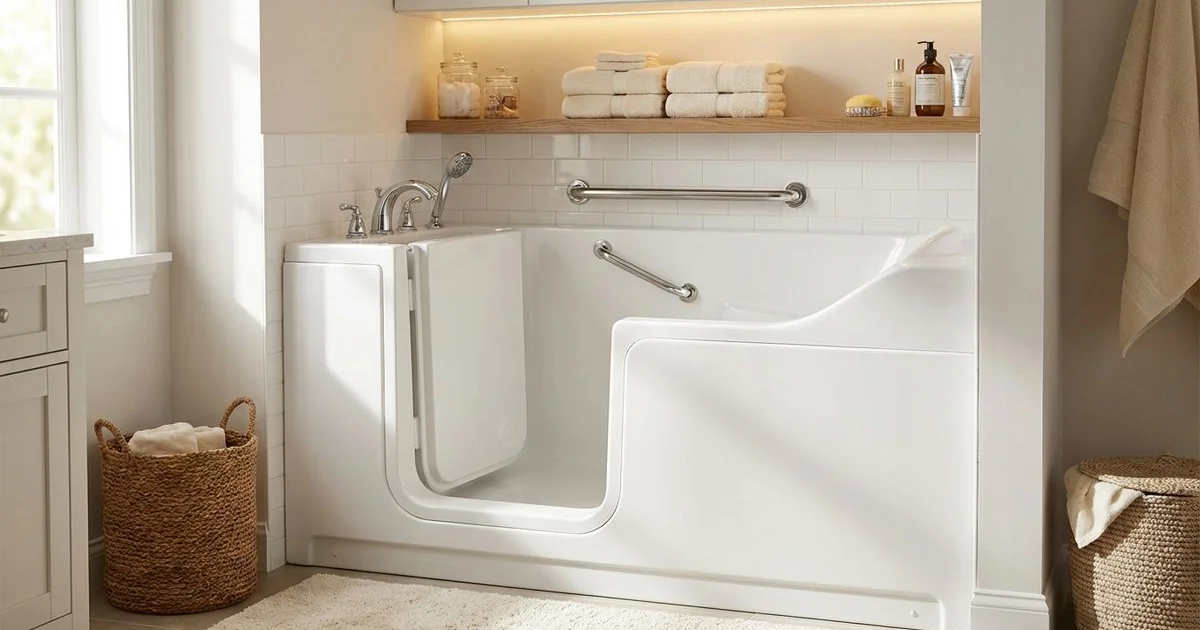
Walk-in Tub Cost Guide: What to Expect in 2026 (With Price Breakdown)
Comprehensive breakdown of walk-in tub costs including installation, features, and financing options.

Senior Home Modification Grants, Loans & Assistance Programs
Complete guide to financial assistance for aging-in-place home modifications.
Does Medicare Cover Home Modifications? What's Covered and What's Not
Detailed breakdown of which aging-in-place modifications Medicare, Medicaid, and Medicare Advantage plans will and won't cover.