10 Smart Home Devices That Help Seniors Age in Place Safely
From automatic stove shut-offs to smart medication dispensers — the most useful smart home technology for senior safety.

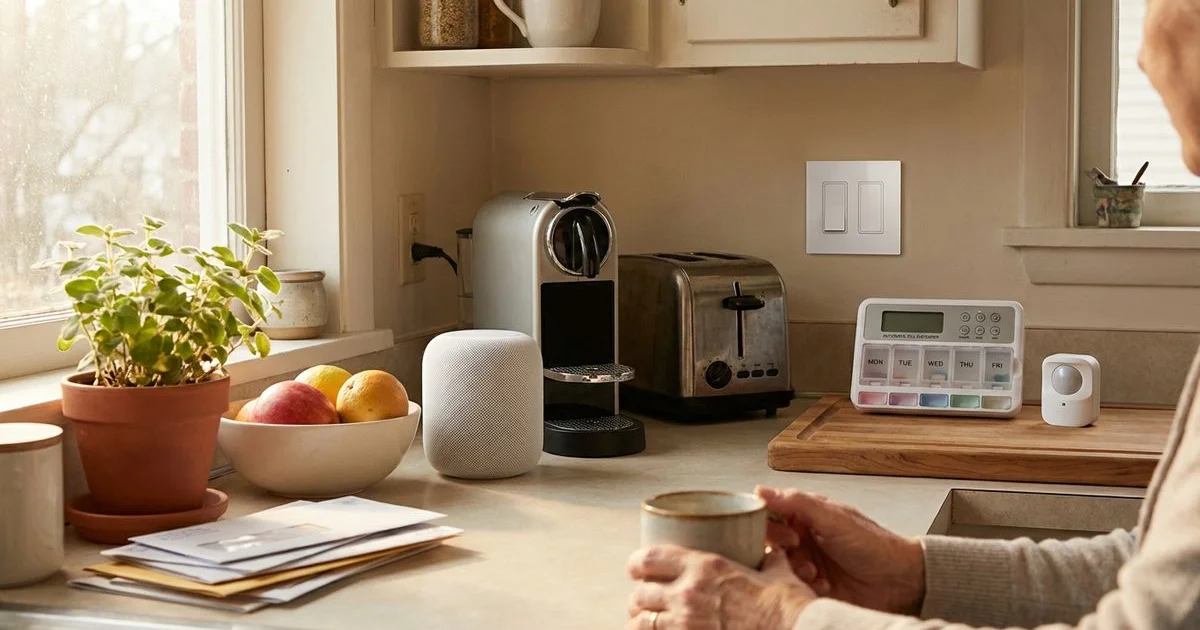
Smart Technology Is Changing Aging in Place
Ten years ago, aging in place meant grab bars, brighter light bulbs, and a simple medical alert pendant. Today, smart home technology has opened up entirely new possibilities for keeping seniors safe, connected, and independent. We have found that the key is choosing devices that genuinely solve problems rather than adding complexity. Seniors do not need a fully automated smart home. They need targeted technology that addresses their specific risks.
After installing and evaluating smart home devices in hundreds of senior homes, our team has identified the ten devices that consistently deliver the most practical benefit. You know how overwhelming the electronics aisle can be? We cut through that noise to find tools that actually work for older adults. Each device on this list meets three criteria: it solves a real safety problem, it is simple enough for most seniors to use (or operates automatically), and it has proven reliability in real-world conditions.
Let’s look at the data, what it’s actually telling us about senior safety, and then explore a few practical ways to respond.
1. Automatic Stove Shut-Off Device
Why it matters: Kitchen fires are the leading cause of home fires for adults over 65. Forgetting a burner is on creates a serious and immediate danger, especially for those with early-stage cognitive decline. The National Fire Protection Association reports that cooking causes nearly half of all home fires, with unattended equipment being the primary culprit.
How it works: Devices like the FireAvert and iGuardStove monitor your stove and automatically shut it off when they detect danger. The FireAvert plugs into the outlet behind the stove and cuts power if it hears your smoke detector sounding for a set period. The more advanced iGuardStove uses motion sensors or radar to see if anyone is in the kitchen. If you walk away for five minutes, it shuts the stove off automatically.
Cost:
- FireAvert: Approx. $150-$200 (Electric models are cheaper/easier).
- iGuardStove: Approx. $400-$600 (Requires professional install for gas).
Pro Tip from Our Installers
“If you have an electric stove, the FireAvert is the easiest retrofit. However, for gas stoves, we strongly suggest the iGuardStove because it physically shuts the gas valve, which is safer than just cutting the igniter power.”
My recommendation: The FireAvert is my top pick for electric stoves because of its simple plug-and-play setup. For a higher level of protection, the iGuardStove is superior because it prevents the fire from starting in the first place by tracking user presence.
2. Smart Medication Dispenser
Why it matters: Medication errors send more than 125,000 seniors to the emergency room every year. Taking the wrong dose, missing doses, or double-dosing can be life-threatening with medications like blood thinners and insulin.
How it works: Modern dispensers like Hero Health and MedMinder do more than just sort pills. They pre-load up to 90 days of medications and dispense the correct pills at the exact right time.
- Hero Health: Uses a robotic arm to sort pills and an app to notify caregivers if a dose is missed.
- MedMinder: Features a cellular connection (no Wi-Fi needed) and locking compartments that only open at the scheduled time.
Cost Comparison:
| Feature | Hero Health | MedMinder |
|---|---|---|
| Upfront Cost | ~$100 (often discounted) | ~$0 (Rental model) |
| Monthly Fee | ~$44.99/mo | ~$50-$70/mo |
| Connectivity | Wi-Fi Required | Cellular (Built-in) |
| Best For | Complex regimens (up to 10 meds) | Dementia (Locking feature) |
My recommendation: The Hero Health system is the most comprehensive option for tech-savvy families due to its detailed app and pharmacy integration. For a simpler approach, the MedMinder with its cellular connection works well for seniors who do not have Wi-Fi or who need physical locking mechanisms to prevent overdose.
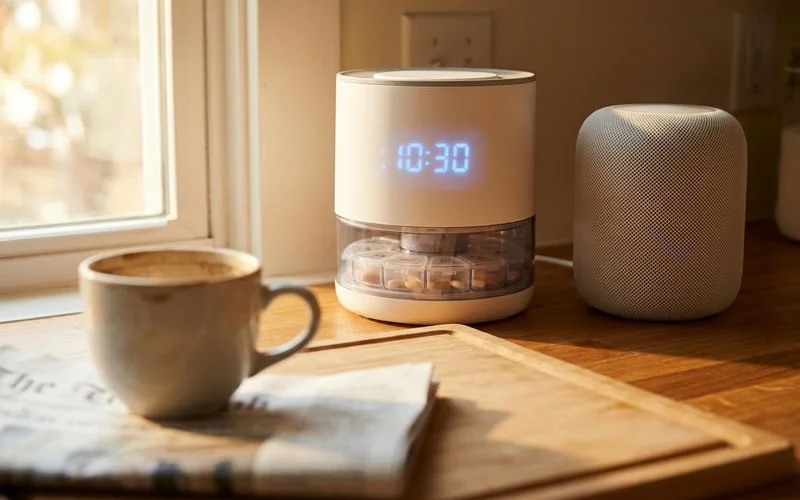 Smart medication dispensers can prevent dangerous dosing errors and alert caregivers to missed doses
3. Motion-Activated Smart Lighting
Why it matters: Poor lighting contributes to more than half of all senior falls at home. Fumbling for light switches in the dark is a common fall trigger, especially during those inevitable nighttime bathroom trips.
How it works: Motion-sensor lights activate automatically when they detect movement, illuminating the path before the senior takes a step.
- Simple: Plug-in units like Maz-Tek or AuVon go into any wall outlet.
- Integrated: Systems like Lutron Caseta use wireless motion sensors mounted in corners to turn on main overhead lights automatically.
Cost: $15 for plug-ins; $50-$150 for smart switch systems.
My recommendation: For a whole-home solution, we prefer Lutron Caseta sensors because they have a 10-year battery life and don’t require Wi-Fi to talk to the switch. For a simpler solution, plug-in motion-activated LED night lights cost under $15 each and require zero setup. Install them along the path from bedroom to bathroom as part of your fall prevention strategy.
4. Smart Door Lock With Keypad
Why it matters: Fumbling with keys is difficult for seniors with arthritis or tremors. Getting locked out is both a safety risk and an anxiety source. Traditional locks also make it harder for caregivers and emergency responders to access the home quickly.
How it works: Smart locks replace your existing deadbolt. You can unlock them with a code, a smartphone app, or even a tap of a watch.
- The “Tap” Feature: The Schlage Encode Plus allows iPhone users to simply tap their phone or Apple Watch against the lock to open it—no app or code required.
Cost: $250 to $350 installed.
My recommendation: The Schlage Encode Plus is our winner because of the “Apple Home Key” tap-to-unlock feature, which is incredibly intuitive for seniors. The Yale Assure Lock 2 is a strong runner-up, offering excellent reliability and key-free options for those who might lose physical keys.
5. Video Doorbell
Why it matters: Answering the door is risky for seniors with mobility issues, as rushing to the door increases fall risk. It also exposes them to aggressive solicitors or potential scams. A video doorbell lets them screen visitors from the safety of their recliner.
How it works: When a visitor presses the button, the camera sends a live video feed to a smartphone, tablet, or smart display (like an Echo Show). The senior can see and speak to the person without opening the door.
Cost:
- Device: $100-$250.
- Subscription: Ring Protect ($4.99/mo) or Nest Aware ($8/mo).
My recommendation: The Ring Battery Doorbell Pro pairs perfectly with an Amazon Echo Show. When someone rings the bell, the video automatically pops up on the Echo screen—no “tech skills” needed. Google Nest Doorbell is an excellent alternative if the home already uses Google speakers.
6. Voice-Activated Smart Speaker
Why it matters: Voice control acts as a universal remote for the real world. It eliminates the need to physically reach for switches, dials, or phones, which is a massive benefit for seniors with limited mobility or vision.
How it works: Devices like the Amazon Echo Show 8 or Google Nest Hub sit on a counter and listen for a “wake word.”
- Communication: “Alexa, call my daughter.”
- Control: “Alexa, turn on the living room lights.”
- Reminders: “Alexa, remind me to take my blood pressure at 9 AM.”
Cost: $50 to $150.
My recommendation: The Amazon Echo Show 8 (3rd Gen) is ideal because its “Adaptive Content” feature adjusts the screen display based on how close you are to it. The large visual cues combined with loud audio make it perfect for seniors with sensory decline.
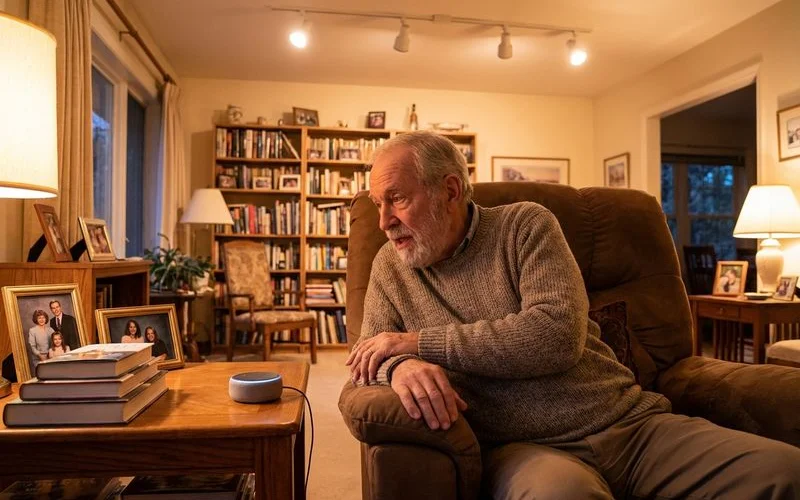 Voice-controlled smart home devices eliminate the need to physically reach switches and thermostats
7. Water Leak and Freeze Sensor
Why it matters: A forgotten running faucet or a burst pipe can cause catastrophic damage in minutes. Seniors living alone may not hear a running toilet or notice a leak until it becomes a slip hazard or a major financial burden.
How it works:
- Sensors: Small pucks placed near toilets and sinks that beep when wet.
- Shut-Off Valves: Devices like the Moen Flo attach to the main water line. They monitor pressure and flow rates 24/7. If they detect a leak (even a small drip), they can automatically shut off the water to the whole house.
Cost: $40 per sensor; $400-$800 for whole-home shut-off valves (installed).
My recommendation: We recommend the Moen Flo Smart Water Monitor. Its standout feature for seniors is that it will call their phone (not just text) if it detects a leak. For comprehensive protection, this automatic shut-off capability is worth the investment.
8. Smart Thermostat
Why it matters: Seniors are physiologically more vulnerable to heat and cold. A home that is too hot can cause dehydration, while a drafty home can lead to hypothermia. A smart thermostat ensures the environment remains safe without manual fiddling.
How it works: These devices maintain a set temperature range. The key feature for seniors is the remote room sensor.
- The Problem: Most thermostats are in the hallway, but the senior is in the living room.
- The Fix: A sensor placed near the senior tells the thermostat to keep that specific room comfortable.
Cost: $150 to $250.
My recommendation: The Ecobee Smart Thermostat Premium is our top choice because it includes a SmartSensor in the box. It also has a built-in air quality monitor that can alert you if the air becomes stale or unhealthy.
9. Bed Sensor Pad
Why it matters: Knowing if a senior is in bed—or if they haven’t returned to bed after a bathroom trip—is critical safety data. It allows caregivers to sleep better knowing they will be alerted only if there is a problem.
How it works: Modern sensors like the Withings Sleep Tracking Mat slide under the mattress. There is nothing to wear and nothing to charge. They track sleep cycles, heart rate, and presence.
Cost: $100 to $130.
My recommendation: The Withings Sleep Tracking Mat is superior to old-school pressure pads. It connects to Wi-Fi and provides a detailed health report to the app. You can set it up to trigger an alert if the bed is empty for a specific duration during the night. This integrates well with broader smart home monitoring systems.
10. Smart Smoke and Carbon Monoxide Detector
Why it matters: Standard smoke detectors are only effective if the person hears them and responds. Seniors with hearing loss may miss the high-pitched chirp of a traditional alarm.
How it works:
- Voice Alerts: The Google Nest Protect speaks in a clear, human voice: “Smoke detected in the kitchen.” This is less disorienting than a siren.
- Visual Cues: It flashes red for danger and yellow for a heads-up.
- Pathlight: When you walk under it at night, it glows white to light your way—a brilliant safety feature in itself.
Cost: $120 per unit.
My recommendation: Google Nest Protect is the gold standard. Its “Pathlight” feature alone prevents falls, and the phone alerts allow family members to check on the home remotely if an alarm goes off.
Creating Your Smart Home Safety Plan
The goal is not to install every device at once. We suggest starting with the items that address your loved one’s highest risks. A professional home safety assessment can help identify priorities.
- For fall risk: Start with motion-activated lighting (Lutron or plug-ins) and a bed sensor pad.
- For cognitive decline: Prioritize the automatic stove shut-off (FireAvert) and smart medication dispenser (Hero).
- For isolation concerns: Begin with an Echo Show for video calls and a Ring doorbell for safe visitor management.
- For general safety: Smart smoke detectors and water leak sensors provide foundational protection.
Build gradually, introduce one or two devices at a time, and give your loved one time to adjust before adding more. The best smart home setup is one that works invisibly in the background, providing safety without adding confusion or frustration.
Ready to Take Action?
Learn more about our comprehensive smart home monitoring solutions and how they can help your family.
Explore Smart Home Monitoring About James Wilson
Home Safety Assessment Specialist
Certified home safety specialist with 10+ years of residential accessibility evaluation experience.
Related Articles
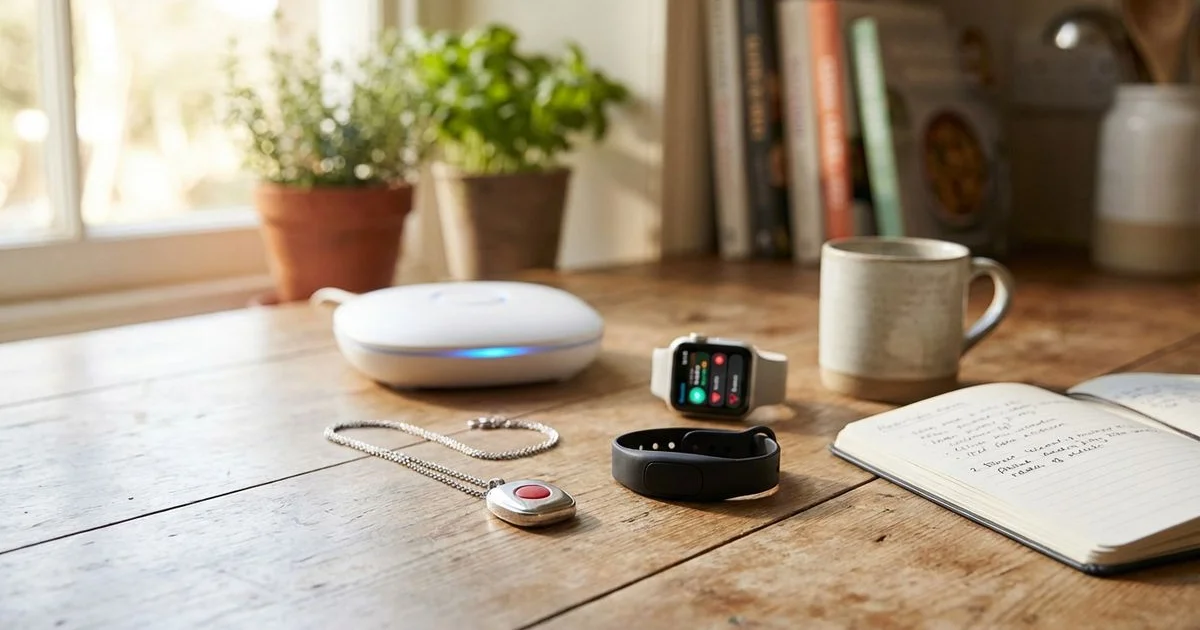
Best Medical Alert Systems for Seniors in 2026: Expert Comparison
In-depth comparison of top medical alert systems including fall detection, GPS, and monitoring features.
How to Monitor Elderly Parents Without Cameras: Privacy-Friendly Options
Non-intrusive ways to monitor elderly parents' safety using motion sensors, activity trackers, and smart home systems.