Independent Assisted Living 2026: How to Stay Home Safely With the Right Support
A comprehensive guide to independent assisted living — combining aging-in-place strategies, home modifications, assistive technology, and professional care services so seniors can maintain independence without moving to a facility.

What Is Independent Assisted Living?
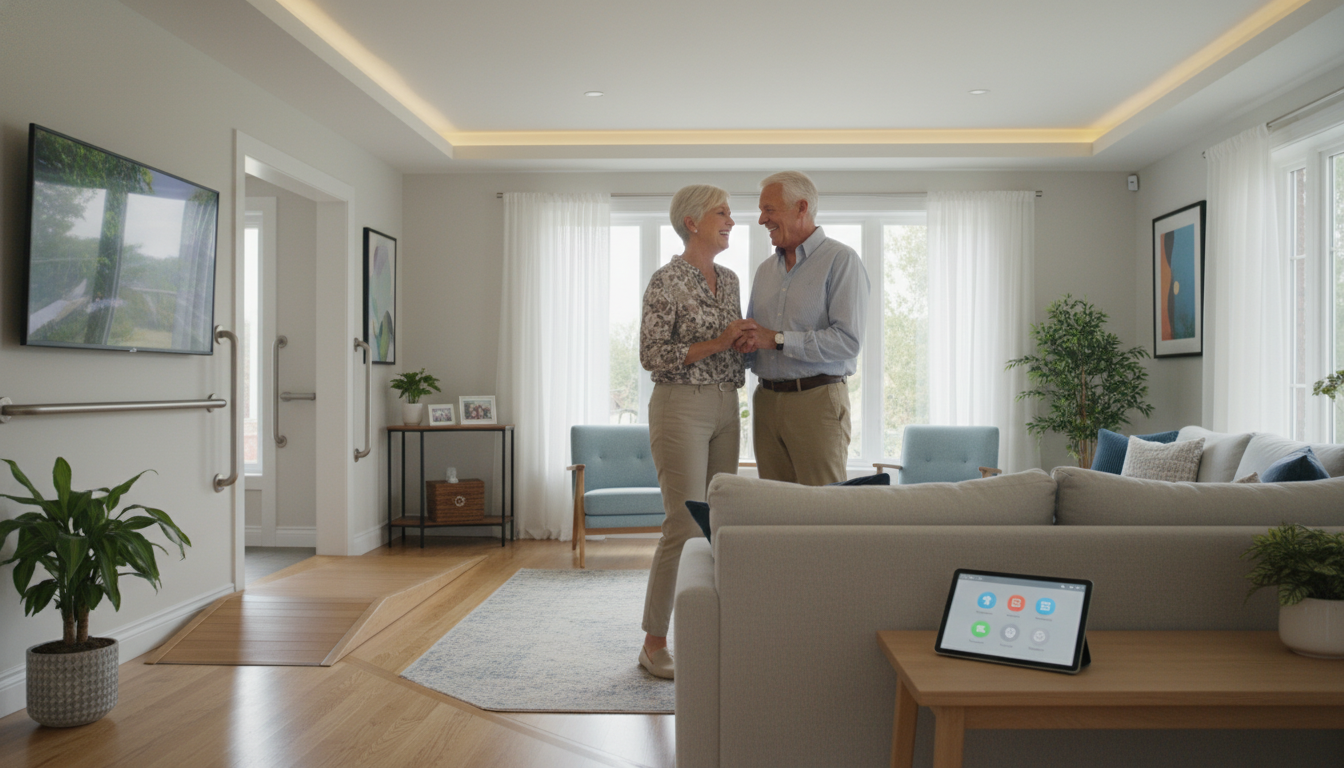
Independent assisted living is the approach of remaining in your own home while using a tailored combination of home modifications, assistive devices, professional care services, and smart technology to maintain safety and quality of life. Unlike moving to a senior living community or assisted living facility, this model keeps seniors in the familiar environment they love while bringing the support to them.
The concept bridges the gap between full independence and facility-based assisted living. Many seniors reach a point where they need some help with daily activities — medication management, meal preparation, bathing, or mobility — but do not require the round-the-clock supervision that a residential care facility provides. Independent assisted living fills that middle ground by layering the right services and equipment into the home environment.
According to AARP, 77% of adults over 50 want to remain in their homes as they age. The challenge is doing so safely. We consider independent assisted living to be a proactive strategy that anticipates needs before a crisis occurs — rather than a reactive scramble after a fall or health event forces a decision. For families exploring this path, our aging in place services guide provides a detailed overview of available support options.
"Independent assisted living is not about choosing between independence and safety — it is about designing a home environment where you can have both."
Independent Living vs. Assisted Living: Key Differences
Understanding the difference between independent living, assisted living, and independent assisted living at home helps families make informed decisions about the best path forward. Each option serves different needs and comes with distinct trade-offs in cost, freedom, social engagement, and care level.
| Factor | Independent Living Community | Assisted Living Facility | Independent Assisted Living at Home |
|---|---|---|---|
| Monthly Cost | $1,500–$4,000 | $4,500–$8,000+ | $500–$5,000 (varies by services) |
| Care Level | Minimal — social activities, maintenance | Moderate — ADL assistance, medication management | Customizable — from occasional to daily help |
| Personal Freedom | High — own schedule, own space | Moderate — structured meals, activities | Highest — complete autonomy in own home |
| Social Engagement | Built-in community | Built-in community | Requires proactive planning |
| Home Equity | Often sold to fund move | Often sold to fund move | Preserved — asset stays in family |
The financial advantage of independent assisted living at home can be significant. The national median cost of an assisted living facility is now $5,350 per month, according to Genworth's 2025 Cost of Care Survey. In contrast, a senior who owns their home outright might spend $1,500 to $3,000 monthly on a combination of part-time home health aides, a medical alert system, and periodic home maintenance — while preserving their home equity. For those who need more substantial help, costs can approach facility levels, but the care is personalized and the senior remains in familiar surroundings. Our guide on what to do when assisted living is not enough helps families evaluate when home-based care reaches its limits.
Essential Home Modifications for Independent Living
The foundation of successful independent assisted living is a home environment that has been adapted for safety and accessibility. Home modifications range from simple, low-cost changes to comprehensive renovations — and the right combination depends on the senior's current abilities and anticipated future needs.
Bathroom modifications are the highest priority because the bathroom is where most in-home falls occur. Essential upgrades include grab bars near the toilet and in the shower, a senior-friendly bathroom with non-slip flooring, a walk-in shower or walk-in tub, a comfort-height toilet, and lever-style faucet handles. See our detailed non-slip bathroom flooring guide for material recommendations.
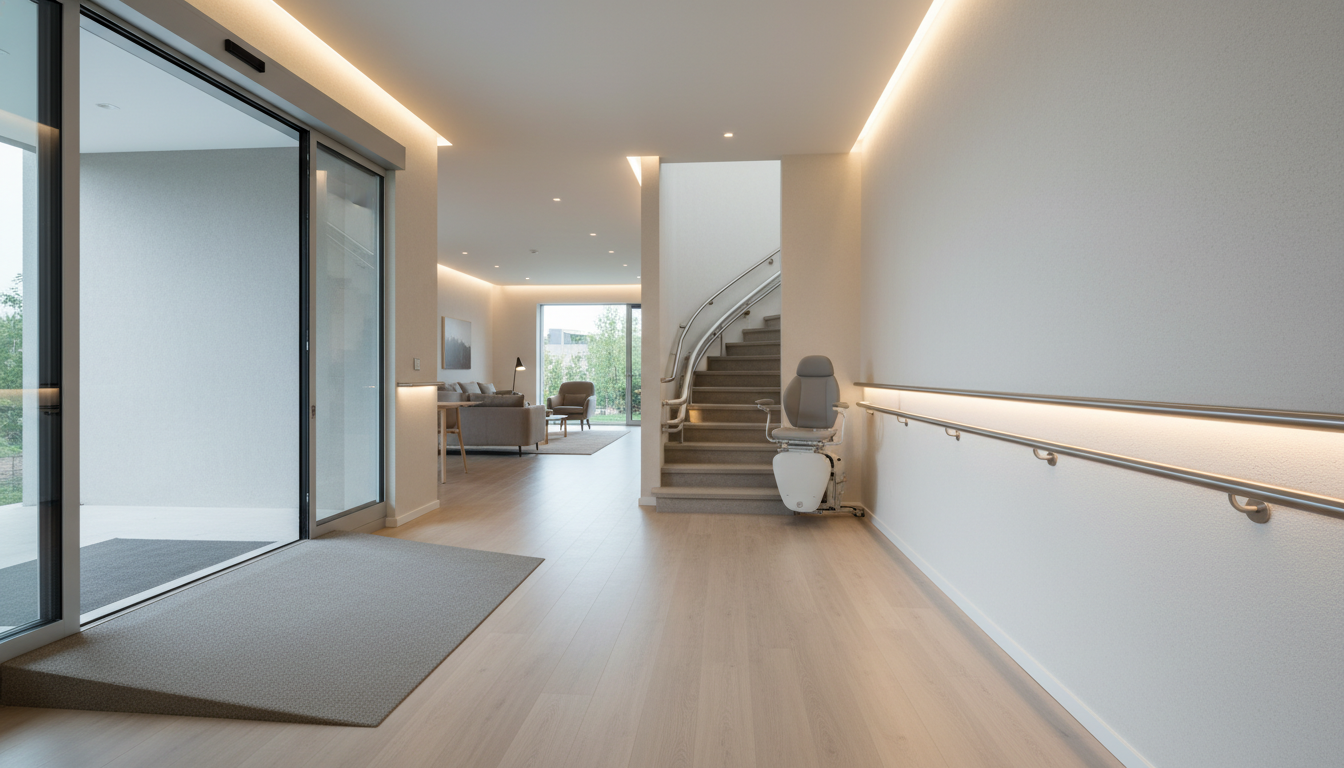
Stairway solutions address one of the most significant barriers to aging in place in a multi-story home. A stairlift allows seniors to safely travel between floors without climbing stairs. Costs range from $3,000 to $5,000 for a straight staircase model and $8,000 to $15,000 for curved configurations. For homes where a stairlift is not practical, consider converting a main-floor room into a bedroom to eliminate stair use entirely.
Entrance accessibility ensures the senior can safely enter and exit their home. This may include a ramp or accessible entrance, wider doorways (36 inches minimum for wheelchair passage), lever door handles replacing round knobs, improved exterior lighting, and a covered porch area to prevent ice and rain from creating slip hazards.
Kitchen adaptations help seniors continue preparing meals independently. Pull-out shelving, lazy Susans in corner cabinets, a side-opening oven or microwave drawer, touch-activated or lever faucets, and contrasting-color countertop edges for seniors with low vision all contribute to kitchen safety. Induction cooktops are increasingly recommended because they only heat when cookware is present, dramatically reducing burn and fire risk.
Assistive Technology and Equipment for Seniors
Modern assistive technology has transformed what is possible for seniors living independently. The right combination of devices can provide the safety net that allows older adults to remain at home confidently — and gives their families peace of mind from a distance.
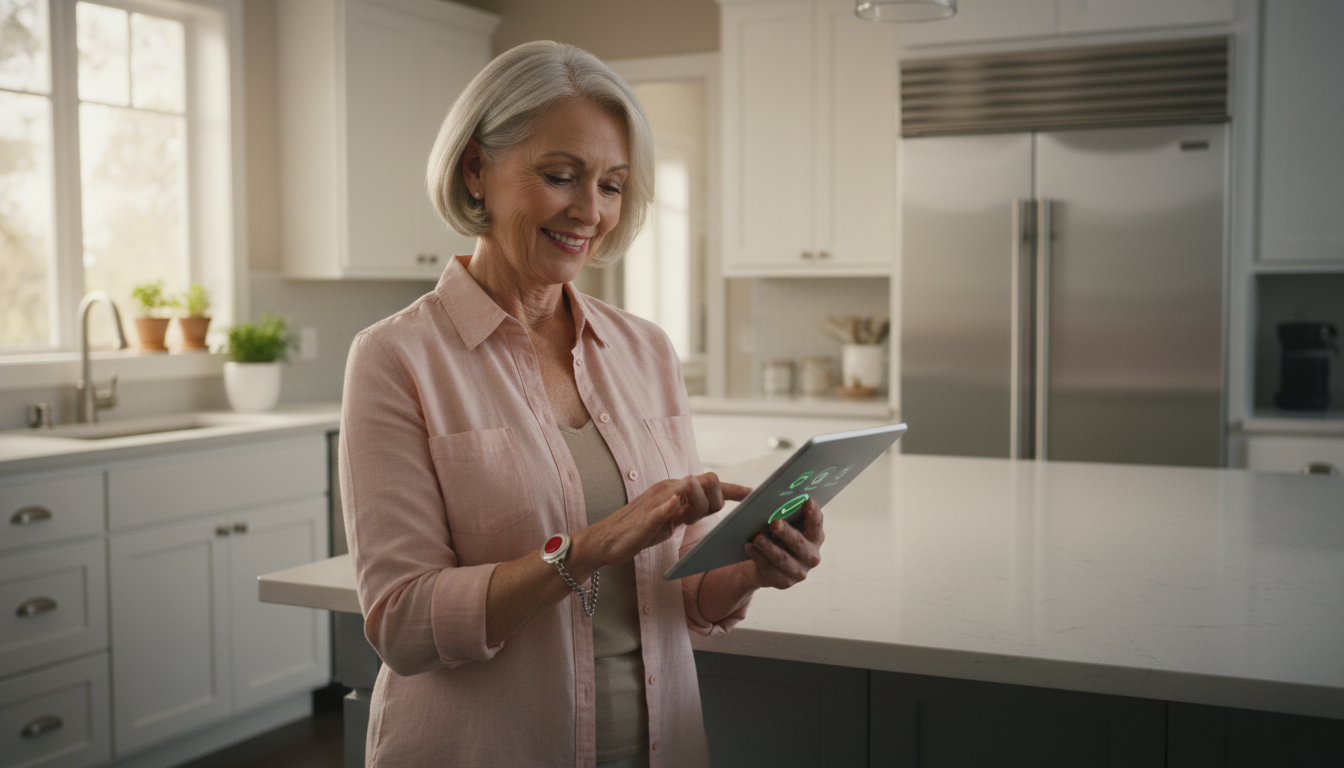
Medical alert systems are the cornerstone of independent assisted living technology. These wearable devices allow seniors to summon emergency help with the push of a button. Modern systems like Medical Guardian, Life Alert, and Bay Alarm Medical offer automatic fall detection, GPS tracking for outdoor use, and two-way communication. Monthly monitoring costs range from $20 to $50. Some systems integrate with smart home platforms for a comprehensive safety network. Our smart home monitoring resource covers the latest options.
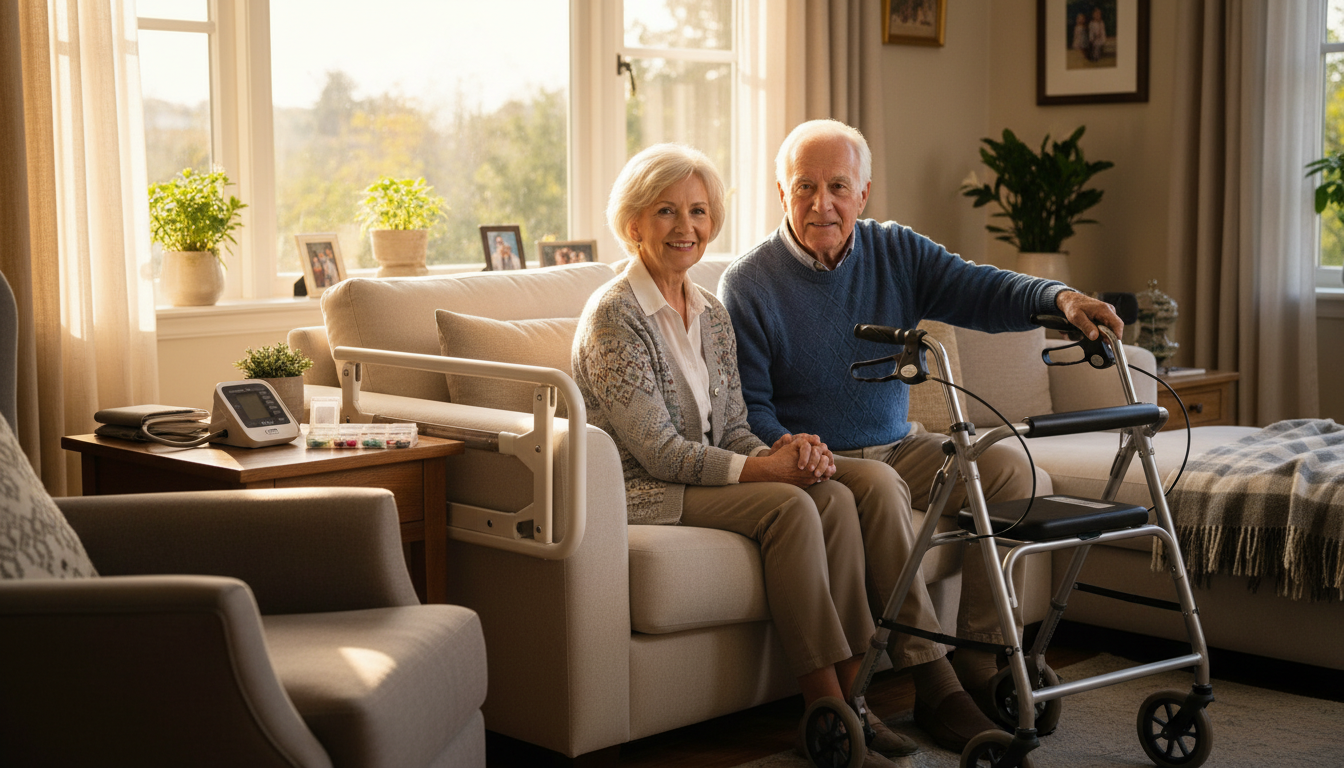
Mobility aids help seniors move safely through their home and community. Walkers, rollators, canes, and wheelchairs should be properly fitted by a physical therapist — an improperly sized mobility aid can actually increase fall risk. Medicare Part B covers durable medical equipment (DME) including walkers, wheelchairs, and hospital beds when prescribed by a physician. See our home medical equipment guide for a complete overview of covered devices.
Smart home devices provide monitoring and automation that support independence. Voice assistants (Amazon Echo, Google Nest) allow seniors to set medication reminders, make phone calls, control lighting, and get answers to questions — all hands-free. Smart doorbells let seniors see and speak with visitors without walking to the door. Automated lighting that responds to motion sensors eliminates the need to navigate dark hallways. Smart thermostats ensure the home stays at a safe temperature, which is critical for seniors who may be sensitive to extreme heat or cold.
Medication management systems address one of the most common challenges in independent living. Automatic pill dispensers like MedMinder or Hero dispense the correct medications at the right times and alert caregivers if a dose is missed. These devices cost $30 to $100 per month and can prevent dangerous medication errors that are a leading cause of emergency room visits among older adults.
Professional Care Services for Home-Based Independence
Even with the best home modifications and technology, most seniors eventually benefit from some level of professional care support. The key to successful independent assisted living is matching the right level of service to the senior's actual needs — not over-serving or under-serving.
Home health aides provide assistance with activities of daily living (ADLs) including bathing, dressing, grooming, toileting, and meal preparation. They are not licensed to provide medical care but handle the personal care tasks that become difficult as mobility or cognitive function declines. Costs average $27 to $33 per hour nationally, with most families using 10 to 40 hours per week depending on needs.
Home health care (as distinct from home health aides) involves licensed medical professionals — registered nurses, physical therapists, occupational therapists, and speech therapists — who provide skilled care in the home. Medicare covers home health care when a physician certifies that the patient is homebound and needs skilled services. This can include wound care, IV medication administration, rehabilitation after surgery, and chronic disease management.
Adult day programs provide structured daytime activities, meals, and socialization for seniors who are home alone during the day while family caregivers work. These programs typically operate weekdays from 7 AM to 6 PM and cost $75 to $150 per day. They provide meaningful social engagement — one of the biggest challenges of aging at home — while giving family caregivers reliable respite.
Geriatric care managers (also called aging life care professionals) are specialists who assess a senior's needs, coordinate services, mediate family decisions, and manage the logistics of aging in place. They charge $100 to $250 per hour for consultations and are especially valuable when managing complex care situations or coordinating services across multiple providers.
Creating Your Aging-in-Place Plan: A Step-by-Step Approach
The most successful independent assisted living arrangements start with a thoughtful plan — not a panicked reaction to a health crisis. Here is our recommended approach to creating a comprehensive aging-in-place strategy that evolves with the senior's needs.
Step 1: Conduct a home safety assessment. Walk through the home with a critical eye (or hire a professional) and identify every potential hazard: tripping risks, poor lighting, difficult bathroom access, steep stairs, and hard-to-reach storage. Our home safety assessment guide provides a detailed checklist. Many Area Agencies on Aging offer free or low-cost professional home safety evaluations.
Step 2: Prioritize modifications by impact and cost. Not everything needs to happen at once. Start with the highest-risk, lowest-cost improvements: bathroom grab bars, improved lighting, removal of throw rugs, and a medical alert system. Then plan larger projects (walk-in shower conversion, stairlift installation, doorway widening) for the next phase.
Step 3: Evaluate current and future care needs. Be honest about what activities are becoming difficult. Can the senior safely bathe alone? Prepare meals? Manage medications? Get up from a fall? Drive to appointments? These answers determine what professional services or technology solutions to put in place. Our aging in place services guide helps match needs to available services.
Step 4: Build a support network. Independent assisted living works best with a team. Identify family members, friends, neighbors, and professionals who can each contribute. Assign specific roles: who handles medication oversight, who manages finances, who coordinates medical appointments, who provides social visits. Having a clear plan prevents caregiver burnout and ensures nothing falls through the cracks.
Step 5: Plan for emergencies. Create and post emergency plans for fire, power outage, severe weather, and medical emergencies. Ensure the medical alert system is tested monthly. Keep an updated medication list and emergency contact list on the refrigerator and in the senior's wallet. Register with the local fire department's file of life program if available.
Funding and Financial Resources for Independent Assisted Living
One of the most common concerns families have about independent assisted living is cost. The good news is that multiple funding sources exist, and combining them strategically can make aging in place far more affordable than facility-based care.
Medicare covers medically necessary home health care (skilled nursing, physical therapy, occupational therapy) when prescribed by a physician and the patient is homebound. Medicare Part B covers durable medical equipment (walkers, wheelchairs, hospital beds, oxygen equipment) at 80% after the deductible. Medicare does not cover home modifications, personal care aides, or medical alert systems under traditional plans — but some Medicare Advantage plans include these benefits.
Medicaid waiver programs are often the most valuable funding source for seniors with limited income. Most states offer Home and Community-Based Services (HCBS) waivers that cover personal care aides, home modifications, adult day programs, medical alert systems, and even meal delivery. Eligibility and covered services vary significantly by state — contact your state Medicaid office or Area Agency on Aging for specific details.
Veterans benefits through the VA include the Aid and Attendance pension (up to $2,431/month for a veteran with a spouse in 2026), the Homemaker and Home Health Aide program, and the Home Improvements and Structural Alterations (HISA) grant program that covers up to $6,800 in home modifications for service-connected disabilities.
Long-term care insurance policies typically cover home health aides, adult day programs, and sometimes home modifications and assistive technology. If the senior purchased a policy before needing care, review the benefit triggers (usually requiring help with 2+ ADLs or having a cognitive impairment) and daily benefit amounts. Contact the insurance company to start the claims process as soon as eligibility criteria are met.
Aging-in-place grants are available through various government and nonprofit programs. The USDA Section 504 program provides grants up to $10,000 for very-low-income rural homeowners over 62 for home repairs and accessibility modifications. Rebuilding Together, a national nonprofit, provides free home modifications for low-income seniors. Many states and municipalities have additional grant programs — the Eldercare Locator can help identify programs in your area.
Addressing Social Isolation: The Hidden Challenge
The biggest risk of independent assisted living is not physical — it is social isolation. Seniors living in their own homes do not have the built-in community that senior living facilities provide. Research from the National Academies of Sciences shows that social isolation increases the risk of dementia by 50%, heart disease by 29%, and depression by 26%. Addressing this proactively is essential to any aging-in-place plan.
Structured social activities provide reliable engagement. Adult day programs, senior center activities, faith community involvement, volunteer work, and hobby groups all create regular social contact. Transportation is often the barrier — ride services like GoGoGrandparent, local senior transportation programs, and volunteer driver networks can solve this.
Technology-enabled connection keeps seniors in touch with family and friends between in-person visits. Video calling (simplified tablets like GrandPad or standard iPads with large icons) allows face-to-face contact with distant family members. Social media groups for seniors with shared interests, online book clubs, and virtual exercise classes all combat isolation from home.
Companion care is a professional service specifically designed to address loneliness. Companion caregivers visit regularly to provide conversation, play games, go on outings, help with hobbies, and simply be present. Unlike personal care aides, companion caregivers focus on social and emotional well-being rather than physical assistance. Costs are similar to home health aides ($25–$35/hour) and can be scheduled for as few as 4 hours per week.
Knowing When Independent Living Is No Longer Enough
An honest assessment of when independent assisted living has reached its limits is one of the most important — and most difficult — conversations a family can have. Certain warning signs indicate that the current level of support may not be sufficient for safety.
Frequent falls despite home modifications and mobility aids suggest that the home environment may no longer be safe regardless of adaptations. If a senior is falling more than once every few months, a comprehensive evaluation by a geriatrician and physical therapist is warranted. Multiple falls may indicate a need for 24-hour supervision that home-based care cannot practically provide.
Wandering or getting lost is a sign of cognitive decline that creates serious safety risks in a home setting. GPS tracking and door alarms can help in early stages, but advanced dementia typically requires the secure environment that a memory care facility provides. Our guide on options when assisted living is not enough covers memory care and other higher-level care options.
Caregiver burnout is a legitimate reason to reconsider the independent living arrangement. If family caregivers are experiencing chronic exhaustion, health problems, relationship strain, or neglecting their own needs, the current care plan is not sustainable. Increasing professional services, adding respite care, or transitioning to facility care may be necessary to protect both the senior and their caregivers.
Escalating care costs can reach a tipping point where 24/7 home care costs more than a residential facility that provides comparable services. When the need for supervision approaches 16 or more hours per day, the economics typically favor a facility setting. However, the emotional and psychological benefits of remaining at home may justify the additional cost for some families.
Frequently Asked Questions About Independent Assisted Living
What is independent assisted living?
Independent assisted living is the approach of staying in your own home while using home modifications, assistive technology, professional care services, and a support network to maintain safety and independence. It is an alternative to moving into a senior living community or assisted living facility.
How much does independent assisted living cost compared to a facility?
The cost varies widely based on services used. A basic setup (home modifications, medical alert system, 10 hours/week of home care) might cost $1,500 to $2,500 per month. This compares to the national median of $5,350 per month for an assisted living facility. However, seniors needing extensive daily care may find costs comparable to or exceeding facility rates.
Does Medicare pay for independent assisted living services?
Medicare covers medically necessary home health care (skilled nursing, therapy) and durable medical equipment when prescribed by a doctor. It does not cover personal care aides, home modifications, medical alert systems, or companion care under traditional Medicare. Some Medicare Advantage plans offer expanded home-based benefits.
What is the difference between independent living and assisted living?
Independent living communities are residential communities for active seniors who need no or minimal assistance with daily activities. Assisted living facilities provide help with activities of daily living (bathing, dressing, medication management). Independent assisted living at home combines elements of both — the senior lives independently but receives targeted assistance as needed.
How do I know if my parent can safely live independently?
Evaluate their ability to perform activities of daily living (bathing, dressing, eating, toileting, transferring, and continence). If they need help with 0-1 ADLs, independent living with some support is usually feasible. If they need help with 2-3, structured home care services are typically necessary. If they need help with 4 or more, facility care or extensive home care should be considered. A geriatric care manager can provide a professional assessment.
What are the best medical alert systems for 2026?
Top-rated systems include Medical Guardian (best overall), Bay Alarm Medical (best value), Life Alert (most recognized), and MobileHelp (best for active seniors). Key features to look for include automatic fall detection, GPS tracking, waterproof design, long battery life, and cellular connectivity. Monthly monitoring costs range from $20 to $50 depending on features.
Margaret Chen
Certified Aging-in-Place Specialist & Senior Care Advisor
Margaret is a CAPS-certified senior care advisor with over 15 years of experience helping families navigate the complexities of aging at home. She specializes in home safety assessments, bathroom accessibility, and connecting families with trusted local contractors and care services. Her work has helped hundreds of seniors maintain independence in the homes they love.


Plan Your Independent Living Strategy
Our team can help you create a personalized plan to stay safely independent at home. Get a free, no-obligation home safety assessment and care consultation today.
Get a Free Assessment