Home Modifications for Aging in Place: Complete 2026 Guide
Room-by-room guide to aging in place home modifications including costs, grants, universal design principles, and how to find a certified specialist.

What Are Home Modifications for Aging in Place?
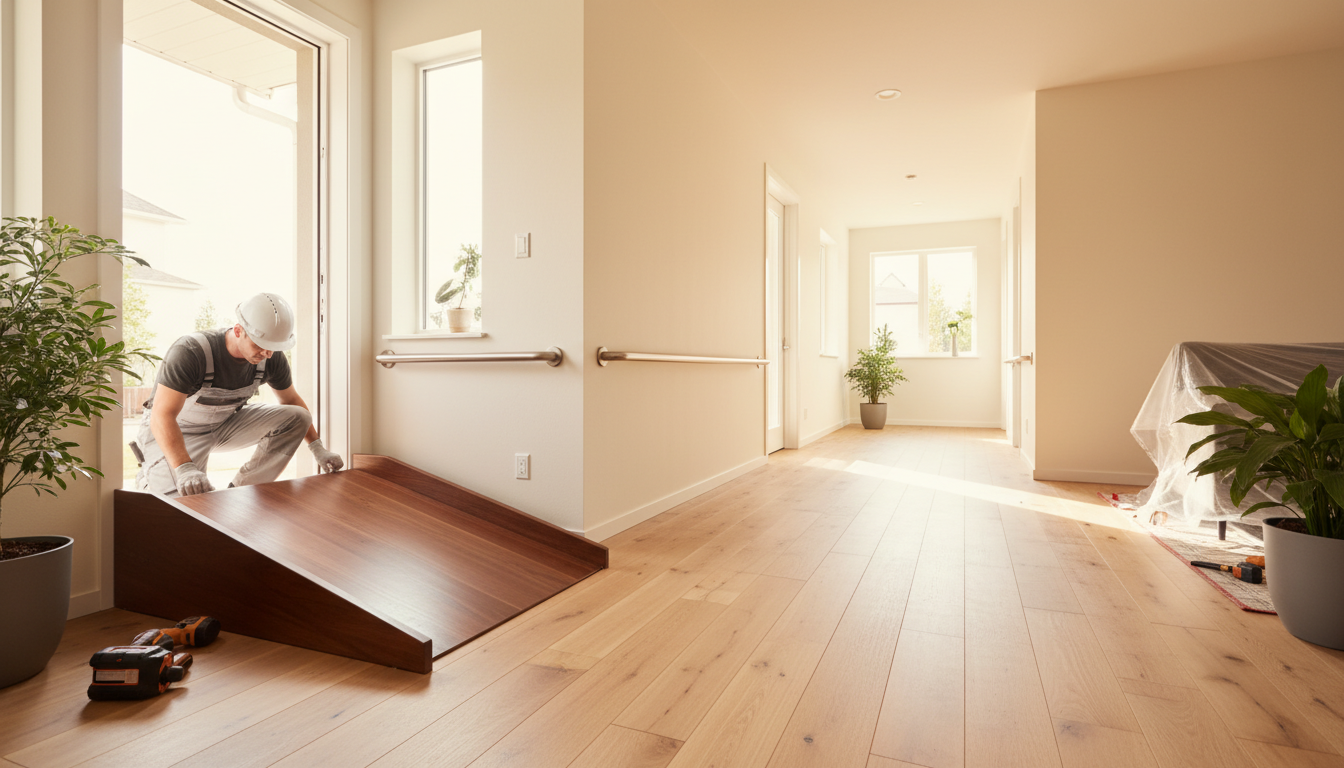
Home modifications for aging in place are structural changes, equipment additions, and design upgrades that make a home safer and more accessible for older adults who want to remain in their own residence as they age. These modifications range from simple fixes like installing grab bars and improving lighting to major renovations such as widening doorways, building wheelchair ramps, and converting bathrooms for full accessibility.
The AARP reports that 77% of adults aged 50 and older want to remain in their current home for the long term. Yet the vast majority of American homes were not designed with aging in mind. Standard homes feature narrow doorways, step-up entries, slippery bathroom surfaces, and second-floor bedrooms that become increasingly dangerous as mobility declines.
We approach aging in place home modifications as a strategic investment rather than a reactive expense. The average cost of assisted living in the United States now exceeds $5,350 per month. A comprehensive set of home modifications typically costs between $5,000 and $30,000 as a one-time investment. The math is straightforward: most families recoup their modification costs within 6 to 12 months compared to the alternative of facility-based care.
Key Statistic: According to the National Council on Aging, falls are the leading cause of injury-related death among adults 65 and older. The right home modifications can reduce fall risk by up to 38% according to published research in the Journal of the American Geriatrics Society.
Start With a Home Safety Assessment
Every effective aging in place renovation begins with a thorough assessment of the home. We never recommend purchasing equipment or hiring contractors before understanding exactly what the home needs. A proper assessment identifies hazards, prioritizes modifications by urgency, and creates a budget-conscious roadmap.
Professional Assessment Options
There are two types of professionals qualified to conduct aging in place home assessments:
- Certified Aging-in-Place Specialist (CAPS): Contractors, designers, or remodelers who have completed the National Association of Home Builders (NAHB) CAPS certification program. They understand both the construction requirements and the unique needs of aging adults. Expect to pay $200 to $500 for a comprehensive CAPS assessment.
- Occupational Therapist (OT): Licensed healthcare professionals who evaluate how the senior's specific physical and cognitive abilities interact with the home environment. An OT assessment is clinical in nature. Some insurance plans, including certain Medicare Advantage plans, cover OT home assessments when ordered by a physician.
We recommend combining both perspectives when the budget allows. The CAPS professional sees the construction possibilities. The occupational therapist sees the clinical needs. Together, they produce the most complete modification plan.
DIY Assessment Alternative
For families who want to start immediately, our DIY home safety assessment guide walks through every room with a detailed checklist. A DIY assessment is a solid first step, though it should not replace a professional evaluation for seniors with complex medical conditions or significant mobility limitations.
Room-by-Room Modification Guide
We organize modifications by room because this is how contractors bid projects and how families experience their homes. Each room presents distinct hazards and requires specific solutions.
Bathroom Modifications (Highest Priority)
The bathroom is responsible for more senior injuries than any other room in the home. The combination of water, hard surfaces, tight spaces, and the physical demands of bathing and toileting creates the highest concentration of risk in the entire house.
Essential modifications:
- Grab bar installation: Stainless steel or chrome bars mounted into wall studs at the toilet, shower entry, and inside the tub or shower enclosure. Our grab bar installation guide details exact placement heights and stud-finding techniques. Cost: $20 to $80 per bar plus $100 to $200 for professional installation.
- Walk-in tub or roll-in shower conversion: Eliminates the dangerous step-over required by traditional tubs. A walk-in tub costs $2,000 to $10,000 installed. A roll-in shower conversion costs $3,000 to $8,000. See our walk-in tub vs roll-in shower comparison for detailed guidance.
- Non-slip flooring: Replace smooth tile with textured, slip-resistant flooring or apply commercial-grade adhesive strips. This single modification addresses the number one cause of bathroom falls. Cost: $200 to $1,500 depending on the area.
- Raised toilet seat or comfort-height toilet: Standard toilets sit at 15 inches. A comfort-height toilet or a raised toilet seat brings the height to 17 to 19 inches, dramatically reducing the effort required to sit and stand. Cost: $25 to $100 for an add-on seat, $300 to $800 for a new comfort-height toilet installed.
- Handheld shower head on adjustable slide bar: Allows the senior to shower while seated. Cost: $30 to $150 installed.
For a comprehensive bathroom approach, see our full bathroom accessibility guide and our senior bathroom safety checklist.
Entryway and Exterior Modifications
The transition from outdoors to indoors is where many aging in place plans fail. A single step at the front door can make a home completely inaccessible to someone using a wheelchair or walker. We address entryway modifications early in every project because they determine whether the senior can actually get in and out of their own home.
- No-step entry or wheelchair ramp: A permanent ramp should have a slope of no more than 1:12 (one inch of rise for every 12 inches of run). A 24-inch step requires a 24-foot ramp. Portable and modular ramp systems from manufacturers like EZ-Access offer faster installation. See our ramps and accessibility guide for detailed planning. Cost: $1,000 to $8,000 depending on length and materials.
- Widened doorways: Standard interior doorways are 30 to 32 inches wide. A wheelchair requires a minimum 36-inch clear opening. Offset hinges can add 2 inches without major construction. Full widening requires framing modifications. Cost: $50 for offset hinges, $300 to $1,500 per doorway for full widening.
- Lever-style door handles: Replace round doorknobs with lever handles that can be operated with a closed fist or forearm. This is one of the simplest and most impactful modifications for anyone with arthritis or reduced grip strength. Cost: $15 to $50 per handle.
- Motion-activated exterior lighting: Illuminates the path from the car to the door automatically. Eliminates the need to fumble for light switches in the dark. Cost: $30 to $150 per fixture.
- Handrails on both sides of exterior steps: Even if a ramp is installed, steps may still be used by other household members. Dual handrails provide maximum stability. Cost: $100 to $300 per side.
Our home entry safety guide covers these modifications in greater detail.
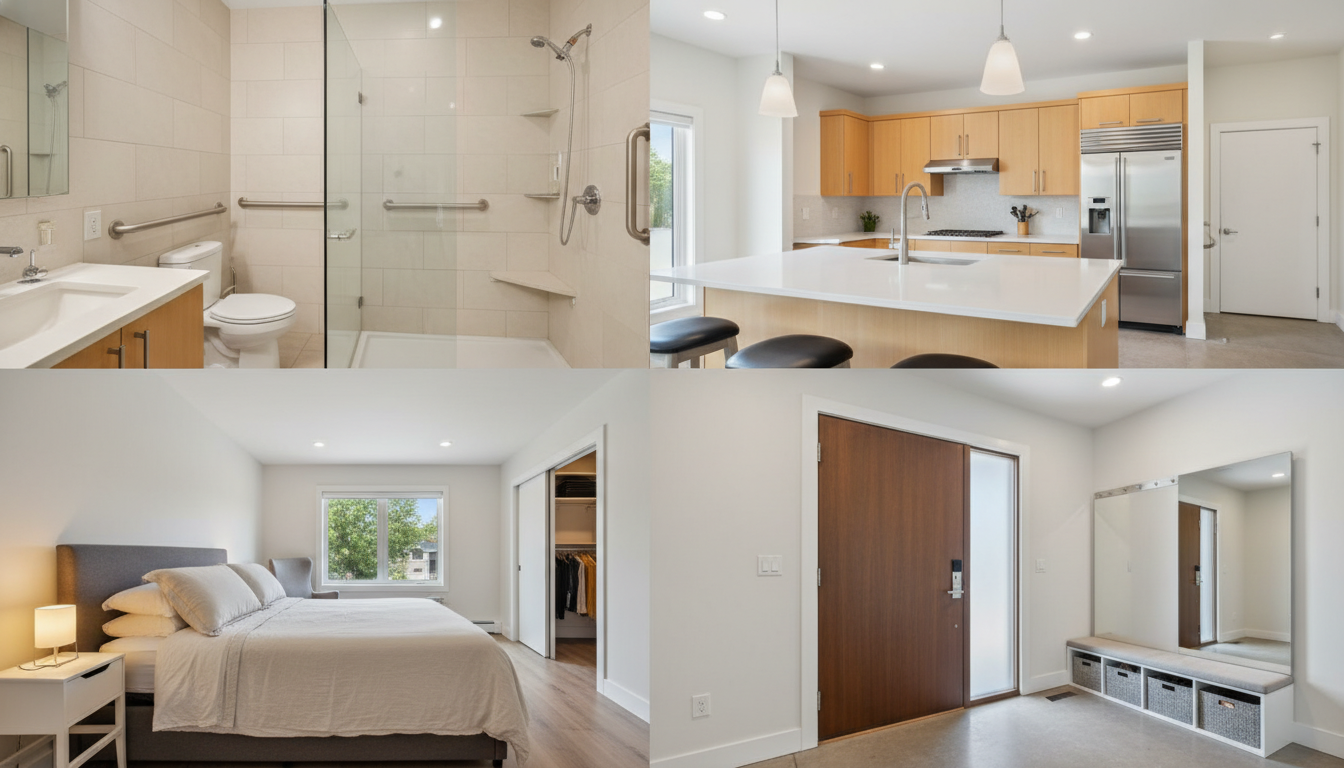 Key modifications across the four highest-priority rooms — bathroom, entryway, bedroom, and kitchen
Bedroom Modifications
The bedroom presents two primary risks: getting in and out of bed safely, and navigating to the bathroom at night. Falls during nighttime bathroom trips are among the most dangerous because the senior is often groggy, the lighting is poor, and help may not arrive quickly.
- Main-floor bedroom conversion: If the primary bedroom is on the second floor, consider converting a first-floor room (dining room, den, or guest room) into the new master bedroom. This eliminates stair use entirely and is often the single most impactful modification for seniors with mobility issues. Cost: $500 to $5,000 depending on scope.
- Bed rails and safety handles: Half-length bed rails help the senior pull themselves to a sitting position. Our bed rails safety guide covers proper selection. Cost: $30 to $200.
- Motion-activated night lights: LED strip lights under the bed frame or along the hallway to the bathroom activate automatically when the senior gets up. Cost: $15 to $50 per unit.
- Adjustable bed frame: Electric adjustable bases allow the head to be raised for easier breathing and the knees to be elevated for circulation. These frames fit standard mattresses. Cost: $500 to $2,000.
- Bedside commode: For seniors who cannot safely walk to the bathroom at night, a bedside commode eliminates the trip entirely. Cost: $50 to $200.
Kitchen Modifications
Kitchen modifications focus on reach, grip, and fire safety. Most standard kitchens place essential items in upper cabinets that require reaching overhead — a movement that challenges balance and can lead to falls from step stools.
- Pull-down shelf organizers: Hardware that brings upper cabinet contents down to counter level with a single pull. Cost: $100 to $300 per cabinet.
- Lever-style faucet handles: Replace twist-style knobs with single-lever faucets that require minimal grip strength. Cost: $100 to $400 installed.
- Automatic stove shut-off: Devices like the CookStop or FireAvert automatically cut power to the stove if it is left on for too long or if the smoke detector activates. This is critical for seniors with memory concerns. Cost: $200 to $400.
- Task lighting under cabinets: LED strip lights improve visibility on countertops where food is prepared. Cost: $50 to $200.
- D-shaped cabinet pulls: Larger, loop-style handles are easier to grip than small knobs. Cost: $3 to $10 per pull.
Stairway Modifications
Stairs are the second most dangerous feature in a home after the bathroom. If stair use cannot be eliminated through a main-floor living conversion, these modifications reduce the risk substantially.
- Stair lift installation: A motorized chair that travels along a rail mounted to the staircase. Our stair lift guide and buying guide cover straight vs curved models, costs, and top brands. Cost: $3,000 to $5,000 for straight stairs, $10,000 to $15,000 for curved. See also our guide on alternatives to stair lifts.
- Continuous handrails: Handrails should extend the full length of the staircase on both sides, returning to the wall at top and bottom. Cost: $200 to $600 per side.
- Non-slip stair treads: Adhesive or screw-down treads that add texture and contrast to each step. Cost: $50 to $150 per staircase.
- Improved stair lighting: LED step lights recessed into the wall at each tread or motion-activated overhead lights. Cost: $100 to $500.
Home Modification Costs and Budgeting
We break down aging in place renovation costs into three tiers based on the scope of work. Most families start with Tier 1, then progress to Tier 2 as needs evolve.
| Tier | Scope | Typical Cost | Timeline | Examples |
|---|---|---|---|---|
| Tier 1: Basic Safety | Simple installations, no construction | $500 - $3,000 | 1 - 3 days | Grab bars, non-slip mats, lever handles, night lights, raised toilet seats |
| Tier 2: Moderate | Some construction, single-room focus | $3,000 - $15,000 | 1 - 4 weeks | Walk-in shower conversion, stair lift, ramp, doorway widening |
| Tier 3: Major Renovation | Multi-room, structural changes | $15,000 - $50,000+ | 4 - 12 weeks | Full bathroom remodel, home elevator, main-floor bedroom addition, ADA kitchen |
Our detailed aging in place budget planning guide provides a full cost breakdown with worksheets and prioritization frameworks. The assisted living vs home care cost comparison also helps families see the long-term financial picture.
Grants and Financial Assistance for Home Modifications
The cost of home modifications is a barrier for many families, but numerous federal, state, and nonprofit programs exist to help offset expenses. We compile the most relevant funding sources below.
Federal Programs
- Medicaid HCBS Waivers: Many state Medicaid programs cover home modifications under Home and Community-Based Services waivers. Eligibility varies by state, but this is the largest public funding source for aging in place modifications. Contact your state Medicaid office for details.
- VA Grants for Veterans: The Specially Adapted Housing (SAH) grant provides up to $109,986 (2026) for eligible veterans with service-connected disabilities. The Home Improvements and Structural Alterations (HISA) grant covers up to $6,800 for service-connected and $2,000 for non-service-connected conditions.
- USDA Rural Development Loans and Grants: The Section 504 program provides loans up to $40,000 and grants up to $10,000 for low-income homeowners in rural areas to repair or modify their homes.
- HUD Community Development Block Grants (CDBG): Funds are distributed to local governments, which administer them through housing rehabilitation programs. Contact your city or county housing authority.
Nonprofit and Community Programs
- Rebuilding Together: A national nonprofit that provides free home modifications to low-income seniors, veterans, and people with disabilities. Over 100 local affiliates nationwide.
- Area Agencies on Aging (AAA): Your local AAA can connect you with community resources including volunteer home repair programs and equipment lending closets. Find your local AAA at eldercare.acl.gov.
- State Assistive Technology Programs: Every state has a federally funded program that may include low-interest loans, equipment lending, and referrals for home modification funding.
Our comprehensive financial assistance guide covers additional funding sources, application tips, and strategies for combining multiple programs.
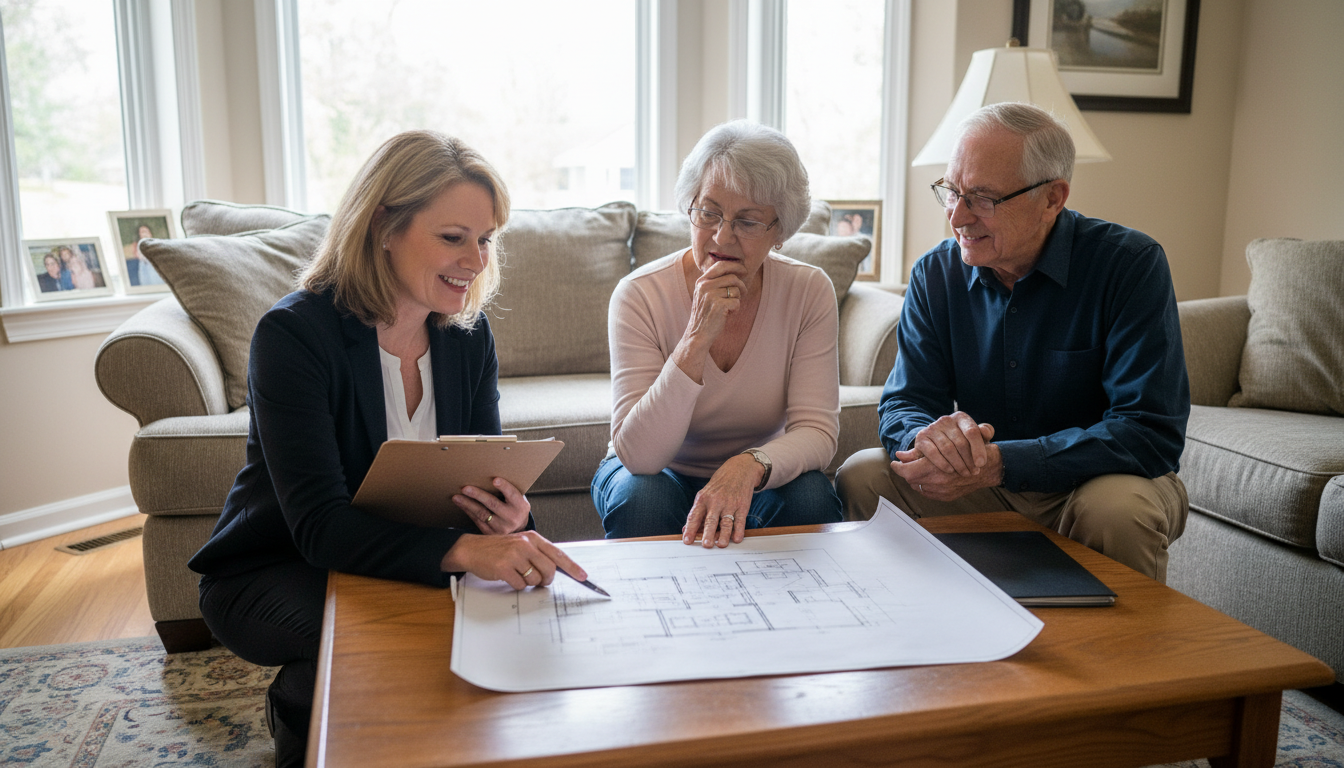 A CAPS-certified specialist reviewing modification plans with a senior couple — professional guidance ensures the right modifications are prioritized
Universal Design vs ADA Compliance: What Homeowners Need to Know
These two terms are frequently confused. Understanding the distinction helps families make smarter modification decisions.
ADA compliance refers to specific measurements and requirements mandated by the Americans with Disabilities Act for commercial and public buildings. Residential homes are generally not required to meet ADA standards unless they receive federal funding. However, ADA measurements serve as excellent benchmarks for home modifications. Key ADA dimensions include 36-inch minimum doorway width, 60-inch turning radius for wheelchairs, and 17 to 19-inch toilet seat height.
Universal design is a broader philosophy. It means creating spaces that work for people of all ages and abilities without looking institutional or medical. A curbless shower is universal design. A lever door handle is universal design. These features benefit everyone — a parent carrying groceries, a child on crutches, and a grandparent using a walker.
We recommend the universal design approach for aging in place modifications because:
- It maintains the home's aesthetic appeal and resale value
- It benefits all household members, not just the senior
- It avoids the clinical look that many seniors resist
- It anticipates future needs rather than reacting to current limitations
| Feature | Standard Home | ADA Compliant | Universal Design |
|---|---|---|---|
| Doorway Width | 30 - 32 inches | 36 inches minimum | 36 inches (blends with design) |
| Bathroom Entry | Step-over tub | Roll-in shower, grab bars | Curbless shower, integrated bars |
| Door Hardware | Round knobs | Lever handles required | Stylish lever handles |
| Flooring | Mixed surfaces, transitions | Level, slip-resistant | Flush transitions, textured tile |
| Lighting | Standard switches | Accessible switch heights | Motion sensors, smart controls |
| Kitchen Counters | 36-inch fixed height | Adjustable or lowered sections | Multi-height with knee clearance |
How to Hire the Right Contractor
Not every general contractor understands the specific requirements of aging in place renovations. We recommend working with professionals who have specialized training.
Find a CAPS-Certified Contractor
The NAHB Certified Aging-in-Place Specialist program is the industry standard. CAPS-certified professionals complete coursework in marketing and communication strategies for the aging market, design and building techniques for aging in place, and business management for building professionals. You can search the NAHB directory at nahb.org to find certified professionals in your area.
Questions to Ask Before Hiring
- Are you CAPS-certified or do you have specific aging-in-place training?
- How many aging in place or accessibility modification projects have you completed in the last year?
- Can you provide references from families with similar modification needs?
- Do you work with occupational therapists to validate your modification plans?
- Are you familiar with local building codes related to accessibility modifications?
- Do you handle grant applications or insurance paperwork for clients?
- What is your warranty on labor and materials?
DIY vs Professional Installation
Some modifications are safe and straightforward for a handy family member. Others require professional installation for safety and code compliance.
| DIY Appropriate | Hire a Professional |
|---|---|
| Lever door handle replacement | Grab bar installation (must hit studs) |
| Non-slip adhesive strips | Walk-in tub or shower conversion |
| Motion-sensor plug-in night lights | Doorway widening (structural framing) |
| Raised toilet seat (clamp-on) | Wheelchair ramp construction |
| Cabinet pull replacement | Stair lift installation |
| Removing loose rugs | Electrical work (outlets, lighting) |
| Furniture rearrangement | Plumbing modifications |
Smart Home Technology for Aging in Place
Technology now plays an important role in aging in place strategies. Smart home devices can compensate for physical and cognitive decline in ways that physical modifications cannot.
- Voice-activated home automation: Systems like Amazon Alexa and Google Home allow seniors to control lights, locks, thermostats, and appliances with voice commands. No need to walk to a switch or reach for a control. Our smart home devices for aging in place article covers the best options for seniors.
- Medical alert systems: Personal emergency response systems provide a direct line to help at the press of a button. Our medical alert system comparison reviews the top providers for 2026.
- Smart home monitoring: Motion sensors, door sensors, and activity monitors can alert family members to changes in daily routines without using cameras. Our smart home monitoring guide and camera-free monitoring guide detail privacy-respecting options.
- Automatic medication dispensers: Smart pill dispensers pre-load medications and alert the senior (and their caregiver) when it is time to take a dose. Critical for seniors managing multiple prescriptions.
- Fall detection systems: Both wearable and non-wearable fall detection systems can automatically alert emergency services when a fall is detected.
Complete Aging in Place Modification Checklist
Use this checklist to evaluate your home systematically. We organize it by priority based on injury data and the frequency of issues we encounter in assessments.
Immediate Priority (Complete Within 1 Week)
- Remove all loose rugs and unsecured floor mats
- Install non-slip strips in tub and shower
- Place night lights along the path from bedroom to bathroom
- Secure loose electrical cords along walkways
- Ensure a working phone is reachable from the bed and main living area
- Check that smoke detectors and carbon monoxide detectors have fresh batteries
Short-Term Priority (Complete Within 1 Month)
- Install grab bars at toilet and in shower/tub area
- Add raised toilet seat if current toilet is below 17 inches
- Install handheld shower head
- Replace round doorknobs with lever handles
- Install motion-sensor exterior lighting at all entry points
- Add handrails to any exterior steps
- Set up a medical alert system
Medium-Term Priority (Complete Within 3 Months)
- Convert tub to walk-in shower or install walk-in tub
- Widen critical doorways to 36 inches
- Install wheelchair ramp or no-step entry if needed
- Add bed rails or safety handles
- Install under-cabinet task lighting in kitchen
- Set up smart home voice controls
- Arrange a professional home safety assessment
Long-Term Planning (As Needs Evolve)
- Main-floor bedroom and bathroom conversion
- Stair lift or home elevator installation
- Full kitchen accessibility renovation
- Whole-home non-slip flooring replacement
- Comprehensive smart home monitoring system
Getting Started With Home Modifications
The most effective approach is to start with the highest-impact, lowest-cost modifications and build from there. Install grab bars, non-slip surfaces, and night lights this week. These three changes alone address the most common causes of in-home falls and cost under $300 total.
Next, schedule a professional assessment. A CAPS-certified contractor or occupational therapist will identify modifications you may not have considered and help you create a phased plan that aligns with your budget and your loved one's evolving needs.
Remember that aging in place is not a one-time project. It is an ongoing process that should be reassessed every six months or after any health change. The goal is to stay ahead of the need — modifying the home before an incident occurs, not after. With the right modifications in place, your loved one can continue living in the home they know and love, safely and independently, for years to come.
Ready to Take Action?
Start with a professional home safety assessment to identify the modifications your home needs. Our comprehensive resource covers what to expect and how to prepare.
Explore Home Safety Assessments About James Wilson
Home Safety Assessment Specialist
Certified home safety specialist with over a decade of experience evaluating and modifying homes for safe aging in place. James has conducted over 2,000 home safety assessments and works closely with CAPS-certified contractors and occupational therapists.
Related Articles
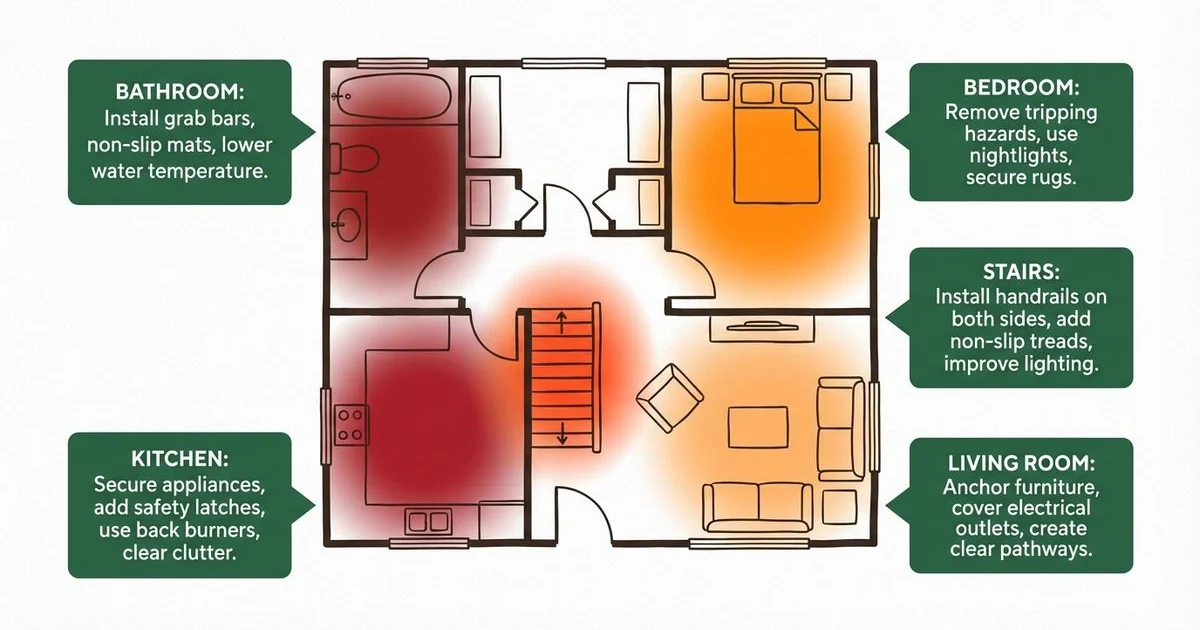
DIY Home Safety Assessment for Elderly Parents
Room-by-room home safety checklist you can complete yourself to identify hazards and prioritize modifications.
Fall Prevention for Seniors: Complete Home Safety Guide
Evidence-based strategies to prevent falls at home including exercises, home modifications, and safety equipment recommendations.

How to Budget for Aging in Place: Complete Planning Guide
Comprehensive budgeting guide for aging in place including home modifications, care costs, and financial planning strategies.