Home Entry Safety for Elderly: Ramps, Lighting & Zero-Step Solutions
Expert guide to making home entryways safe for seniors. Covers zero-step entries, wheelchair ramps, threshold ramps, motion sensor lighting, lever door handles, and video doorbells.

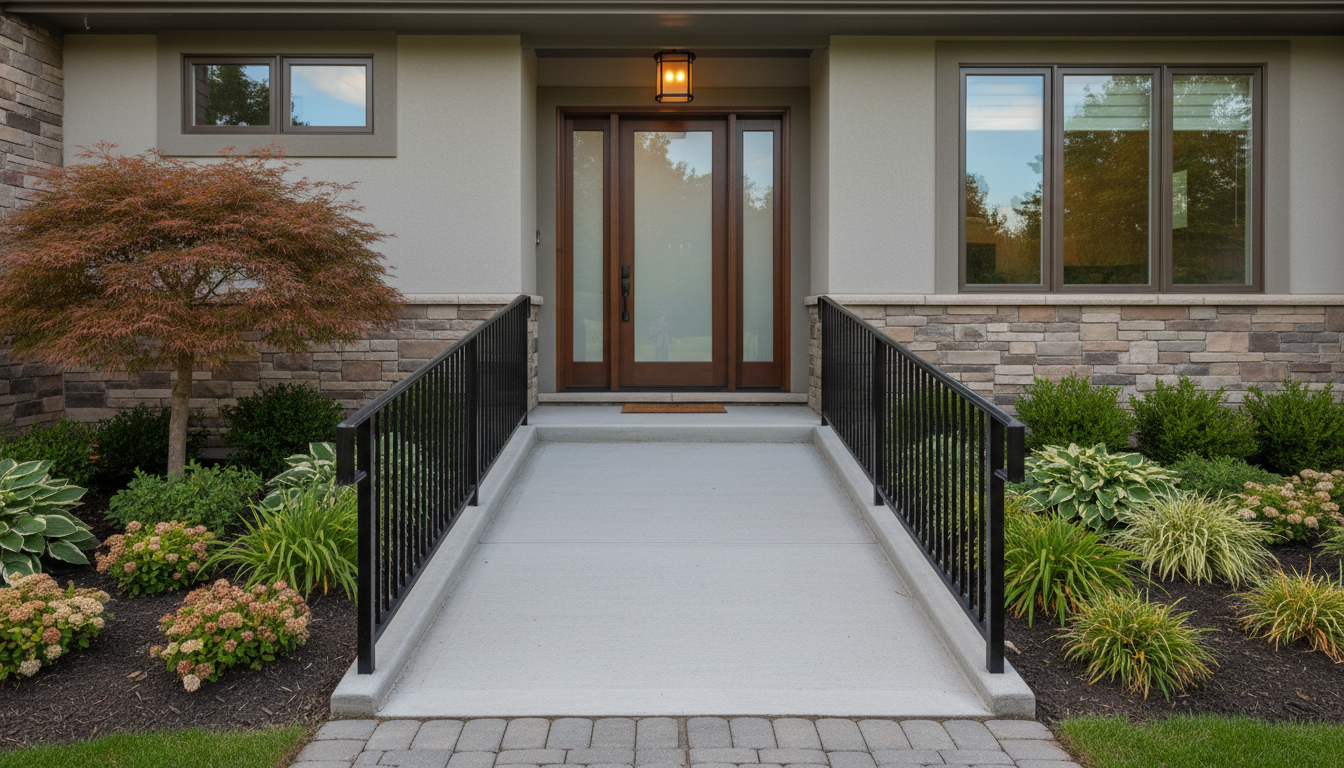
Why the Front Door Is the Most Dangerous Threshold in Your Home
When families call us for a home safety assessment, their concerns almost always focus on the bathroom or the staircase. That is understandable — those are high-risk zones. But our data from over 2,000 assessments tells a different story about where falls actually begin.
The home entrance accounts for a disproportionate number of senior fall injuries because it concentrates every risk factor into a single transition point. Uneven surfaces, elevation changes, poor lighting, slippery materials when wet, awkward door handling, and the physical fatigue of arriving home all converge at the front door.
According to the National Council on Aging, one in four Americans aged 65 and older experiences a fall each year, and entrance-related falls are among the most severe because they often involve steps, concrete surfaces, and the momentum of forward motion. A fall on a concrete porch or walkway generates far more impact force than a fall on a carpeted hallway.
The good news is that home entry safety modifications are among the most effective and affordable fall prevention strategies available. Most of the solutions in this guide can be completed in a weekend for under $500, and several qualify for financial assistance through Medicare, Medicaid waivers, or VA benefits.
The Entry Safety Assessment: What to Evaluate
Before purchasing any product, walk the complete entry path from the street or driveway to the inside of the front door. Evaluate each of these seven zones.
| Zone | What to Check | Common Hazard |
|---|---|---|
| 1. Walkway | Surface condition, cracks, heaving | Cracked concrete catches toes; tree root heaving creates trip edges |
| 2. Steps/Porch | Height, number of steps, railing presence | Even one step without a railing is a fall hazard |
| 3. Landing | Size and surface material | Landing smaller than 36" x 36" does not allow safe door operation |
| 4. Threshold | Height of the door threshold | Thresholds over 0.5 inches catch walker and wheelchair wheels |
| 5. Door | Width, handle type, weight | Doorways under 32 inches do not accommodate walkers or wheelchairs |
| 6. Lighting | Brightness, coverage, switch location | Shadows on steps are invisible trip hazards after dark |
| 7. Interior transition | Floor surface change, rug placement | Loose entry mats slide underfoot on hard flooring |
This is part of a broader DIY home safety assessment that every family should complete. The entry is simply the starting point.
Zero-Step Entries: The Gold Standard for Aging in Place
A zero-step entry eliminates all stairs and elevation changes between the exterior grade and the interior floor level. It is the single most impactful accessibility modification for aging in place because it removes the fall risk entirely rather than mitigating it.
What Qualifies as Zero-Step
A true zero-step entry has no more than a 0.5-inch threshold between the exterior walking surface and the interior floor. The approach must have a maximum slope of 1:20 (one inch of rise per 20 inches of run) without requiring a formal ramp with handrails.
How to Create a Zero-Step Entry
- Grade-Level Approach: If the home has a garage or side entrance near grade level, converting that to the primary entry point may be the simplest solution. This often requires only a threshold ramp and improved lighting.
- Concrete Ramp Pour: A permanent concrete ramp with a gentle slope from the driveway to the door. Cost: $1,500 to $5,000 depending on length and complexity.
- Modular Aluminum Ramp: A pre-fabricated ramp system from manufacturers like National Ramp or Amramp. These bolt together and can be reconfigured or removed. Cost: $100 to $200 per linear foot.
- Landscape Regrading: Reshaping the yard to gradually raise the ground level to the door threshold. This is the most aesthetically invisible solution but requires drainage planning.
Pro Tip: Universal design principles recommend that every home have at least one zero-step entry regardless of the occupant's current age or ability. It accommodates strollers, delivery carts, rolling luggage, and temporary injuries — not just wheelchairs. It also increases home resale value.
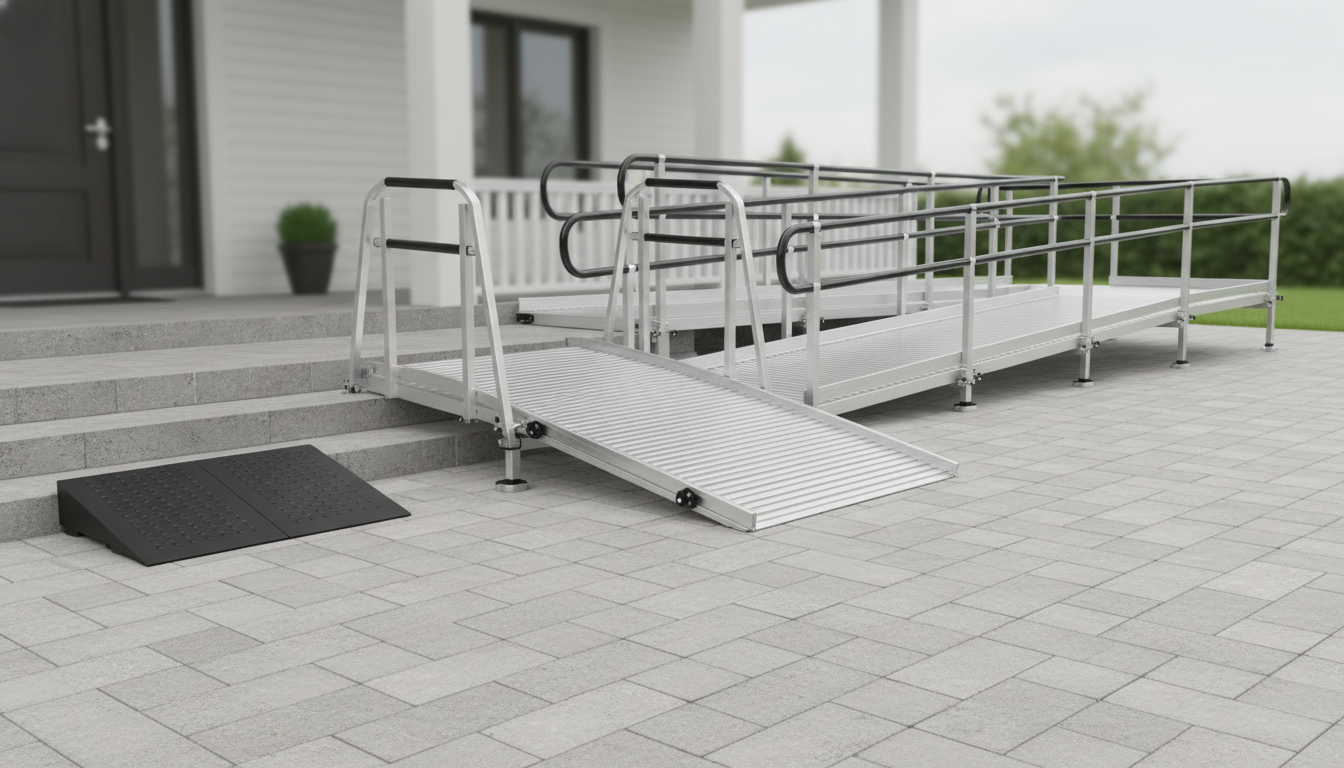 Modular ramp systems can be configured to fit virtually any home entrance and removed without permanent modification
Wheelchair Ramps and Threshold Ramps
When a zero-step entry is not feasible, a ramp is the next best option. There are three primary categories, each suited to different elevation changes and permanence requirements.
Portable Wheelchair Ramps
Folding or telescoping ramps that can be deployed and stored as needed. They handle elevation changes of 1 to 6 inches for threshold ramps and up to 24 inches for longer folding models.
- Best For: Renters, temporary needs, or supplementing a primary ramp at secondary entrances.
- Weight Capacity: Most portable wheelchair ramps support 600 to 800 pounds (combined user and wheelchair weight).
- Cost: $30 to $80 for threshold ramps; $150 to $500 for folding multi-fold ramps.
Modular Aluminum Ramps
Semi-permanent systems made from aluminum sections that bolt together with platforms, turns, and handrails. These are the most common choice for home accessibility ramp projects.
- Best For: Permanent installations at primary entrances with elevation changes over 6 inches.
- ADA Slope Requirement: The maximum slope is 1:12 (one inch of rise per 12 inches of run). A 24-inch rise requires a minimum 24-foot ramp length, which typically means switchback turns with landing platforms.
- Cost: $100 to $200 per linear foot installed. A typical residential installation runs $2,000 to $8,000.
Threshold Ramps
Small wedge-shaped ramps that bridge the gap between the door threshold and the interior or exterior floor. They address one of the most overlooked trip hazards in senior homes.
- Best For: Door thresholds between 0.5 and 2 inches in height. Standard in homes with sliding glass doors, French doors, or raised exterior thresholds.
- Materials: Rubber, aluminum, or composite. Rubber threshold ramps are the most affordable and work on most surfaces.
- Cost: $15 to $60 per ramp.
| Ramp Type | Elevation Range | Permanence | Cost Range |
|---|---|---|---|
| Threshold ramp | 0.5 – 2 inches | Semi-permanent (adhesive/screw) | $15 – $60 |
| Portable folding ramp | 1 – 24 inches | Fully portable | $30 – $500 |
| Modular aluminum ramp | 6 – 60+ inches | Semi-permanent (bolted) | $2,000 – $8,000 |
| Concrete ramp | 6 – 36+ inches | Permanent | $1,500 – $5,000 |
| Vertical platform lift | Up to 14 feet | Permanent (installed) | $5,000 – $15,000 |
Lighting the Entry Path: Motion Sensors and Best Practices
Poor lighting is the invisible multiplier behind most entry falls. A step that is perfectly navigable in daylight becomes a lethal hazard when a senior returns home after dark and cannot see the edge.
Motion Sensor Lighting
Motion sensor lighting activates automatically when it detects movement, eliminating the need to fumble for a switch while holding groceries, a cane, or a walker. This is non-negotiable for any aging-in-place entry modification.
- Placement: Install lights at three points: the walkway (solar path lights every 6 to 8 feet), the steps (dedicated step lights or strip lighting on each riser), and the door (a wall-mounted fixture aimed at the lock and threshold).
- Brightness: The Illuminating Engineering Society recommends a minimum of 50 lux at the entry for elderly vision. Standard porch lights often deliver only 10 to 20 lux. Use LED fixtures rated at 1,000+ lumens for the primary entry light.
- Color Temperature: Use 3000K to 4000K (warm to neutral white). Yellow-toned lights (2700K) reduce contrast perception for aging eyes. Blue-white lights (5000K+) cause glare.
Step and Edge Lighting
Each step riser should have dedicated lighting or high-contrast edge tape. LED strip lighting installed under the nose of each step costs under $30 and dramatically improves depth perception.
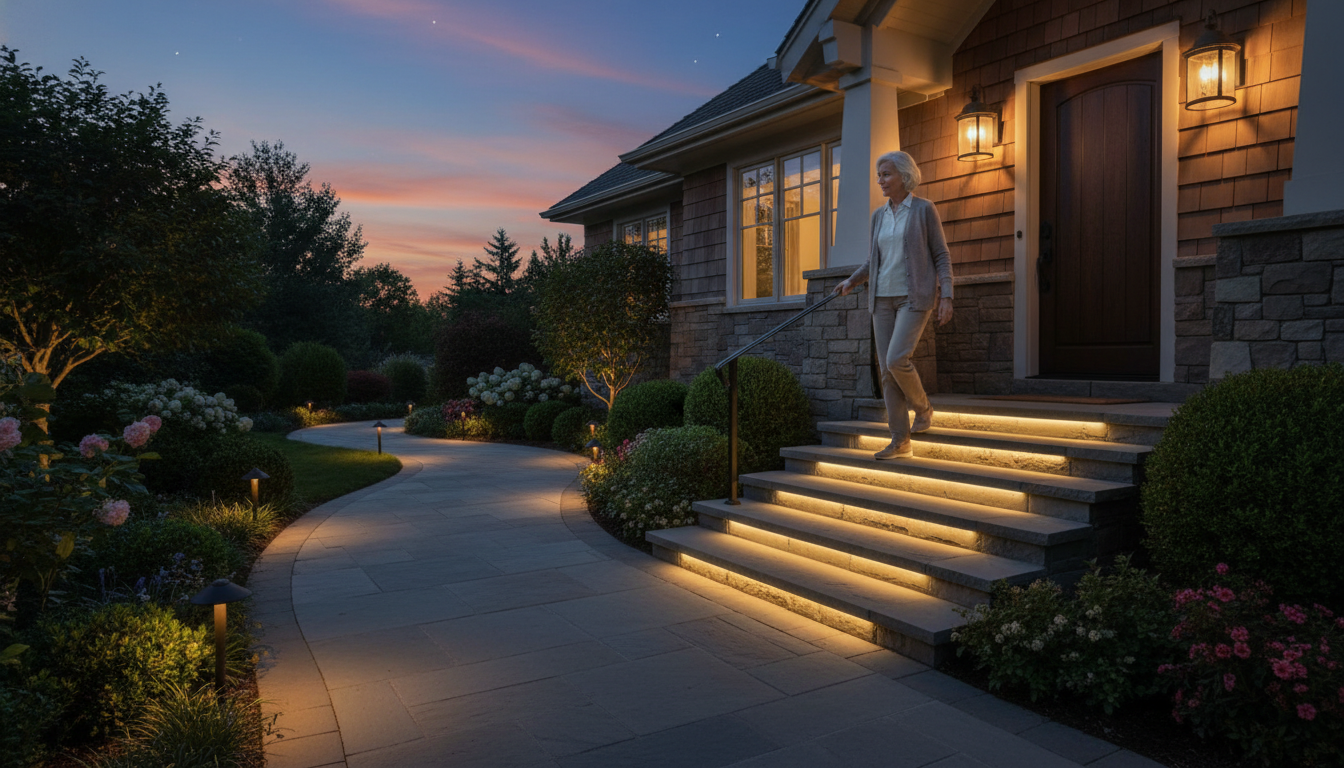 Proper entry lighting requires coverage at three zones: the walkway, each step, and the door itself
Door Modifications for Accessibility
The door itself presents multiple challenges for seniors with reduced grip strength, limited mobility, or assistive device users.
Lever Door Handles
Round doorknobs require grip-and-twist motion that is painful or impossible for seniors with arthritis. Replacing knobs with lever door handles allows the door to be opened with a push of the forearm, elbow, or an open palm.
- Cost: $15 to $50 per handle for a standard lever set.
- Installation: Direct replacement using the same bore holes — a 10-minute DIY project.
- ADA Requirement: ADA standards mandate lever-style or push-type handles in all accessible facilities. Applying this standard at home is a best practice.
Widened Doorways
Standard interior doorways are 28 to 32 inches wide. A standard wheelchair requires 32 inches minimum clear width, and a comfortable passage requires 36 inches. If the primary entry door is narrower than 36 inches, consider these options:
- Offset hinges: Replace standard hinges with swing-clear (offset) hinges. These move the door completely out of the frame when open, adding 1.5 to 2 inches of clear width without any construction. Cost: $15 to $30 per pair.
- Door frame widening: A contractor can widen the rough opening. This involves removing the existing frame, cutting the studs, installing a wider header, and hanging a new door. Cost: $500 to $1,500 per doorway.
Smart Locks and Video Doorbells
A video doorbell with two-way audio allows a senior to see and communicate with visitors without walking to the door. Combined with a smart lock, they can grant entry remotely from a voice-activated assistant or smartphone.
This eliminates the dangerous rush-to-the-door scenario where a senior hurries to answer a knock and trips in the process. It also provides security against scam visitors targeting elderly homeowners.
Slip Prevention at the Entry
Wet conditions transform a safe entry into a hazard zone. Rain, snow, morning dew, and sprinkler overspray all create slippery surfaces at the worst possible location.
Slip-Resistant Flooring and Coatings
- Concrete Sealer With Grit Additive: For existing concrete porches and walkways, apply a penetrating sealer mixed with aluminum oxide grit. This creates a sandpaper-like texture that maintains traction in wet conditions. Cost: $30 to $80 for materials to cover a typical entry area.
- Rubber Matting: Outdoor-rated rubber flooring tiles or rolls placed on the porch provide cushioning and grip. Ensure they are secured with adhesive — loose rubber mats are a trip hazard themselves.
- Non-Slip Tape: Adhesive abrasive strips applied to step nosings and ramp surfaces. Replace annually as the grit wears down. Cost: $10 to $20 per roll.
Entry Mat Safety
Loose entry mats on hard flooring (tile, hardwood, laminate) are one of the top five trip hazards our team identifies during home safety assessments. Either secure the mat with double-sided carpet tape or replace it with a recessed mat well (a mat that sits flush with the surrounding floor surface).
Handrails and Grab Bars at the Entry
Every exterior step requires a handrail. This is not optional for a senior-safe home — it is a structural necessity.
- Both Sides: Install handrails on both sides of exterior stairs, even if there are only two steps. A senior who has a dominant hand or weakness on one side needs a rail on their strong side, which varies by individual.
- Extension: Rails must extend 12 inches beyond the top and bottom steps, providing a stable grip point before the first step and after the last.
- Diameter: 1.25 to 1.5 inches — the same specification detailed in our grab bar installation guide.
- Material: Powder-coated steel or aluminum rated for outdoor weather exposure. Stainless steel is ideal but expensive. Avoid bare wood, which becomes slippery when wet and requires frequent maintenance.
For porches and landings, consider adding a vertical ADA-compliant grab bar mounted next to the door. This provides a stable anchor point for the transition from standing to reaching for keys or operating the door handle.
Creating an Entry Safety Action Plan
We recommend a phased approach based on urgency and budget. Here is the priority order our NAHB CAPS-certified team uses.
- Immediate (under $100): Install motion sensor lighting, replace doorknobs with lever handles, add non-slip tape to all step edges, secure or remove loose entry mats, add a threshold ramp for doorway transitions over 0.5 inches.
- Short-term ($100 to $500): Install handrails on both sides of all entry steps, add a video doorbell with two-way audio, apply slip-resistant coating to concrete surfaces, install an emergency call button near the entry.
- Long-term ($500 to $8,000+): Install a modular wheelchair ramp or concrete ramp, create a zero-step entry at the primary entrance, widen the doorway to 36 inches, consider a vertical platform lift for high-elevation entries.
Many of these modifications qualify for financial assistance through VA Aid and Attendance benefits, state Medicaid waiver programs, USDA Rural Development grants, and local Area Agency on Aging programs. Some states also offer property tax credits for accessibility modifications.
The Bottom Line
Home entry safety for the elderly is the first and last fall prevention checkpoint every day. A senior navigates this transition at least twice daily — once leaving, once returning — and often while carrying items, feeling fatigued, or dealing with weather conditions that multiply the risk.
The most effective modifications are also the least expensive: motion sensor lighting, lever door handles, non-slip tape, and threshold ramps. Combined with handrails on all steps and a clear, well-maintained walkway, these changes reduce entry fall risk by the vast majority.
For families planning long-term aging in place, a zero-step entry or modular wheelchair ramp is the highest-impact structural investment you can make. It preserves independence, accommodates future mobility changes, and adds genuine value to the home. Start with the immediate fixes this weekend, and plan the larger modifications as part of a comprehensive aging-in-place safety checklist.
Ready to Take Action?
Learn more about our comprehensive fall prevention solutions and how they can make every entrance to your home safer.
Explore Fall Prevention About Margaret Chen
Certified Aging-in-Place Specialist & Senior Care Advisor
CAPS-certified senior care advisor with 15+ years helping families plan for safe aging at home.
Related Articles
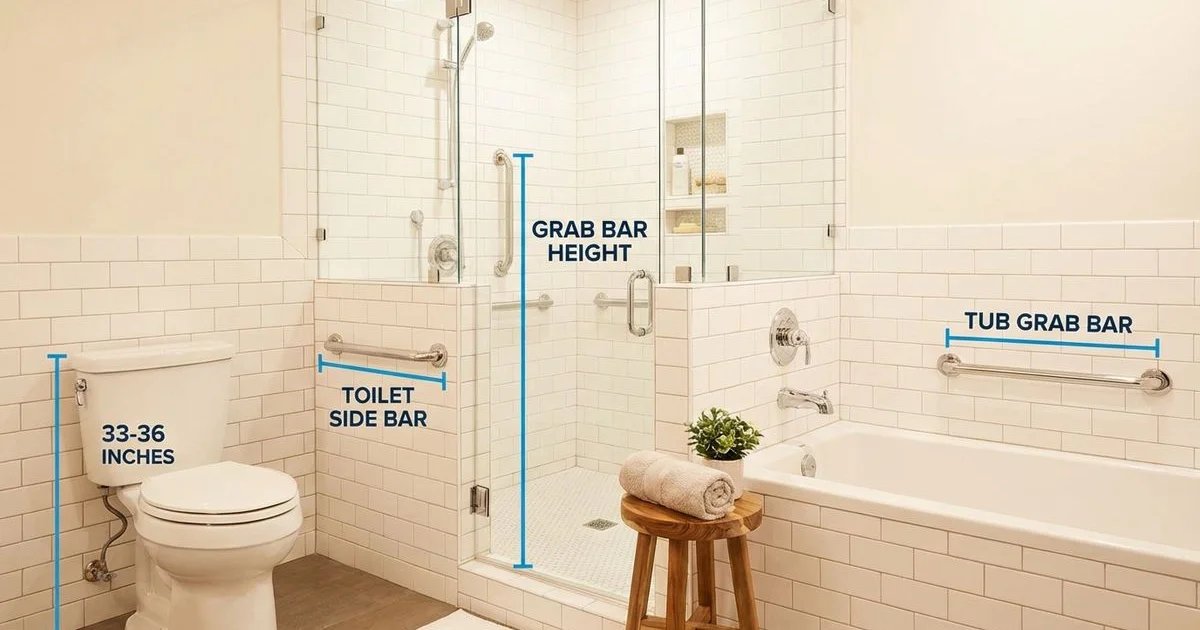
Where and How to Install Grab Bars: Location Guide With Diagrams
Expert guide to grab bar placement in bathrooms, hallways, and bedrooms. Includes installation heights, recommended products, and DIY vs. professional advice.
Fall Prevention for Seniors: The Complete Home Safety Guide
Evidence-based fall prevention strategies for seniors covering home modifications, exercise, medication management, and environmental hazard reduction.
DIY Home Safety Assessment: Room-by-Room Senior Guide
Learn to conduct your own home safety assessment with our detailed room-by-room guide. Identify fall hazards, accessibility issues, and safety improvements.