Fall Detection Without Wearables: Best Non-Wearable Systems for 2026
Compare the best non-wearable fall detection systems using radar, mmWave, and AI technology. No pendants, no cameras — just passive monitoring that works automatically for seniors.

The Problem With Wearable Fall Detection
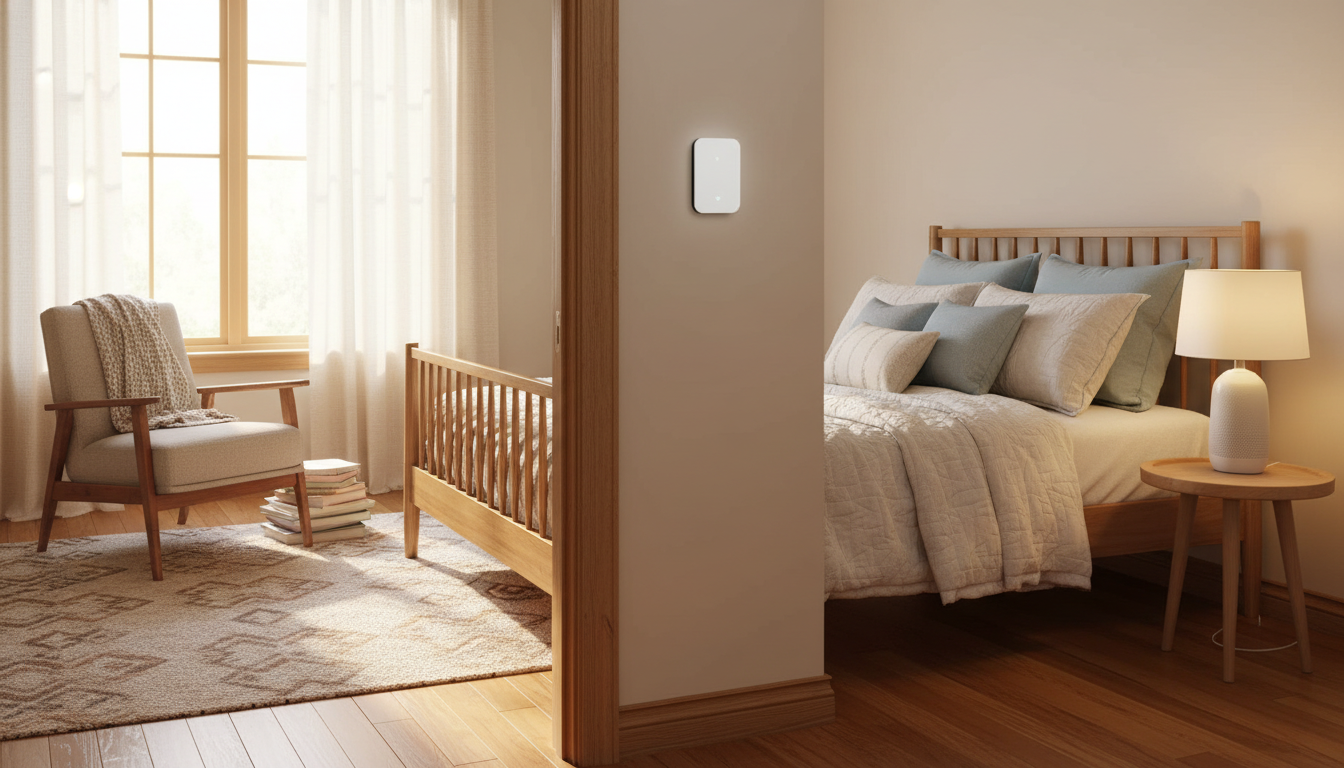
Traditional fall detection relies on wearable devices — pendants, wristbands, and smartwatches that a senior must put on every morning and keep charged. In theory, these Personal Emergency Response Systems (PERS) work well. In practice, up to 80% of falls happen when the wearable is not being worn. The device sits on the nightstand during the middle-of-the-night bathroom trip, which is exactly when most dangerous falls occur.
Non-wearable fall detection solves this fundamental problem. These passive systems use radar, infrared, or AI-powered sensors mounted on walls or ceilings to detect falls automatically — no buttons to press, no devices to remember, no batteries to charge. The technology has matured rapidly since 2024, and in 2026, several systems are accurate enough for serious consideration. This guide breaks down how each technology works, which products lead the market, and what they actually cost.
How Non-Wearable Fall Detection Works
All non-wearable fall detection systems share a core approach: they monitor a room passively and use algorithms to distinguish a fall from normal movement. The differences lie in the sensing technology each system uses to "see" the room.
Radar and mmWave Detection
Radar fall detection uses millimeter-wave (mmWave) radio signals to create a 3D map of a room and track the movement of people within it. The sensor emits low-power radio waves that bounce off the human body, and an onboard processor analyzes the reflected signals to determine body position, movement speed, and trajectory. When the system detects the rapid downward acceleration pattern of a fall followed by a period of stillness on the ground, it triggers an alert.
This is currently the most commercially mature non-wearable technology. Radar works through clothing, in complete darkness, and does not capture images or video, making it the strongest option for privacy-preserving fall detection. Leading products like Vayyar Care use 4D imaging radar that can track multiple people simultaneously and even monitor breathing patterns.
Infrared and Thermal Detection
Infrared fall detection systems use thermal imaging to track body heat signatures. These sensors see the world as a heat map rather than a visual image, so they cannot identify faces or capture recognizable footage. When a person's heat signature suddenly drops to floor level and remains stationary, the system registers a potential fall.
Infrared systems work well in complete darkness and offer strong privacy protection. However, they can be affected by ambient temperature changes — a room near body temperature (around 98°F) can reduce accuracy. They also tend to have shorter detection ranges than radar systems.
Acoustic and Vibration Detection
Acoustic fall detection uses microphones or vibration sensors to identify the sound and physical impact of a fall. Floor-mounted vibration sensors detect the specific vibration pattern that a human body creates when it hits the ground, which is distinct from dropping objects or footsteps.
These systems are simpler and often less expensive than radar, but they produce more false positives. A heavy book falling off a table can trigger some acoustic systems. They work best as a supplementary layer combined with another detection method rather than as a standalone solution.
AI-Powered Motion Analysis
Several newer systems combine basic motion sensors with artificial intelligence to analyze movement patterns over time. Rather than detecting a single fall event, these predictive fall detection systems learn a person's normal movement patterns and flag changes that indicate increased fall risk — such as slower gait speed, shorter stride length, or increased time spent sitting.
This approach is valuable for fall risk assessment and pre-impact fall detection, but it typically supplements rather than replaces real-time fall detection. The AI component helps reduce false alarms by understanding the difference between someone bending down to pick up a shoe and actually falling.
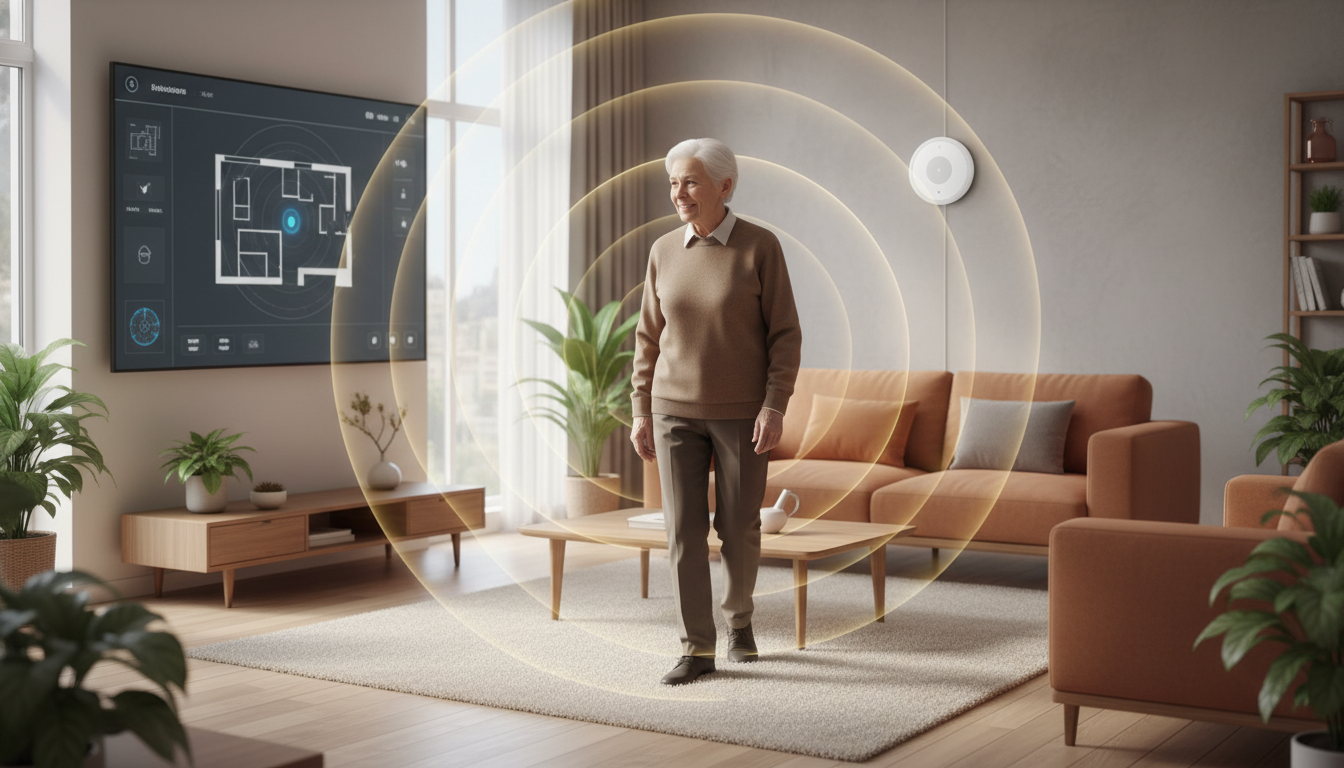 Radar-based fall detection systems use radio waves to track movement without capturing images or video
Best Non-Wearable Fall Detection Systems in 2026
The non-wearable fall detection market has consolidated around a handful of proven products. Here are the systems we recommend based on accuracy, privacy, and value.
Vayyar Care
Vayyar Care is the current market leader in radar-based fall detection. The wall-mounted sensor uses 4D imaging radar to track body position in three dimensions plus time. It detects falls in the bathroom, bedroom, or any room where it is installed, and sends automatic alerts to caregivers and emergency contacts.
- Technology: 4D mmWave radar imaging
- Detection range: Up to 23 feet (7 meters)
- Camera-free: Yes — no images or video captured
- Additional features: Room presence detection, long-lie alerts, activity trends
- Installation: Wall-mounted, professional installation recommended
- Estimated cost: $300 - $500 per sensor + monthly monitoring ($30 - $50/month)
Vayyar's standout feature is its long-lie prevention capability. If the system detects someone on the floor for an extended period — even if the initial fall was too gentle to trigger the fall algorithm — it will still send an alert. This catches the slow slides and gentle falls that wearable accelerometers often miss.
Medical Guardian
Medical Guardian offers both wearable and non-wearable fall detection through their home monitoring packages. Their system combines motion sensors, door sensors, and an AI-powered hub that learns daily activity patterns and flags anomalies.
- Technology: Multi-sensor hub with AI analysis
- Detection method: Activity pattern monitoring + motion sensors
- Camera-free: Yes
- Additional features: Medication reminders, activity monitoring, two-way voice
- Installation: Self-install or professional setup
- Estimated cost: $0 - $150 equipment + $30 - $55/month monitoring
Bay Alarm Medical SOS
Bay Alarm Medical provides a comprehensive home safety package that includes passive monitoring alongside their traditional medical alert system. Their SOS Home system uses strategically placed motion sensors and smart home integrations to detect inactivity patterns that suggest a fall or medical event.
- Technology: Motion sensors + smart home integration
- Detection method: Inactivity monitoring + pattern analysis
- Camera-free: Yes
- Additional features: 24/7 monitoring center, GPS tracking (with mobile unit)
- Installation: Self-install
- Estimated cost: $0 - $100 equipment + $25 - $40/month monitoring
Floor-Based Sensor Systems
Several companies now offer pressure-sensitive floor mats and under-carpet sensor strips that detect falls through vibration and pressure changes. These floor sensor fall detection systems are particularly useful in bathrooms and beside beds where most falls occur.
- Technology: Piezoelectric pressure/vibration sensors
- Detection method: Impact vibration + sustained floor pressure
- Camera-free: Yes
- Best for: Bathroom placement, bedside monitoring
- Estimated cost: $150 - $400 per mat + optional monitoring subscription
Non-Wearable vs. Wearable Fall Detection
Understanding the tradeoffs between these approaches helps you decide which fits your family's situation.
| Feature | Non-Wearable (Passive) | Wearable (Pendant/Watch) |
|---|---|---|
| Works automatically | Yes — always on | Only when device is worn |
| Compliance required | None | Must wear and charge daily |
| Coverage area | Fixed rooms only | Anywhere the person goes |
| Night fall detection | Excellent — bathroom, hallway | Only if worn to bed |
| Outdoor coverage | No | Yes (with GPS models) |
| False alarm rate | Low to moderate | Moderate to high |
| Privacy | High (radar/IR) to low (camera) | High — personal device only |
| Upfront cost | $150 - $500 per room | $0 - $200 for device |
| Monthly cost | $25 - $50 | $20 - $55 |
| Long-lie detection | Yes — detects person on floor | Limited — based on inactivity |
| Best for | Seniors who forget/refuse wearables | Active seniors who go outside |
For many families, the ideal setup is a combination of both. Non-wearable sensors cover the home — especially the bathroom and bedroom where most falls happen — while a wearable device provides coverage outside the house. This layered approach eliminates the gap that either system has on its own. For a broader overview of wearable options, see our medical alert systems comparison.
Radar vs. Camera-Based Fall Detection
Some companies offer camera-based fall detection that uses computer vision and AI to visually identify falls. While these systems can be highly accurate, they raise significant privacy concerns that radar and infrared systems avoid entirely.
| Factor | Radar (mmWave) | Camera-Based AI |
|---|---|---|
| Privacy | No images captured | Captures video footage |
| Bathroom use | Appropriate — no visual data | Privacy concern |
| Darkness performance | Excellent — radar ignores light | Requires IR night vision |
| Accuracy | High (95%+ on leading systems) | High (97%+ with good AI) |
| Acceptance by seniors | High — feels less invasive | Low — many refuse cameras |
| Data security risk | Low — no identifiable data | Higher — video can be breached |
We strongly recommend camera-free fall detection for bathroom installations, where dignity and privacy matter most. For other rooms, radar still offers the best balance of accuracy and privacy. Most families we work with are specifically looking for monitoring solutions that don't use cameras, and radar-based systems meet that need well.
 Non-wearable systems send instant alerts to family caregivers and monitoring centers when a fall is detected
Can Smart Speakers Like Alexa Detect Falls?
Amazon has introduced fall detection capabilities through some Echo devices and the Alexa Together subscription service. While these voice-activated emergency response features are a helpful addition, they have important limitations as a primary fall detection system.
Alexa's fall detection relies primarily on acoustic detection — it listens for the sound of a fall impact and the subsequent lack of movement-related sounds. It can also respond to voice commands like "Alexa, call for help" when a person is conscious and able to speak after a fall. However, it does not use radar or motion sensing, which means it can miss quiet falls and cannot detect falls in rooms without an Echo device.
Smart speaker fall detection works best as a supplementary layer in your safety setup, not as a standalone solution. If you already have Echo devices in multiple rooms, enabling this feature through Alexa Together (about $20/month) adds an extra safety net at low cost.
Pro Tip: If you use Alexa Together, place Echo devices in the bathroom and bedroom — the two highest-risk rooms. Make sure the devices can hear clearly and are not blocked by cabinets or shower doors.
Medicare Coverage for Fall Detection
Coverage for non-wearable fall detection is evolving in 2026 but remains limited under traditional Medicare.
- Original Medicare (Parts A & B): Generally does not cover fall detection systems, whether wearable or non-wearable. These devices are classified as convenience items rather than durable medical equipment.
- Medicare Advantage (Part C): Some Medicare Advantage plans now include fall detection as a supplemental benefit, particularly for members with documented fall history. Check your specific plan's benefits guide or call the plan's member services.
- Medicaid HCBS Waivers: Several state Medicaid programs cover non-wearable fall detection under Home and Community-Based Services waivers. This is the most likely path to coverage for low-income seniors.
- VA Benefits: Veterans may be able to obtain fall detection systems through the VA's remote patient monitoring programs, particularly through the Home Telehealth program.
For a deeper dive into coverage, see our guide on Medicare coverage for home modifications. Even without insurance coverage, the monthly cost of non-wearable monitoring ($25-$50) is a fraction of a single emergency room visit from a fall, which averages over $3,500.
Installation and Setup
Most non-wearable fall detection systems are designed for straightforward installation, though some benefit from professional setup.
Wall-Mounted Radar Sensors
Radar sensors like Vayyar Care are typically mounted at a height of 6 to 8 feet on a wall, angled slightly downward. Professional installation ensures optimal coverage of the room and minimizes dead zones. The sensor connects to your home WiFi network and communicates with a cloud-based monitoring service. Most installations take 30 to 60 minutes per room.
Multi-Sensor Hub Systems
Systems like Medical Guardian and Bay Alarm Medical use a central hub with multiple smaller sensors placed around the home. These are generally self-installable: place the hub in a central location, attach motion sensors to walls or ceilings in key rooms, and follow the app setup process. Allow 1 to 2 hours for a full home setup.
Optimal Room Placement
Not every room needs a sensor. We recommend prioritizing these areas:
- Bathroom: The highest-risk room — wet surfaces, hard floors, and transitions in and out of the tub or shower make this the top priority.
- Bedroom: Night falls during trips to the bathroom are extremely common. A sensor here catches falls during the most dangerous hours.
- Hallway: The path between bedroom and bathroom is a critical coverage zone.
- Kitchen: Hard flooring and reaching/bending activities create fall risk.
- Living room: Where seniors spend the most waking hours.
A comprehensive home safety assessment can help you identify the highest-risk areas in your specific home and determine the optimal number and placement of sensors.
Important: Non-wearable systems have a critical limitation — they only work indoors. If your loved one is active and goes outside regularly, pair the home sensors with a wearable medical alert device with GPS for outdoor coverage.
What to Look for When Choosing a System
With the market growing quickly, use these criteria to evaluate any non-wearable fall detection system:
- False alarm rate: Ask for published data. A system that triggers multiple false alarms per week will get disconnected within a month. Leading radar systems now achieve false positive rates below 1 per week.
- Detection accuracy: Look for systems with independently tested accuracy rates above 95%. Manufacturer claims without third-party validation should be viewed skeptically.
- Privacy architecture: Confirm that no images or video are captured, stored, or transmitted. Radar and infrared systems are inherently privacy-preserving. Camera systems are not.
- Monitoring options: Choose between 24/7 professional monitoring (a call center contacts emergency services) or self-monitoring (alerts go to family caregivers). Professional monitoring adds cost but provides faster response when family is unavailable.
- Long-lie detection: This feature alerts caregivers when someone has been on the floor for an extended period, even if the initial fall was too gentle to trigger the fall algorithm. This catches slow falls and slides that other systems miss.
- Battery backup: Some battery-operated fall sensors continue working during power outages. Confirm whether your system includes this.
- Integration: Check if the system integrates with existing smart home devices you already have, such as smart speakers, lighting, or door locks.
Making Your Decision
Non-wearable fall detection has moved from experimental technology to a practical aging-in-place solution. For families where a senior refuses to wear a pendant or frequently forgets to put it on, passive monitoring eliminates the compliance problem entirely. For families where the senior does wear a device, adding non-wearable sensors to the bathroom and bedroom creates a safety net for the moments when the wearable is charging or left behind.
Start by identifying the highest-risk rooms in the home — the bathroom and the bedroom-to-bathroom pathway are almost always the top priorities. Then choose a system based on your privacy requirements (radar for maximum privacy), your budget (motion sensor hubs for lowest cost), and whether you want professional monitoring or family-managed alerts.
The technology is no longer a question of whether it works — it is a question of which system fits your family's needs and comfort level. With falls sending over 230,000 seniors to the ER annually for bathroom-related injuries alone, the cost of inaction is far greater than the cost of any sensor.
Ready to Take Action?
Learn more about our comprehensive smart home monitoring solutions and how they can help your family.
Explore Smart Home Monitoring About Margaret Chen
Certified Aging-in-Place Specialist & Senior Care Advisor
CAPS-certified senior care advisor with 15+ years helping families plan for safe aging at home.
Related Articles
Best Medical Alert Systems for Seniors in 2026: Expert Comparison
In-depth comparison of top medical alert systems including fall detection, GPS, and monitoring features.

How to Monitor Elderly Parents Without Cameras: Privacy-Friendly Options
Non-intrusive ways to monitor elderly parents' safety using motion sensors, activity trackers, and smart home systems.
10 Smart Home Devices That Help Seniors Age in Place Safely
From automatic stove shut-offs to smart medication dispensers — the most useful smart home technology for senior safety.