Aging in Place Store Guide 2026: Where to Buy the Best Senior Safety Products
Your complete guide to finding and purchasing aging in place products — from local DME suppliers and online retailers to free equipment programs and Medicare-covered items.

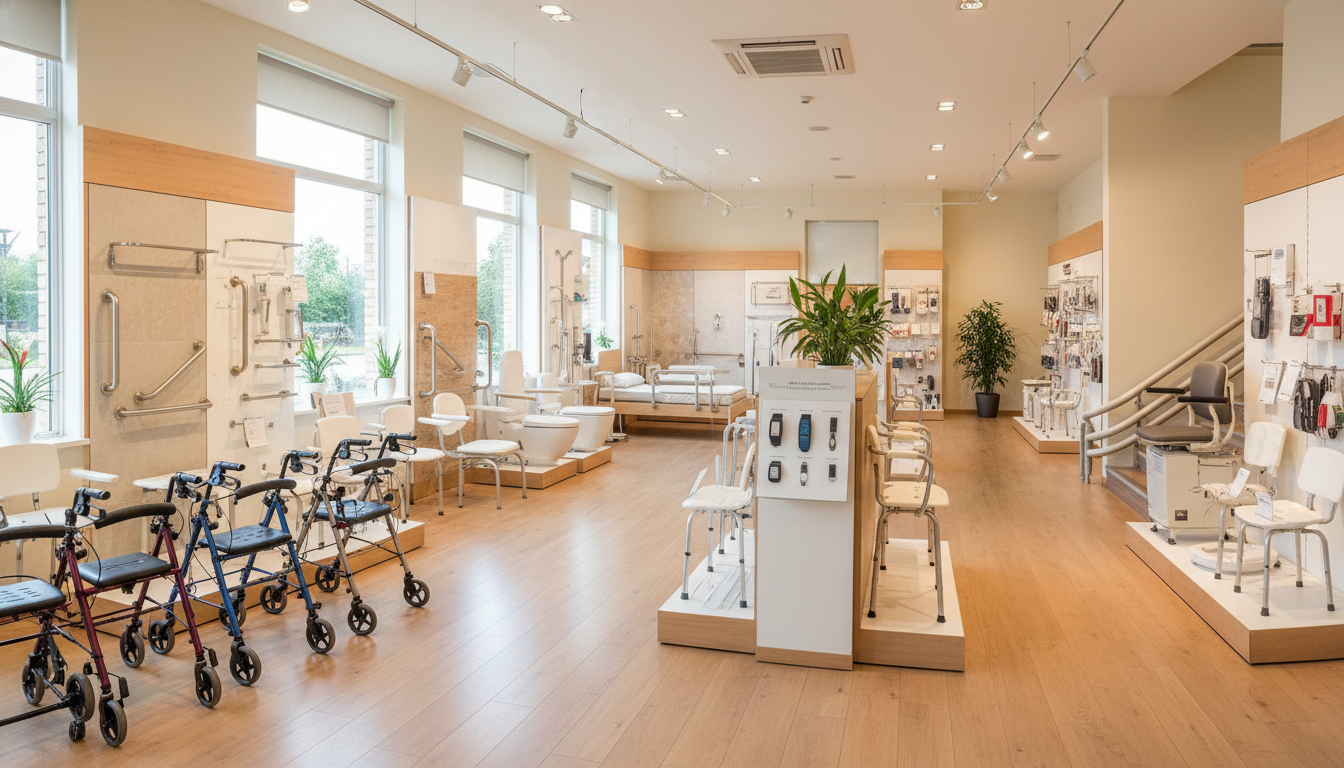
What Is an Aging in Place Store?
An aging in place store is any retailer — physical or online — that specializes in products designed to help seniors live safely and independently in their own homes. These stores carry everything from simple bathroom grab bars and raised toilet seats to complex items like stair lifts, hospital beds, and smart home monitoring systems. The category also includes durable medical equipment (DME) suppliers, home healthcare equipment vendors, and specialty online retailers focused on senior safety and accessibility.
The aging in place products industry has grown rapidly. AARP research shows that over 90% of adults aged 65 and older prefer to remain in their current home as they age. This demand has created a broad marketplace that ranges from dedicated brick-and-mortar showrooms to massive online catalogs with thousands of adaptive devices and assistive equipment.
We find that the biggest challenge families face is not finding products — it is knowing which products they actually need and where to get the best combination of quality, price, and support. A grab bar from a general hardware store looks the same as one from a specialized DME supplier, but the installation guidance, weight rating certification, and customer support behind those two products can be dramatically different.
Important Distinction: "Aging in place store" is a search term, not a single retailer. There is no one store that carries everything you need. The smartest approach is knowing which type of retailer to use for each category of product — and that is exactly what this guide covers.
Essential Aging in Place Product Categories
Before we cover where to buy, you need to know what to buy. We organize aging in place products into seven functional categories based on the Activities of Daily Living (ADLs) they support. A home safety assessment will identify exactly which categories apply to your situation.
| Category | Key Products | Price Range | Medicare Covered? |
|---|---|---|---|
| Bathroom Safety | Grab bars, shower chairs, raised toilet seats, non-slip mats, transfer benches | $15 - $300 | No (most items) |
| Mobility Aids | Walkers, rollators, wheelchairs, canes, transport chairs | $30 - $2,000 | Yes (with Rx) |
| Bedroom Safety | Bed rails, hospital beds, over-bed tables, bedside commodes | $30 - $2,000 | Partially |
| Stairway Access | Stair lifts, platform lifts, ramps | $1,000 - $15,000 | No (most cases) |
| Emergency Response | Medical alert systems, fall detection devices, PERS | $20 - $50/mo | No |
| Smart Home Tech | Voice assistants, smart locks, motion sensors, remote monitoring | $30 - $500 | No |
| Daily Living Aids | Pill dispensers, reachers, jar openers, adaptive utensils, dressing aids | $5 - $100 | No |
For detailed equipment recommendations by category, see our home medical equipment guide.
Where to Buy Aging in Place Products
We evaluate every purchasing channel by product selection, pricing, expertise, and whether they handle Medicare billing.
Medicare-Approved DME Suppliers
If your loved one has Medicare Part B and a physician's prescription, a Medicare-enrolled DME supplier should be your first stop for covered items. These include walkers, rollators, wheelchairs, hospital beds, CPAP machines, and oxygen equipment. Medicare typically covers 80% of the approved amount after the Part B deductible is met.
How to find one: Search the Medicare Supplier Directory at medicare.gov by zip code. Only purchase from enrolled suppliers — Medicare will not reimburse purchases from non-enrolled vendors regardless of the documentation.
What they offer: DME suppliers handle insurance paperwork, deliver equipment to the home, provide setup and training, and offer ongoing maintenance for covered items. Many also carry non-covered products like bathroom safety equipment at competitive prices.
For details on the Medicare DME approval process, see our Medicare coverage guide.
Specialty Online Retailers
Dedicated aging in place and home healthcare retailers offer the widest selection of specialized products with knowledgeable customer service. These are the online equivalents of a dedicated aging in place store.
- SpinLife: One of the largest online retailers for mobility equipment. Strong selection of wheelchairs, scooters, and lift chairs. Offers phone consultations with product specialists.
- Rehabmart: Comprehensive catalog covering bathroom safety, mobility, bedroom, and daily living aids. Competitive pricing and bulk options for facilities.
- Parentgiving: Curated specifically for family caregivers. Well-organized by need (bathroom, mobility, incontinence, medication management) with extensive buying guides.
- AbleData: Not a store, but an essential resource. This federally funded database catalogs thousands of assistive products with objective descriptions and manufacturer links.
General Online Retailers
Amazon, Walmart, and Home Depot carry extensive aging in place product lines at competitive prices. These are excellent for commodity items where brand and specifications are well understood.
- Best for: Grab bars, non-slip mats, raised toilet seats, shower chairs, night lights, lever door handles, pill organizers — items where you know exactly what you need.
- Caution: For complex items like wheelchairs, hospital beds, or stair lifts, we recommend specialty retailers where staff can help with sizing, features, and compatibility.
- Tip: Read reviews carefully, but filter for verified purchases and reviews from seniors or caregivers specifically. A shower chair rated five stars by a 30-year-old using it at the beach has different requirements than a senior using it daily.
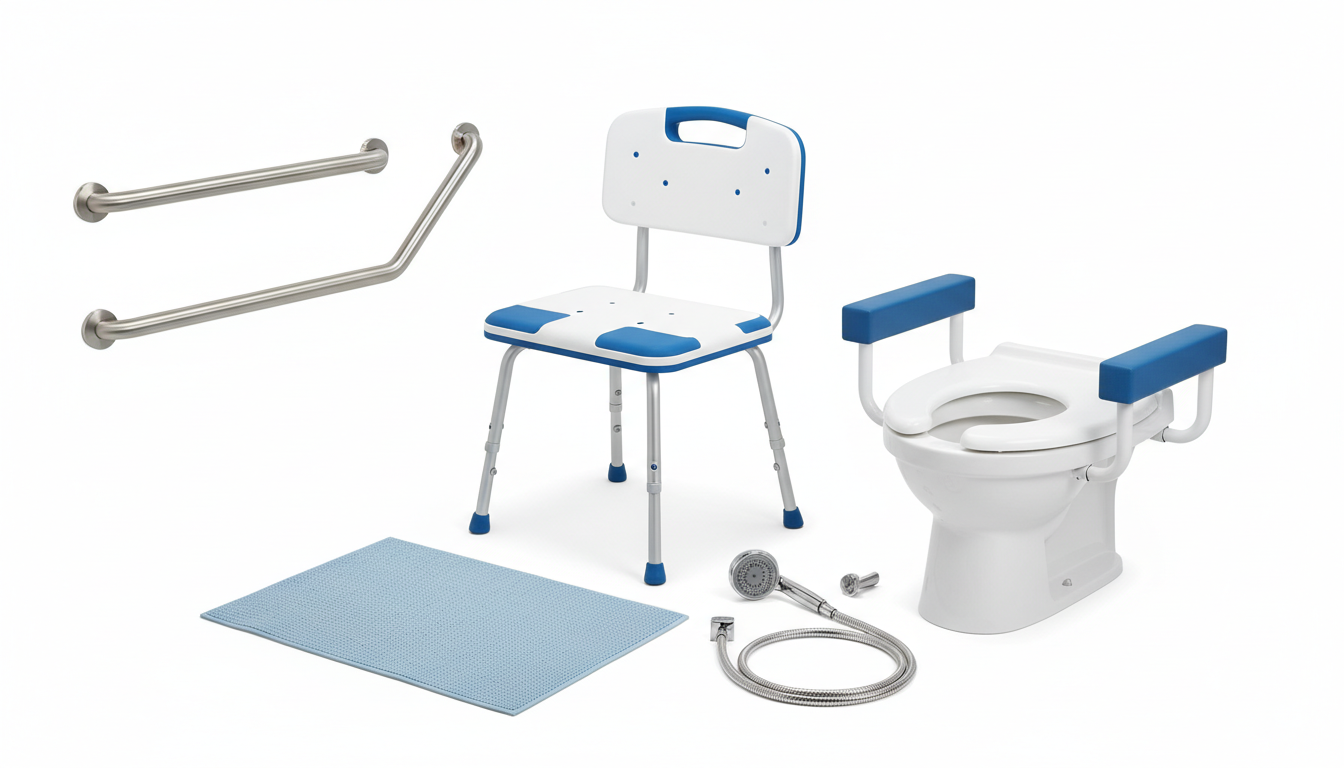 Bathroom safety products — grab bars, shower chairs, raised toilet seats, and non-slip mats — form the foundation of most aging in place equipment purchases
Local Home Medical Equipment Stores
Brick-and-mortar DME stores remain valuable for items that require fitting or testing. You cannot determine whether a wheelchair fits properly from a photograph. You cannot judge the grip comfort of a walker handle from a product listing.
When to visit in person:
- Wheelchairs and transport chairs (seat width, depth, and footrest height matter)
- Rollators and walkers (handle height, brake style, and weight must be tested)
- Lift chairs and adjustable beds (comfort is subjective and must be experienced)
- Custom orthotics or prosthetics (always require professional fitting)
How to find one: Search "home medical equipment near me" or "DME supplier near me." Your Area Agency on Aging can also provide referrals. Many local stores offer delivery, setup, and in-home demonstrations.
Home Improvement Stores
Home Depot, Lowe's, and Ace Hardware stock a growing selection of aging in place products, particularly for bathroom and entryway modifications.
- What they carry well: Grab bars (Moen Home Care line at Home Depot), comfort-height toilets, ADA-compliant faucets, lever door handles, non-slip flooring, wheelchair ramps, motion-sensor lighting
- Advantage: You can see and handle products in person, and many stores offer installation services through their pro desk
- Limitation: Staff typically lack specialized aging-in-place training. Bring measurements and specifications from your home safety assessment
Aging in Place Product Buying Guide by Room
We organize the most commonly purchased products by room to create a practical shopping list. Prices reflect typical retail ranges for 2026.
Bathroom Products
The bathroom generates the most product purchases of any room. See our bathroom accessibility guide and bathroom safety checklist for complete recommendations.
- Grab bars (stainless steel, 16" to 36"): $15 to $60 each. We recommend Moen Home Care or Delta for finish options that match existing fixtures. See our installation guide.
- Shower chair or transfer bench: $30 to $150. Look for adjustable height, drainage holes in the seat, and rubber-tipped legs. Weight capacity should exceed the user's weight by at least 50 pounds.
- Raised toilet seat with arms: $25 to $100. See our raised toilet seat comparison and comfort height toilet guide.
- Walk-in tub or curbless shower: $2,000 to $12,000 installed. See our walk-in tub guide and tub vs shower comparison.
- Handheld shower head: $25 to $100. Mount on an adjustable slide bar for seated use.
- Non-slip bath mat: $15 to $40. Replace annually as suction cups degrade.
Mobility Products
- Rollator walker with seat: $60 to $350. The most versatile mobility aid. Our equipment guide covers top brands including Drive Medical and Medline.
- Lightweight wheelchair: $150 to $500. Look for models under 30 pounds for easy transport.
- Stair lift: $3,000 to $15,000 installed. See our stair lift guide and buying guide for brand comparisons.
- Wheelchair ramp: $200 to $8,000 depending on length and material. Our ramps guide covers portable, modular, and permanent options.
Safety and Monitoring Products
- Medical alert system: $20 to $50/month. See our medical alert system comparison for the top providers.
- Smart home monitoring: $100 to $500 for a starter kit. Our monitoring guide and smart home devices article cover the best options.
- Automatic pill dispenser: $50 to $100/month. Essential for complex medication regimens.
- Motion-sensor night lights: $10 to $30 each. One of the most cost-effective fall prevention investments available.
 Online shopping gives families access to the widest selection of aging in place products — but know when to visit a store in person for fitting and testing
How to Get Aging in Place Products for Free or at Reduced Cost
The cost of equipping a home for aging in place adds up quickly. Fortunately, multiple programs exist to help families afford essential equipment.
Medicare Part B (Durable Medical Equipment)
Medicare covers walkers, wheelchairs, hospital beds, oxygen equipment, CPAP machines, and diabetic supplies when prescribed by a physician and purchased from an enrolled supplier. You pay 20% of the Medicare-approved amount after meeting the annual Part B deductible ($240 in 2026). Our Medicare coverage guide details the full approval process.
Medicaid Home and Community-Based Waivers
Many state Medicaid programs cover home modifications and equipment under HCBS waivers. Coverage varies significantly by state but can include grab bars, ramps, stair lifts, and bathroom modifications. Contact your state Medicaid office or local Area Agency on Aging for details.
Veterans Programs
The VA provides DME at no cost to enrolled veterans through VA healthcare. The Specially Adapted Housing (SAH) and Home Improvements and Structural Alterations (HISA) grants cover major modifications. See our financial assistance guide for complete details.
Equipment Lending and Donation Programs
- Area Agencies on Aging: Many maintain equipment lending closets where families can borrow walkers, wheelchairs, shower chairs, and other items at no cost.
- Lions Clubs: Provide mobility aids and vision equipment to those in need.
- State Assistive Technology Programs: Every state has a federally funded AT program that includes equipment lending, low-interest loans, and referrals.
- Rebuilding Together: This national nonprofit provides free home modifications to eligible low-income seniors and veterans.
Aging in Place Products vs Assisted Living: The Cost Comparison
One of the most powerful motivators for investing in aging in place equipment is the cost comparison with facility-based care.
| Expense | Aging in Place (Annual) | Assisted Living (Annual) |
|---|---|---|
| Housing | $0 (already own/rent) | $64,200 (national median) |
| Equipment (one-time) | $2,000 - $10,000 | Included |
| Home modifications (one-time) | $5,000 - $30,000 | N/A |
| In-home care (20 hrs/wk) | $32,000 - $36,000 | Included |
| Medical alert system | $300 - $600 | Included |
| First-year total | $39,300 - $76,600 | $64,200 |
| Year 2+ (recurring only) | $32,300 - $36,600 | $64,200+ |
The first year of aging in place may cost more due to one-time equipment and modification expenses. But from year two onward, aging in place is typically 40% to 50% less expensive than assisted living. Our detailed cost comparison breaks this down further, and our budget planning guide provides worksheets for your specific situation.
How to Choose the Right Aging in Place Products
With thousands of products available, making smart purchasing decisions requires a structured approach.
Start With an Assessment
Do not buy anything before understanding the specific needs. A professional home safety assessment or our DIY assessment guide produces a prioritized list of exactly which products are needed for each room.
Prioritize by Impact
Spend first on the items that prevent the most dangerous scenarios. Our recommended priority order:
- Bathroom safety — grab bars, non-slip surfaces, shower chair (highest fall risk area)
- Emergency response — medical alert system (critical for living alone)
- Mobility aids — walker or rollator (enables independence throughout the home)
- Bedroom safety — bed rail, night lights (prevents nighttime falls)
- Entryway access — ramp or stair lift (prevents isolation)
- Smart home tech — voice controls, sensors (adds convenience and monitoring)
Test Before Buying When Possible
Visit a local DME store to test wheelchairs, walkers, and seating. Sit in the shower chair. Grip the grab bar. Walk with the rollator. An uncomfortable device is a device that collects dust.
Always Check Weight Capacity
Every safety product has a rated weight capacity. We recommend purchasing products rated at least 50 pounds above the user's weight. Bariatric versions are available for users over 300 pounds and should be sourced from specialized DME suppliers.
Getting Started
The most effective approach is to start small, start now, and build over time. Order grab bars, non-slip mats, and a set of motion-sensor night lights this week. These three items cost under $100 total and address the most common causes of in-home falls for seniors.
Next, schedule a home safety assessment to identify the full scope of products your home needs. Use the room-by-room shopping list in this guide to prioritize purchases by impact. Check Medicare eligibility for mobility aids and DME before purchasing out of pocket. And explore the free and reduced-cost programs listed above — many families qualify for assistance they never knew existed.
Aging in place is not about buying everything at once. It is about equipping the home strategically so that your loved one can live safely, comfortably, and independently for as long as possible.
Ready to Take Action?
Not sure which products your home needs? Start with a professional home safety assessment to get a prioritized equipment list tailored to your situation.
Explore Home Safety Assessments About Margaret Chen
Certified Aging-in-Place Specialist & Senior Care Advisor
CAPS-certified senior care advisor with 15+ years helping families plan for safe aging at home. Margaret specializes in product selection and vendor evaluation for aging in place equipment.
Related Articles

Home Medical Equipment Guide 2026: What Seniors Need to Age in Place Safely
Complete guide to durable medical equipment for seniors including mobility aids, bathroom safety devices, and Medicare coverage.
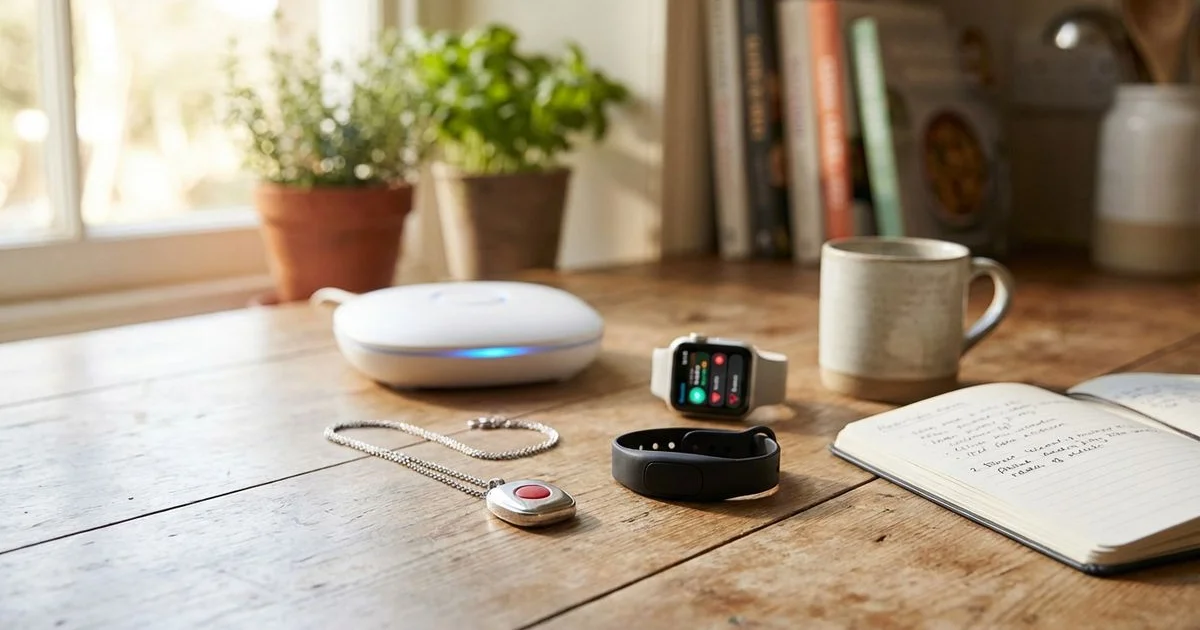
Best Medical Alert Systems for Seniors in 2026: Expert Comparison
In-depth comparison of top medical alert systems including fall detection, GPS tracking, and 24/7 monitoring features.

Financial Assistance for Senior Home Modifications
Grants, loans, and programs that help seniors pay for home modifications and aging in place equipment.