Aging in Place Remodeling: Room-by-Room Renovation Guide for 2026
How to plan and execute aging in place renovations that combine safety, universal design, and lasting value — from curbless showers to zero-step entries.

Why Aging in Place Remodeling Is Different From Standard Renovation
Aging in place remodeling is a specialized category of home renovation that prioritizes long-term safety, accessibility, and independence over aesthetics alone. Unlike a typical kitchen or bathroom remodel that focuses on visual appeal and resale value, an aging in place renovation must address the physical and cognitive changes that accompany aging while maintaining a home that feels warm and personal rather than institutional.
We see a critical distinction that many families miss: standard contractors build to code, but CAPS-certified contractors build to need. Building code sets a minimum bar. Aging in place design anticipates how the home must function five, ten, and fifteen years from now. A bathroom that meets code today may be completely inaccessible to the same homeowner in three years if they develop arthritis, need a walker, or recover from a hip replacement.
The financial case is equally compelling. The Genworth Cost of Care Survey reports that a private room in a nursing home averages over $9,700 per month in 2026. A comprehensive aging in place remodel costing $20,000 to $40,000 pays for itself within months compared to facility care. This is not a cosmetic investment. It is a strategic decision that preserves both independence and savings.
Key Insight: A 2025 study from the Joint Center for Housing Studies at Harvard found that adults who made proactive home modifications were 60% less likely to move to assisted living within five years compared to those who made no changes. The timing of the remodel matters as much as the remodel itself.
Universal Design: The Foundation of Every Aging in Place Remodel
Universal design is the philosophy that drives modern aging in place remodeling. The core idea is simple: create a space that works for everyone in the household regardless of age, size, or physical ability. A universally designed home does not look like a medical facility. It looks like a thoughtfully designed, modern home that happens to be extraordinarily functional.
We apply seven universal design principles to every aging in place remodeling project:
- Equitable Use: The design works for people with diverse abilities. A curbless shower serves a wheelchair user, a parent bathing a toddler, and an athlete rinsing off after a run.
- Flexibility in Use: The design accommodates a wide range of preferences. Adjustable-height countertops serve someone standing and someone seated.
- Simple and Intuitive Use: The design is easy to understand. Lever door handles operate with a push, a pull, or a closed fist.
- Perceptible Information: The design communicates information effectively. Contrasting tile colors at shower edges are visible to someone with low vision.
- Tolerance for Error: The design minimizes hazards. An automatic stove shut-off prevents a fire if the user forgets a burner.
- Low Physical Effort: The design can be used efficiently with minimum fatigue. Pull-out shelves eliminate the need to reach deep into cabinets.
- Size and Space for Approach: Adequate space is provided for reach, manipulation, and use. A 60-inch turning radius in the bathroom accommodates a wheelchair.
The difference between universal design and ADA compliance is important. ADA standards are legal requirements for commercial buildings with specific measurements. Universal design is a broader philosophy for residential spaces. Our home modifications guide includes a detailed comparison table of standard, ADA, and universal design specifications.
Aging in Place Bathroom Remodeling
The bathroom is the most critical room in any aging in place remodel. It is where the greatest concentration of risk factors converge: water, hard surfaces, confined spaces, and physically demanding activities. We always begin our remodeling projects here.
Curbless Shower Installation
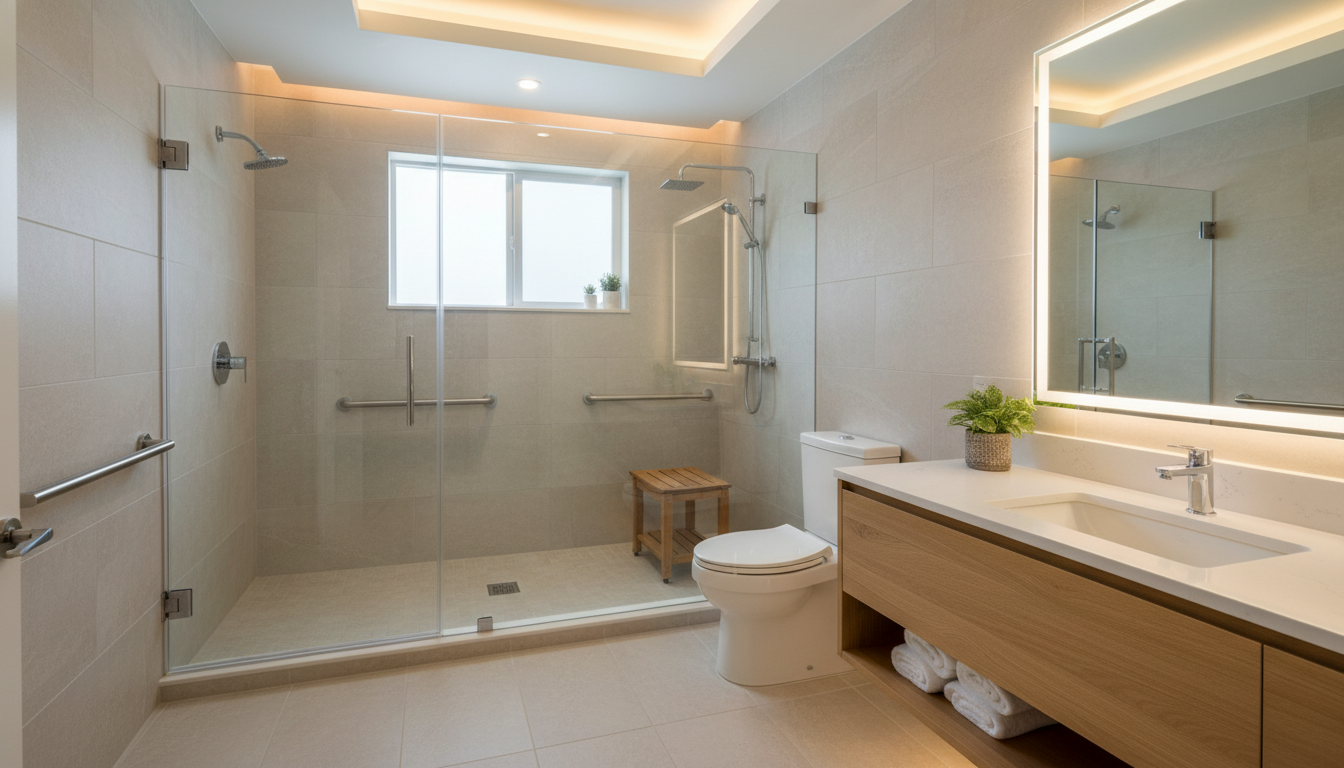
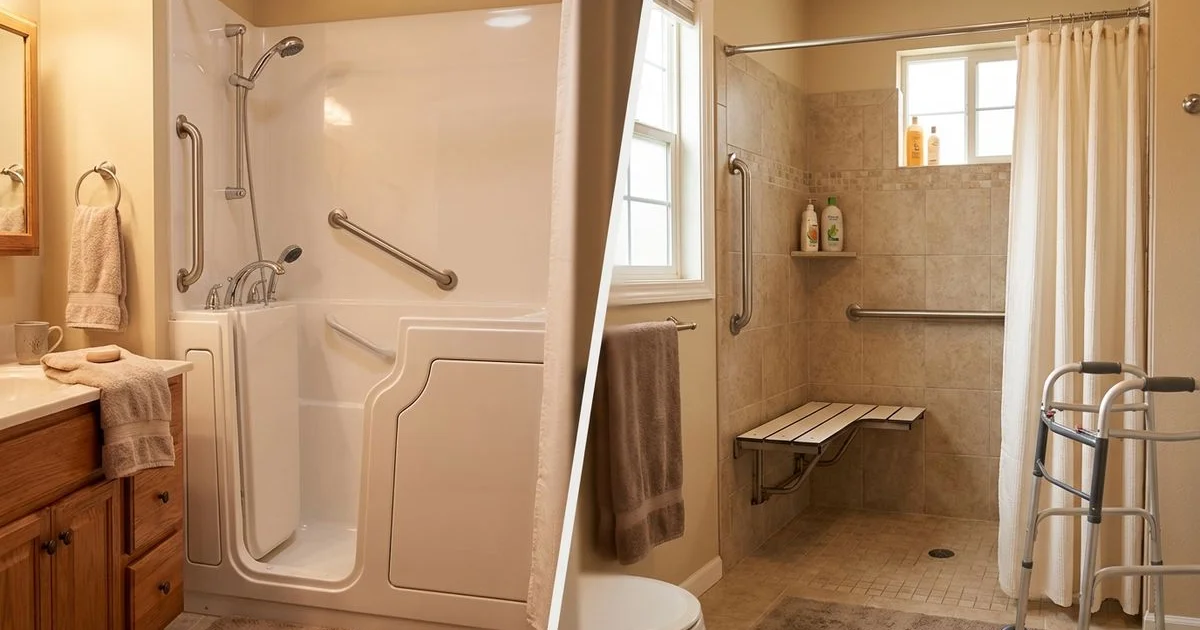
A curbless (also called zero-threshold or barrier-free) shower is the gold standard of aging in place bathroom design. It eliminates the step-over barrier that causes falls and blocks wheelchair access. The shower floor slopes gently toward a linear drain, keeping water contained without a raised edge.
Installation requires careful subfloor preparation. The contractor must create a gradual slope (typically a quarter inch per foot) and waterproof the entire area with a membrane system. We recommend a minimum shower size of 36 by 60 inches for seated bathing, though 42 by 60 is preferable for wheelchair access.
Cost: $4,000 to $12,000 installed, depending on tile selection and whether the subfloor requires structural modification. Compare this to a walk-in tub ($2,000 to $10,000) in our walk-in tub vs roll-in shower comparison.
Grab Bar Integration
Modern aging in place design integrates grab bars into the bathroom aesthetic rather than bolting them on as afterthoughts. Decorative grab bars from manufacturers like Moen Home Care and Delta come in brushed nickel, oil-rubbed bronze, and matte black finishes that match existing fixtures.
We install blocking (solid wood backing) inside walls during any bathroom remodel, even if grab bars are not needed immediately. This $50 to $100 investment during construction eliminates the need to tear out tile later when bars become necessary. See our grab bar installation guide for detailed placement heights and configurations.
Comfort-Height Toilet and Wall-Mounted Sink
A comfort-height toilet sits at 17 to 19 inches, compared to the standard 15-inch height. This 2 to 4-inch difference dramatically reduces the effort required to sit and stand, especially for seniors with knee or hip issues. Our raised toilet seat comparison details the options.
Wall-mounted sinks create knee clearance underneath for wheelchair users and provide a cleaner, more open aesthetic. They also make floor cleaning easier. Cost: $400 to $1,200 installed.
| Bathroom Feature | Standard | Aging in Place Remodel | Cost |
|---|---|---|---|
| Shower Entry | Step-over tub (14-16") | Curbless / zero-threshold | $4,000 - $12,000 |
| Grab Bars | None / towel bars | Decorative bars at toilet, shower, tub | $200 - $800 |
| Toilet Height | 15 inches | 17-19 inches (comfort height) | $300 - $800 |
| Sink | Vanity cabinet | Wall-mounted with knee clearance | $400 - $1,200 |
| Flooring | Smooth ceramic tile | Textured non-slip tile (COF > 0.60) | $800 - $3,000 |
| Lighting | Single overhead fixture | Layered: overhead + vanity + night light | $300 - $1,000 |
| Door | 24" swing-in door | 32-36" pocket or barn door | $400 - $1,500 |
For a complete bathroom approach, see our bathroom accessibility guide and senior bathroom safety checklist.
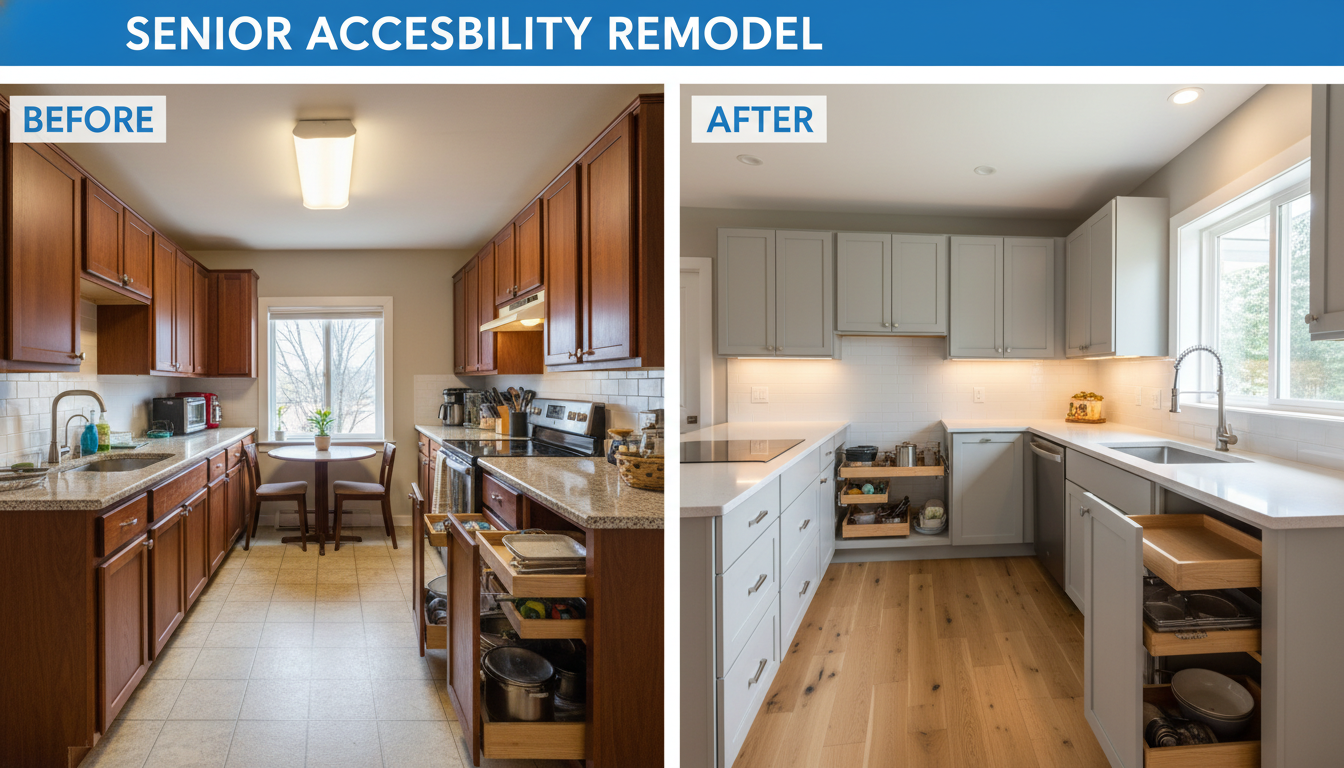 An accessible kitchen remodel transforms a cramped, high-reach layout into an open, ergonomic space with pull-out shelves and lever handles
Aging in Place Kitchen Remodeling
The kitchen is where seniors spend significant time preparing meals, managing medications, and socializing. An aging in place kitchen remodel focuses on three goals: reducing reach, improving grip, and preventing burns and fires.
Cabinet and Counter Modifications
- Pull-out shelves and drawers: Retrofit existing base cabinets with full-extension pull-out shelves. This eliminates the need to kneel, bend, or reach into dark cabinet interiors. Cost: $100 to $300 per cabinet.
- Adjustable-height countertops: Electric-lift counter sections can be raised or lowered with a switch, accommodating both standing and seated work positions. Cost: $2,000 to $5,000 per section.
- Pull-down upper cabinet organizers: Wall-mounted systems that bring upper shelf contents to counter level with a single pull. Cost: $150 to $400 per unit.
- D-shaped cabinet pulls: Large loop handles that can be operated with a fist, forearm, or one finger. Cost: $3 to $12 per pull, with 20 to 30 needed for a full kitchen.
Appliance and Fixture Upgrades
- Side-opening wall oven: Eliminates the need to lift heavy dishes over the door of a traditional drop-down oven. Mounted at counter height for wheelchair access.
- Induction cooktop: The surface stays cool around the active burner, dramatically reducing burn risk. The cooktop also shuts off automatically when the pan is removed.
- Single-lever faucet: Replace two-handle faucets with a single lever that controls both temperature and flow. Touch-activated models from Moen and Delta are ideal for seniors with severe arthritis.
- Automatic stove shut-off: Devices like CookStop and FireAvert cut power to the range if left unattended. Essential for households with memory concerns. Cost: $200 to $400.
Lighting and Flooring
Under-cabinet LED task lighting illuminates the countertop work surface directly, reducing shadows where knives and hot surfaces are handled. Motion-sensor lighting activates automatically for nighttime trips to the kitchen. Non-slip flooring (look for a static coefficient of friction above 0.50) prevents falls near the sink where water splashes are common.
Entryway and Exterior Remodeling
A zero-step entry is the defining feature of an accessible home. Without it, a wheelchair or walker user cannot enter or exit independently. We prioritize at least one no-step entry point — typically the entry used most frequently by the resident.
Zero-Step Entry Options
- Regraded walkway: If the grade permits, the most elegant solution is to regrade the approach so the walkway meets the threshold at the same level. This creates a completely invisible accessibility feature. Cost: $2,000 to $6,000.
- Permanent concrete ramp: Built to a 1:12 slope (one inch of rise for every twelve inches of run). Can be integrated into landscaping with stone borders and plantings that conceal the ramp's function. See our ramps and accessibility guide. Cost: $1,500 to $8,000.
- Modular aluminum ramp: Pre-fabricated sections that bolt together. Ideal for rental properties or temporary needs. Manufacturers like EZ-Access and Prairie View offer systems that install in hours. Cost: $1,000 to $5,000.
Door and Threshold Modifications
Standard exterior doors are 36 inches wide, which is the minimum for wheelchair passage. We recommend widening to 42 inches if structurally feasible. Replace round doorknobs with lever handles that operate with a push from a fist or elbow. Install a flat, flush threshold (maximum half-inch height) to eliminate the trip hazard at the door.
Automatic door openers activate with a wall-mounted button or remote control. Commercial-grade openers from Norton and LCN have become affordable for residential use at $500 to $1,500 installed.
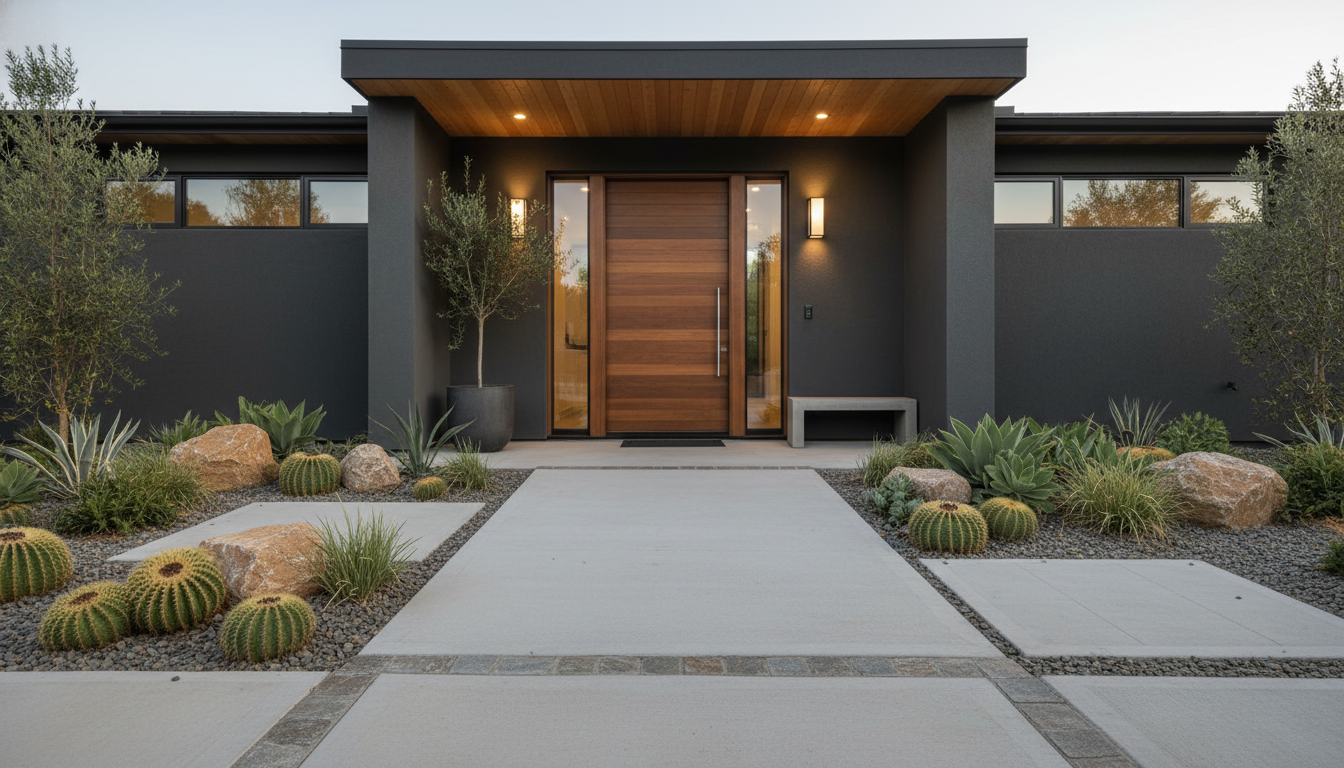 A well-designed zero-step entry with landscaped ramp blends accessibility into the home's curb appeal
Bedroom and Living Space Remodeling
The bedroom remodel focuses on two priorities: safe transfers in and out of bed, and safe nighttime navigation to the bathroom. The living space remodel focuses on clear pathways, adequate seating support, and accessible controls.
Main-Floor Bedroom Conversion
For homes where the primary bedroom is on the second floor, converting a ground-level room into the new master suite is often the single most impactful renovation. This eliminates stair use entirely. A basic conversion (adding closet space and a small ensuite bathroom) costs $8,000 to $25,000 depending on the plumbing requirements.
For families who prefer to keep the second-floor layout, a stair lift is the alternative. Our stair lift buying guide compares straight and curved models. For multi-level living with heavier accessibility needs, a residential home elevator ($20,000 to $50,000) provides the most complete solution. See our alternatives to stair lifts article for a full comparison.
Open Floor Plan and Pathway Clearance
Aging in place remodeling often involves opening up floor plans to create clear pathways. Removing non-load-bearing walls between the kitchen, dining, and living areas creates unobstructed routes for walkers and wheelchairs. Minimum pathway width should be 42 inches, though 48 inches is preferred.
Remove furniture that obstructs pathways. Replace glass coffee tables (a fall hazard) with padded ottomans. Ensure all seating has armrests for leverage when standing.
Smart Home Technology Integration
Modern aging in place remodels incorporate technology as a core layer, not an afterthought. Voice-controlled systems reduce the physical demands of operating the home and add a safety net that traditional modifications cannot provide.
- Voice-controlled lighting and climate: Amazon Alexa or Google Home hubs allow seniors to control every light, thermostat, and connected device by voice. No walking to switches in the dark. No bending to adjust the thermostat. Cost: $100 to $500 for a starter system.
- Smart locks: Keypad or smartphone-controlled deadbolts eliminate the need to fumble with small keys. Temporary codes can be issued to caregivers, cleaning services, or family members. Cost: $150 to $350.
- Motion-sensor lighting: Hardwired motion sensors in hallways, bathrooms, and staircases activate lights automatically when movement is detected. This is one of the most effective fall prevention measures available. Cost: $50 to $200 per zone.
- Emergency alert systems: A medical alert system should be installed during any aging in place remodel. Wall-mounted emergency buttons in the bathroom and bedroom provide backup to wearable pendants.
- Smart home monitoring: Non-camera monitoring systems track activity patterns and alert caregivers to anomalies. See our smart home monitoring guide and smart home devices article for recommended systems.
Aging in Place Remodeling Costs by Project
We break down the most common aging in place renovation projects by cost range to help families budget effectively. These figures reflect national averages for 2026 including labor and materials.
| Project | Budget Range | Mid-Range | Premium | Timeline |
|---|---|---|---|---|
| Full bathroom remodel | $8,000 - $15,000 | $15,000 - $25,000 | $25,000 - $45,000 | 2 - 6 weeks |
| Curbless shower only | $4,000 - $7,000 | $7,000 - $12,000 | $12,000+ | 1 - 2 weeks |
| Kitchen accessibility remodel | $5,000 - $12,000 | $12,000 - $25,000 | $25,000 - $50,000 | 2 - 8 weeks |
| Zero-step entry + ramp | $1,000 - $4,000 | $4,000 - $8,000 | $8,000 - $15,000 | 2 - 5 days |
| Doorway widening (per door) | $300 - $800 | $800 - $1,500 | $1,500+ | 1 - 2 days |
| Stair lift (straight) | $3,000 - $4,500 | $4,500 - $6,000 | $6,000+ | 1 day |
| Main-floor bedroom conversion | $5,000 - $12,000 | $12,000 - $25,000 | $25,000+ | 3 - 8 weeks |
| Home elevator | $20,000 - $30,000 | $30,000 - $50,000 | $50,000+ | 2 - 4 weeks |
For detailed budgeting worksheets and cost prioritization frameworks, see our aging in place budget planning guide. For financial assistance options, our financial assistance guide covers federal grants, VA benefits, Medicaid waivers, and nonprofit programs.
Hiring a CAPS-Certified Contractor vs a Regular Contractor
The Certified Aging-in-Place Specialist (CAPS) designation from the National Association of Home Builders is the industry standard for contractors who specialize in accessibility renovations. A CAPS-certified professional has completed training in the unique technical, business, and customer service skills needed for aging in place projects.
What a CAPS Contractor Brings to the Project
- Needs assessment training: They understand how progressive conditions like Parkinson's, arthritis, and macular degeneration affect home use over time. They design for future needs, not just current ones.
- Universal design expertise: They know how to make accessibility features look integrated and residential rather than institutional.
- Building code knowledge: They understand ADA dimensions and local accessibility code requirements that general contractors may not be familiar with.
- Product knowledge: They are current on the latest accessible fixtures, hardware, and smart home technology specifically designed for aging in place.
CAPS vs Regular Contractor Comparison
| Factor | CAPS Certified | General Contractor |
|---|---|---|
| Aging-in-place training | Yes (NAHB certified) | Varies widely |
| Universal design expertise | Core competency | May need guidance |
| Future needs planning | Standard practice | Often builds to current specs only |
| Cost premium | 10-20% higher labor rates | Lower rates but may miss critical details |
| Insurance familiarity | Often helps with grant/insurance paperwork | Rarely |
| Find one | NAHB directory at nahb.org | Standard contractor directories |
Our Recommendation: For projects under $3,000 (grab bars, lever handles, non-slip flooring), a skilled general handyman can handle the work with proper guidance. For projects over $3,000 or any structural modifications, we strongly recommend a CAPS-certified contractor. The 10-20% cost premium pays for itself in avoided mistakes and future-proof design.
Getting Started With Your Aging in Place Remodel
The most effective remodels begin with a professional home accessibility assessment. A CAPS-certified contractor or occupational therapist will walk through every room, identify current hazards and future risks, and produce a prioritized renovation plan with budget estimates.
Start the process today by scheduling a home safety assessment. If you prefer to begin on your own, our DIY home safety assessment guide provides a detailed room-by-room checklist.
We recommend phasing the work in three stages: immediate safety items (grab bars, non-slip surfaces, night lights) in the first week, bathroom and entryway renovations in the first three months, and kitchen and living space upgrades as the budget allows. This phased approach delivers the highest-impact safety improvements first while spreading the cost over a manageable timeline.
Remember that the best time to remodel is before the need becomes urgent. A family that renovates proactively has the luxury of planning, comparing contractors, and making thoughtful design choices. A family remodeling after a fall or hospital discharge is under pressure to move fast, often at higher cost and with fewer options. Invest in the remodel now, and the home will be ready for whatever the future brings.
Ready to Take Action?
Start with a professional home safety assessment to create a prioritized remodeling plan tailored to your family's needs and budget.
Explore Home Safety Assessments About James Wilson
Home Safety Assessment Specialist
Certified home safety specialist with over a decade of experience evaluating and modifying homes for safe aging in place. James has conducted over 2,000 home safety assessments and specializes in aging in place remodeling project planning.
Related Articles
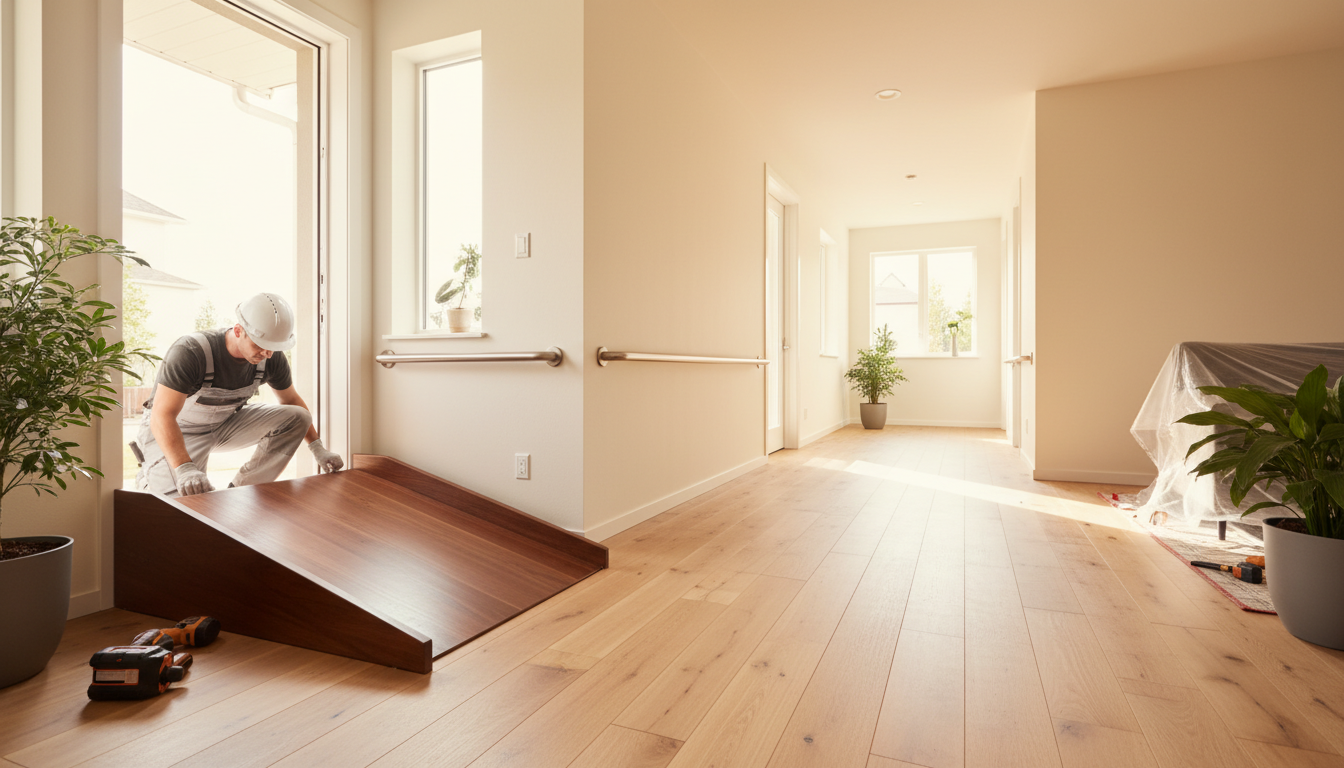
Home Modifications for Aging in Place: Complete 2026 Guide
Room-by-room guide to aging in place home modifications including costs, grants, universal design principles, and how to find a certified specialist.
Walk-in Tub vs Roll-in Shower: Which Is Right for Your Parent?
Side-by-side comparison of walk-in tubs and roll-in showers covering accessibility, cost, installation, and safety features for seniors.

How to Budget for Aging in Place: Complete Planning Guide
Comprehensive budgeting guide for aging in place including home modifications, care costs, and financial planning strategies.